Top MVP Development Companies to Work With


How should a startup approach the creation of a minimum viable product if it lacks its own developers? Assembling an in-house development team can be too challenging for an early-stage company that's only taking its first steps. Not to mention that this process is time-consuming and usually implies lots of additional costs. So, finding a decent partner to assist with building an MVP is a surefire alternative.
Below, we list ten plus well-rated and reputable MVP development companies that provide services for startups, small businesses, and those in need of turnkey MVP teams.
Overview: Top MVP Development Companies in 2026
We took a close look at each company’s portfolio to see how well they build MVPs for different industries. We also paid attention to the reviews and customer ratings on Clutch and jotted down hourly rate estimates and other vital information that was available on the company websites and platforms like Goodfirms and LinkedIn for you to take note of.
MVP Development Companies for Startups [Experts' Choice]
1. Upsilon
Locations: USA, Poland, Estonia
On the market since: 2012
Team size: 60+ people
Average hourly rate: $25 - $49
Key services: Discovery phase services, MVP development, AI-based development and integrations, web and mobile app development, UI/UX design, consulting
Client rating: 5/5
Helping startups create MVPs and grow their products further is Upsilon's specialty. The company has been around for over a decade, and throughout this time, it helped more than 25 products reach market success (some MVPs turned into 9-figure businesses!).
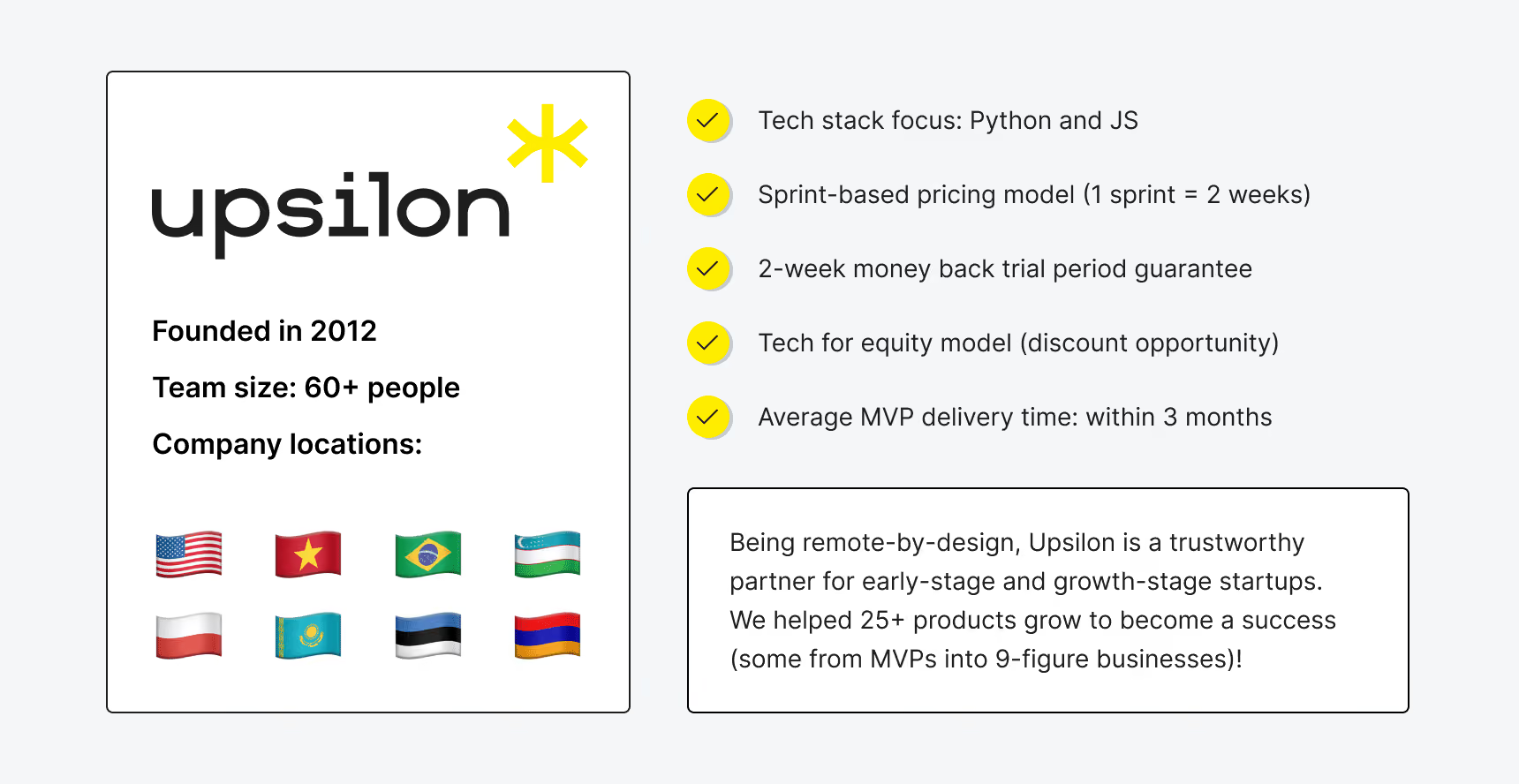
Being remote by design, Upsilon provides high-quality, customer-focused MVP development services for startups of any size at any stage. The major technologies in focus are Python and JS, in which the team has gained proven proficiency.
The team is made up of top talent and niche experts (each candidate is hand-picked very thoroughly). What is more, the MVP development company uses a dedicated team pricing model that's based on sprints, meaning that the work of the dedicated team is agile and split into 2-week blocks, allowing for changes and quick iterations if required. Custom team composition is also possible.
Noteworthy, being a Digital Product Studio, Upsilon also has several products of its own. Such expertise helps the team to develop various products as they know what it takes to build and grow an MVP first-hand.
On average, Upsilon delivers an MVP within three months. Notably, customers can make use of the trial period guarantee (that is, get their money back for the first sprint if the delivered work was unsatisfactory). You may use the MVP calculator to get a quick project estimate. Startups can also consider getting discounted rates for Upsilon's tech services in exchange for equity.


2. Classic Informatics
Locations: India, UK, Australia
On the market since: 2002
Team size: 100+ people
Average hourly rate: $25 - $49
Key services: MVP Development, web and mobile app development, AI development, data engineering, cloud engineering
Client rating: 5/5
Classic Informatics is a global software development company helping startups and enterprises validate ideas quickly with user-first, scalable digital products. With 100+ experts in web, mobile, AI, and cloud, they build business-ready MVPs that test market demand and support iterative growth. Their end-to-end capabilities span product engineering, digital transformation, AI automation, mobility, CMS, cloud, and marketing. Known for measurable outcomes, strong project management, and 5-star Clutch ratings, they deliver data-driven, industry-focused solutions across ecommerce, healthcare, fintech, logistics, travel, and more—turning concepts into reliable, scalable products.
3. ZoolaTech
Locations: USA, Mexico, Turkey, Poland
On the market since: 2017
Team size: 500+
Hourly rate: $50 - $99
Key services: Custom software development, web and mobile development, product engineering and modernization, cloud and DevOps, data analytics and AI/ML, QA and test automation
Client rating: 5/5
ZoolaTech is a full-cycle software development company that helps startups, scale-ups, and enterprises build and scale digital products with distributed engineering teams in Europe and LatAm. The company focuses on long-term partnerships, offering offshore development centers, team extension, and fully managed delivery instead of one-off projects. Core expertise includes cloud transformation, legacy modernization, data platforms, AI/ML, and high-quality web and mobile solutions across industries like retail & eCommerce, fintech, and enterprise software. Clients highlight ZoolaTech’s senior engineering talent, transparent processes, and strong ownership culture.
4. SolGuruz
Locations: India, USA
On the market since: 2019
Team size: 70+
Hourly rate: <$25/hr
Key services: End-to-end MVP development, UI/UX design and user flows, custom software development, generative AI and LLM integration for smarter MVPs, MVP for SaaS, marketplaces, AI apps
Client rating: 4.9/5
SolGuruz is a leading MVP development company that helps startups and enterprises in developing functional, ready-to-market products. The team of SolGurz transforms your products from the initiation stage to full cycle development without compromising quality. With our key focus strategy of innovation to success, the experts here aim to satisfy clients' and users' needs as a priority. Being a mobile app development company, our services are delivered and used across different domains, from healthcare to fintech and the AI and ML industry.
5. Emvigo Technologies
Locations: UK
On the market since: 2012
Team size: 150+
Hourly rate: $25 - $49
Key services: MVP development, web and mobile app development, UI/UX design, AI-driven solutions, cloud and enterprise architecture, agile project delivery
Client rating: 4.7/5
Emvigo Technologies is a UK-based software development agency trusted by clients across the UK, US, and beyond. With over 700 projects delivered, they specialise in launching fully functional MVPs within just 4 weeks. Using agile methodology, Emvigo ensures fast, iterative development without compromising quality — and at highly affordable rates for startups and growing businesses. From initial discovery and design to full development and post-launch support, their team focuses on building scalable, high-performing solutions that help businesses validate ideas quickly and cost-effectively.
6. Entrans
Locations: USA, India
On the market since: 2019
Team size: 250+
Hourly rate: $20 - $55
Key services: Custom generative autonomous AI agents, product development, data engineering and analytics, quality testing
Client rating: 4.9/5
Entrans is a top MVP development company for AI and custom generative AI systems. They apply deep expertise in data processing and work across multi-cloud platforms (AWS, GCP, Azure). The company’s method automates data movement and smooths deployment, making AI practical for businesses. They develop autonomous agents like Thunai for sales and support. Entrans also uses RAG and quantization to optimize LLMs on company data. Clients benefit from their proficiency in Python, C++, and React to build solutions for predictive AI, speech recognition, and text-to-video generation.
7. Amrood Labs
Locations: USA, EU, Australia
On the market since: 2017
Team size: 50+
Hourly rate: $25 - $49
Key services: MVP development, custom AI development, staff augmentation, cloud development and DevOps, custom mobile app development
Client rating: 4.8/5
Amrood Labs helps organizations modernize with end-to-end digital transformation. Alongside full-stack software development, it delivers practical generative AI services that pair cloud infrastructure, automation, and custom web/mobile builds to simplify complex workflows and support growth. Our AI engineers use programming languages such as JavaScript, Ruby on Rails, Java, and Python to transform large datasets into actionable insights through email assistants, predictive analytics for automotive teams, and RAG-powered document intelligence. In addition, Amrood Labs offers UI/UX design, product lifecycle support, and cloud-native deployment on AWS, Azure, Kubernetes, and related tools, serving both startups and large enterprises.
8. Innowise
Locations: USA, UK, Poland, Germany, Switzerland, Austria, Italy, Sweden, UAE
On the market since: 2007
Team size: 3000+
Hourly rate: $50 - $60
Key services: custom software development and integration, MVP development, AI
Client rating: 4.9/5
Based in the EU, Innowise is a global software development company with a proven track record of turning innovative ideas into market-ready products. With deep business analysis expertise and technological know-how, the team helps startups and enterprises validate concepts, reduce risks, and achieve faster time to market.
From discovery and requirements analysis to design, development, and post-launch support, the company ensures every MVP is scalable, efficient, and aligned with business objectives. Leveraging modern technologies and a strong consulting approach, Innowise stands out as a reliable partner for organizations seeking both speed and quality in product delivery.
9. Suffescom Solutions
Locations: USA
On the market since: 2013
Team size: 250+
Hourly rate: $25 - $49
Key services: MVP development, single landing page MVP, software prototype MVP, crowdfunding MVP
Client rating: 4.9/5
Suffescom is one of the leading MVP development company that provides services for all types of businesses across many industries. The company has helped more than 63+ startups to make their mark in the market, and with over a decade of experience, the company has delivered 550+ MVP solutions. It has also collaborated with top tech brands such as NBC and Stripe. Therefore, when you are seeking an MVP app development company that can help you transform your idea into an app within the timeline, then Suffescom is the right choice.
10. SolveIt
Locations: Poland
On the market since: 2016
Team size: 50+ people
Average hourly rate: $25 - $49
Key services: Web/mobile app development, UI/UX design, MVP development, discovery phase services, consulting
Client rating: 4.9/5
Next on our list of MVP software development companies is SolveIt that's based in the EU. They specialize in creating scalable, high-performing, and cost-effective solutions for startups and SMEs. SolveIt handles every step of the process, from discovery to development and ongoing support, to help you launch a full MVP within 3 months. They use the most innovative development languages and frameworks like Swift, Kotlin, Node, Flutter and React.
11. Code District
Locations: USA, Pakistan
On the market since: 2017
Team size: 250+
Hourly rate: $25 - $49
Key services: AI POC and MVP development, app modernization, custom software development
Client rating: 4.9/5
Code District is a custom software development company with expertise in MVP development for startups and large enterprises. The company has been in the business for over eight years and has successfully completed 100+ projects. The team at Code District helps growing businesses with designing prototypes, doing market research and validation, and then with full-scale development. The company keeps clients in the loop throughout the development lifecycle and takes an incremental approach to delivering on its promises.
12. CONTUS Tech
Locations: USA, India, UAE
On the market since: 2008
Team size: 300+
Hourly rate: $25 - $49
Key services: SaaS product development, MVP development, AI software development, custom software development, IoT solutions
Client rating: 4.7/5
CONTUS Tech is a product design and development firm that helps companies launch and scale digital products, with long-standing experience in mobility, SaaS, and real time communication platforms. For startups, they provide end to end MVP development, from discovery and market fit exploration through UX design, core build, QA, and cloud deployment, with an emphasis on lean, iterative releases rather than big bang launches. Their background in areas like messaging, streaming, and IoT means they are comfortable building systems that need to handle scale and real time usage from early on.
13. Cabot Technology Solutions
Locations: USA, Canada, India
On the market since: 2006
Team size: 100+
Hourly rate: $25 - $49
Key services: MVP development (SaaS & healthcare), product design (UI/UX), cloud (AWS/Azure), healthcare digital solutions, data analytics, Salesforce services, AI/ML enablement
Client rating: 4.7/5
Cabot is a healthcare-focused software partner with North American presence and delivery centers in India. They’re a strong fit if you need a HIPAA-ready MVP that touches clinical data or workflows (EHR, SMART on FHIR, telehealth, claims) and you want pragmatic guidance from discovery through launch. Typical engagements pair a discovery sprint with iterative builds on AWS or Azure, plus compliance-aware UI/UX and data pipelines. Expect hands-on product management, weekly demo cycles, and audit-ready documentation so you can validate with real users while keeping stakeholders aligned.
14. Technext
Locations: USA, UK, Canada, Bangladesh
On the market since: 2012
Team size: 50+
Hourly rate: $25 - $49
Key services: Web and mobile app development, UI/UX design, AI, ML and IoT development, CTO as a service
Client rating: 4.9/5
Technext understands the challenges startups face when turning ideas into market-ready products. They focus on fast MVP delivery, helping startups launch quickly and begin collecting user feedback right away. With a practical, no-nonsense approach, they focus on delivering only the core features needed to test your product idea, saving time and money. Rather than perfecting every feature from the start, Technext builds a functional MVP that you can refine based on real-world input. This helps you validate assumptions before committing substantial resources.
15. Master of Code Global
Locations: Canada, USA
On the market since: 2004
Team size: 250+
Hourly rate: $50 - $99
Key services: AI MVP development, generative AI development, web and mobile development, CRM and SaaS development, blockchain development
Client rating: 4.7/5
Master of Code Global is a top-tier AI consulting and software development company with over 20 years of experience and 1,000+ successful projects delivered to global leaders such as Tom Ford, T-Mobile, Electronic Arts, and Burberry. It is also a leader in AI MVP development, helping startups and enterprises quickly validate ideas and bring AI-powered products to market faster. With proven expertise in building scalable, data-driven MVPs, the company enables clients to test, iterate, and launch with confidence.
16. Relevant Software
Locations: Poland, Ukraine, Spain, Global (US operations)
On the market since: 2013
Team size: 100+
Hourly rate: $50 - $99
Key services: MVP development, web and mobile development, IoT, AI and ML, SaaS development, QA
Client rating: 4.9/5
Relevant Software is an international software consulting and development company that partners with Fortune 500 and fast-growing enterprises globally. For over 12 years, the firm has specialized in helping mature and growth-stage businesses solve complex operational, technological, and strategic challenges by designing, building, and scaling high-performing digital products that deliver measurable business results. They take a partner-first approach, rather than acting as a standard development vendor. By combining solid engineering with business insight, the team delivers solutions shaped by real use cases and measurable outcomes.
17. AppVerticals
Locations: USA
On the market since: 2016
Team size: 100+
Hourly rate: $50 - $99
Key services: MVP Development, iOS and Android app development, custom software development, UI/UX design, web development
Client rating: 4.9/5
AppVerticals is a US-based digital product development company helping startups, SMEs, and enterprises turn ideas into scalable mobile and web applications. With a strong focus on strategy-first execution, the company specializes in building high-performance MVPs, user-centric mobile apps, and enterprise-grade software solutions designed for long-term growth.
Backed by a team of experienced designers, developers, and product strategists, AppVerticals delivers end-to-end services—from product discovery and UI/UX design to development, deployment, and post-launch optimization. Their expertise spans healthcare, fintech, on-demand services, real estate, education, and ecommerce industries.
18. Ksoft Technologies
Locations: India (Serving US, UK & EU clients)
On the market since: 2014
Team size: 10 - 50
Hourly rate: $25 - $49
Key services: MVP development, AI integration, web and mobile app development, legacy app migration, process automation
Client rating: 5/5
Ksoft Technologies helps founders move from idea to a real, working product fast using a clear MVP approach. Instead of overbuilding, the focus is on creating a lean product with one core feature, getting real users, and validating the idea within weeks. Alongside this, Ksoft also helps businesses modernize outdated systems into secure, scalable, cloud-based applications - all under strict NDA and privacy-first execution. With 10+ years of experience and 500+ projects delivered, the goal is simple: launch faster, reduce cost, and build with clarity.
19. eSparkBiz
Locations: India, USA
On the market since: 2010
Team size: 400+
Hourly rate: $12 - $24
Key services: MVP development, SaaS development, web and mobile app development, AI/ML development, dedicated development teams
Client rating: 4.9/5
eSparkBiz is an AI-powered software engineering partner that helps startups and product companies turn ideas into scalable digital products. With a large in‑house team experienced in SaaS, data‑driven applications, and cloud‑native systems, they can support the full product lifecycle—from MVP and proof of concept through to multi-tenant, production-grade platforms. For founders, this means one team can handle initial validation, core build, and later-stage optimization without constant vendor switches.
Looking for a reliable tech partner?
Upsilon can help you develop an MVP that'll grow to be a success!

Picking an MVP Development Company: Main Requirements
What are the options for bringing your MVP ideas to life if your startup doesn’t have its own developers yet? Here are a few:
- hiring developers for a startup directly (will likely be a daunting and costly process);
- outsourcing MVP development to a skilled tech partner.
As you might have guessed, we’ll be discussing the last option, hiring a third party. And if you do decide to team up with dedicated developers, you’ll need a solid plan for choosing the right outsourcing partner. Below are the main factors you should consider as you sift through the list of possible MVP companies.

Experience, Certification, and Referrals
Years of experience in the field can be a feasible argument when choosing in favor of a partner. How long has the team been on the market? The longer, the better their proven track record. This will ultimately help you avoid many MVP mistakes at your own expense.
Furthermore, checking the trustworthiness of a company is one of the must-dos. For instance, the absence of relevant certification can be a warning sign to pay attention to.
The same goes for browsing client reviews and testimonials that are up not only on the vendor’s website. Although anyone can claim they’re the top MVP development company, fact checks on sites like GoodFirms, Clutch, or their analogs are worth it. Remember that requesting referrals is at your discretion.
Portfolio Availability
In any scenario, a strong portfolio speaks better than words. Has the company successfully developed MVP solutions for startups before? Make sure to browse the case studies and look into:
- the specific examples of projects the vendor has worked on (are any of them similar to yours?);
- which challenges they faced and how they were solved;
- what their previous clients managed to achieve as a result of the partnership (e.g., were there successful exits?).
Do They Have Their Own Products?
Likewise, if the MVP company has developed its own products, this is also a good sign. When a company has products of its own up and running on the market, such a team is likelier to understand what it takes to grow a product, not only build it.
They are well aware of the challenges a startup can encounter and the business goals set by those who decide to create an MVP. In other words, this could signal that the outsourcing team isn’t only good at execution, but they also have abundant business knowledge and the right mindset.
Technology Stack
Frankly, if a software development company for startups states that it works with a super broad, versatile, and extensive tech stack, this should actually cause doubt. What if the stack list runs on and on? Well, it may turn out that the company’s practical knowledge is mediocre, and they don’t specialize in anything in particular.
This can be a red flag as, ideally, a founder with a specific startup tech stack in mind should be positive that their MVP will be handled by a tech partner who’s experienced enough and whose team is technically savvy. That is, the team should have already invested much time in mastering the used programming languages and tools instead of learning on the go. Bottom line: look for vendors with a laser focus on several technologies to stay on the safe side.
Company Location
Fair enough, the physical location of a partner organization is a secondary factor to consider. After the grand global changes that began in 2020, the massive shift to remote work and boosted digitalization processes have shown that geographic boundaries are somewhat smudged when it comes to outsourcing.
Nonetheless, a team's location may be something to keep in mind for several reasons. For starters, it’s worth noting that IT outsourcing models can differ by location. What does this imply? That you need to be aware of the peculiarities of doing business with a local company compared to finding a nearshore or offshore partner.
Every collaboration case is unique. Yet, if, for instance, having a shared time zone doesn’t matter to you that much, you may visibly cut costs by teaming up with a reliable startup MVP development company that’s overseas. Modern tools allow for flexibility and simple communication, so you may get hold of a better offer if you don’t limit your tech partner search only to your country. For example, European partners are noted for having a good command of English, so you don’t have to worry about language barriers or time difference issues.


Team Size
Finding the happy middle ground in terms of team size can also be considered a best practice when choosing a startup software development company.
This may be obvious, but if the partner’s team is small (say, 20 people or less), your startup will likely be deprived of choice if any additional roles or specific programming expertise will be necessary somewhere down the line when you decide to scale the team. An MVP is a project type that’s prone to iteration and change. So you need agility and room for maneuver, right?
On the contrary, large outsourcing companies (with hundreds of developers) may not only have higher rates but also might not give your startup the attention it expects. Why? One too often, they’re focused on the “bigger fish in the sea”. For this reason, an overall company team size of around 50 to 80 people might be an optimal median.
On another note, you’d be surprised, but there are many companies with artificially inflated team sizes. There are cases when websites show “ghost” figures and fake people who aren’t really part of the team to create a semblance of activity. Looking through a company’s online presence beyond the official website can be a good way to get a better understanding of who they are and whether they’re a real thing or not. As such, you can check LinkedIn and other professional platforms.
Average Time for MVP Development
When we’re talking about the development process, a timely MVP launch matters a lot. After all, there’s always a risk that someone else will put up a similar solution on the market before you. So, the average timeframe for delivering the product that the MVP development company claims is also important.
Surely, a lot depends on the complexity of the product as well as the overall requirements. As such, many prefer to opt for speedy MVP agile development.
Yet, when handled by a well-coordinated team, launching a clean-cut MVP can take about three months on average. Nevertheless, timely delivery on the vendor’s side is key, so make sure to safeguard yourself and specify the product launch deadlines when signing a contract.


Pricing
A startup’s budget usually isn’t limitless. Hence, you’d really want to get the most out of your collaboration in terms of cost-effectiveness. Sadly, the overall development cost is among the trickiest things to evaluate. Here’s what you should take into account when studying the quote from any MVP app development company you consider hiring.
Hourly Rates
Most quotes are calculated according to the number of specialists required for the project multiplied by their hourly rates. As we’ve already mentioned, the quotes may differ based on numerous factors such as:
- the specialists’ individual rates (can vary by level of expertise);
- the location of the vendor company;
- how quickly you want the project done;
- among others.
Say, you want to see the MVP live in two months instead of the three suggested in the quote. The vendor will add more specialists to the MVP development team to shorten the delivery time, meaning the price will go up.
Optionals and Inclusions
The quotes provided by MVP companies may also range in price due to what is actually included in the contract. Here are just a few points to think about:
- Is the project discovery phase included or not? You can do research and move from proof of concept to planning on your own. Alternatively, your partner can give advice on how to bring the solution to life most optimally and help you prioritize features.
- Do you need third-party UX/UI designers? The price will differ if you have your own UX wireframes and mockups vs. if you need external help with prototyping and designs.
Furthermore, keep an eye on the hidden costs. At times, vendors leave vital things for an MVP out-of-scope, which will mean additional upfront expenses. Giving you a simple example, Upsilon always includes Mixpanel or Amplitude integration in project estimates since having powerful startup analytics is among the “must-haves”. We believe that not using such tools to track data is inexcusable if you’re building an MVP as they steer a company’s further decision-making.
MVP Development Process
Launching a successful MVP takes more than just coding—it’s a strategic journey designed to help founders test ideas, collect genuine feedback, and lay the groundwork for scalable growth. Here’s how the best MVP development companies typically manage every stage, giving startups a clear path from concept to market release:
Step 1. Discovery and Deep Validation
The process opens with intensive workshops, interviews, and market research. Development teams work with founders to clarify the business vision, pinpoint user personas, and draft a high-level product roadmap. Top agencies dive into competitors, review available solutions, and help outline a problem statement, unique value proposition, and core metrics for success. By the end of discovery, every feature is mapped to real user pain points.
Step 2. UI/UX Prototyping and Rapid Feedback
Next is the prototyping phase, where product designers draft wireframes and interactive mockups to visualize user flows. You’ll see clickable prototypes, storyboards, and low-fidelity versions ready for early stakeholder input. The smartest teams encourage founders to test and share these with potential users and investors—a crucial step to validate assumptions before investing in deep development.
Step 3. Sprint-Based Core Feature Development
With feedback gathered and scope defined, the technical team works in short, focused sprints (often 1–2 weeks). Each sprint tackles the most critical features, building up backend and frontend elements in parallel while staying laser-focused on the MVP’s fundamentals. Agile project tracking ensures both founders and engineers stay aligned—quick pivots are possible if priorities change. All code is well-documented for future scaling.
Step 4. Thorough Testing, QA and User Review
Before release, the MVP goes through multiple rounds of manual and automated testing—covering functional bugs, security gaps, device compatibility, and usability friction. Founders and early adopters get their hands on the product, submitting feedback that the team uses for final tweaks. Reputable companies ensure GDPR/data compliance and offer beta launch strategies to maximize learning.
Step 5. Launch and Post-Release Support
Once polished, the MVP is deployed to the cloud (AWS, Azure, GCP), with reliable hosting, analytics integration, and ongoing performance monitoring. Good agencies provide devops support, bug fixes, feature upgrades, and guidance for the first user acquisition campaigns. Continuous post-launch communication is key, helping founders measure traction, prioritize updates, and plan the evolution to the next product iteration.
How Much Does MVP Development Cost?
MVP development costs vary dramatically depending on your project’s complexity, the agency’s experience, region, and the technology stack. Here’s what founders can expect in 2026:
- Simple MVPs (No-Code/Low-Code): These are quick prototypes or smaller-scale products often built on platforms like Bubble or Webflow. Costs range from $8,000–$20,000, perfect for initial user validation or proof-of-concept demos.
- Custom Web/App MVPs: For unique products with custom UI, backend integrations, analytics, and mobile compatibility, expect a budget of $25,000–$60,000+. This covers design, coding, testing, analytics setup, and basic cloud hosting.
- Enterprise or Feature-Rich MVPs: Complex projects—multi-platform APIs, advanced user roles, payments, AI tools, heavy data compliance—are typically $30,000–$100,000+. These require senior architects, longer sprints, and substantial post-launch support.


Average Agency Rates (2026):
- Eastern Europe, India: $30–$70/hr;
- US/UK/EU firms: $50–$120/hr;
- Boutique teams can be $100–$200/hr for specialized consulting and advanced architecture.
Additional cost factors include:
- Scope changes and urgent pivots;
- Number of supported platforms (web, iOS, Android);
- Third-party integrations and compliance requirements;
- Level of ongoing QA, analytics, and user feedback.
Always request a detailed estimate that separates phases (discovery, prototyping, core build, launch) and clarifies post-release support. For founders, proper budgeting means you’ll be ready to scale your MVP, keep iterating, and avoid costly surprises as you head toward your next milestone.
Need a hand with your startup's MVP?
Upsilon was once a startup too, so we can help build and scale your product!
Final Thoughts on Choosing MVP Companies
Finding a responsible outsourcing team to help bring your vision to life in the form of an MVP is tough. This has to be a partner with proven previous MVP development experience, a great web development team of qualified specialists, and someone who shares your views and understands your business goals.
A lot has to be taken into consideration, including flexibility, pricing, and delivery timeframes. But, at the end of the day, these people sort of become part of your team, so you’d want to have the freedom to brainstorm together, make amendments, and receive expert opinions. You need a team that’ll tick all the boxes.
Ideally, you should aim for a long-lasting partnership when hiring an MVP development company. What’ll happen after the MVP is launched? Even if your needs change as the startup and product grow bigger, you should be able to count on maintenance and other support from the partner when the product goes live (this implies bug fixes and other assistance). Moreover, if you’re comfortable enough with the collaboration, you can consider entrusting the vendor’s services for growth-stage startups to help you take your product to the next level.
We strive to build partnerships where great ideas and tech expertise go hand in hand. So don’t be shy to contact us, Upsilon will be thrilled to help you launch your product and scale it to success!
FAQ
1. What are the top MVP development companies for startups in 2026?

The leading options for startups this year include Upsilon, SolveIt, Syndicode, Brainhub, Net Solutions, DBB Software, Space-O Technologies, Ptolemay, and Purrweb. These companies stand out for their startup-friendly approach, solid client reviews, and a proven ability to deliver MVPs across SaaS, fintech, HR, e-commerce, and marketplace industries. They combine technical excellence with strategic support, helping founders move fast from idea to market-ready product.
2. How do I choose the best MVP development company for my app idea?
Start by reviewing portfolios to confirm experience with startups and your target industry. Look for agencies that use modern tech stacks and agile sprints. Communication matters—choose a team that offers transparency, regular updates, and is open to feedback. Pricing should be clear and flexible, and services like discovery workshops and post-launch support are a big plus for founders seeking a true partner.
3. What mistakes should founders avoid when hiring an MVP agency?
Don’t go with a company just because they’re cheap or have a big team. Always check their startup case studies and talk to other founders they’ve worked with. Make sure their process is clear and well-documented, with regular communication and clear contracts. Finally, plan for what happens after launch—including bug fixes and future updates—to avoid surprises down the road.
4. How much does a custom MVP cost to build in 2026?
Custom web or mobile MVPs usually cost between $25,000 and $60,000, while simple no-code prototypes can start at $8,000. Complex multi-platform builds or AI-powered features may push costs up to $100,000 or more.
5. What’s included in MVP development service?
Most agencies offer a full package: product discovery, user research, UX/UI design, core feature development in sprints, testing, analytics setup, cloud deployment, and ongoing support. These services ensure your MVP addresses real user needs and is ready for rapid growth and iteration.



to top