10 Strategies to Reduce Software Development Costs for Startups


If you’re starting a startup, you already know that every dollar has a job to do. With resources stretched thin, founders hunt for ways to get more value from each investment—especially when it comes to software development. Rather than draining their cash reserves, successful startups find ways to reduce software development costs and funnel those savings back into areas like marketing, customer acquisition, or new product features.
Experts agree: keeping development costs under control gives your company more financial breathing room. When you spend wisely, your startup gets extra time to test ideas, attract early users, and prove there’s real demand for your product. The key is to stay smart about your budget without sacrificing quality or slowing things down.
So, how do you pull this off? In this article, we’ll share 10 proven strategies that high-growth startups use to reduce software project costs. Let’s check them out.
Key Takeaways
- Strategic outsourcing and a thorough discovery phase are your first steps to prevent budget overruns.
- Taking advantage of open-source tech and cloud lowers upfront and ongoing expenses on licensing and hardware.
- An iterative MVP approach with automation and agile methodologies gets you early user feedback and better resource allocation.
- Quality assurance and DevOps contribute to long-term cost savings, as they help reduce rework and improve deployment.
5 Factors Affecting Software Development Cost
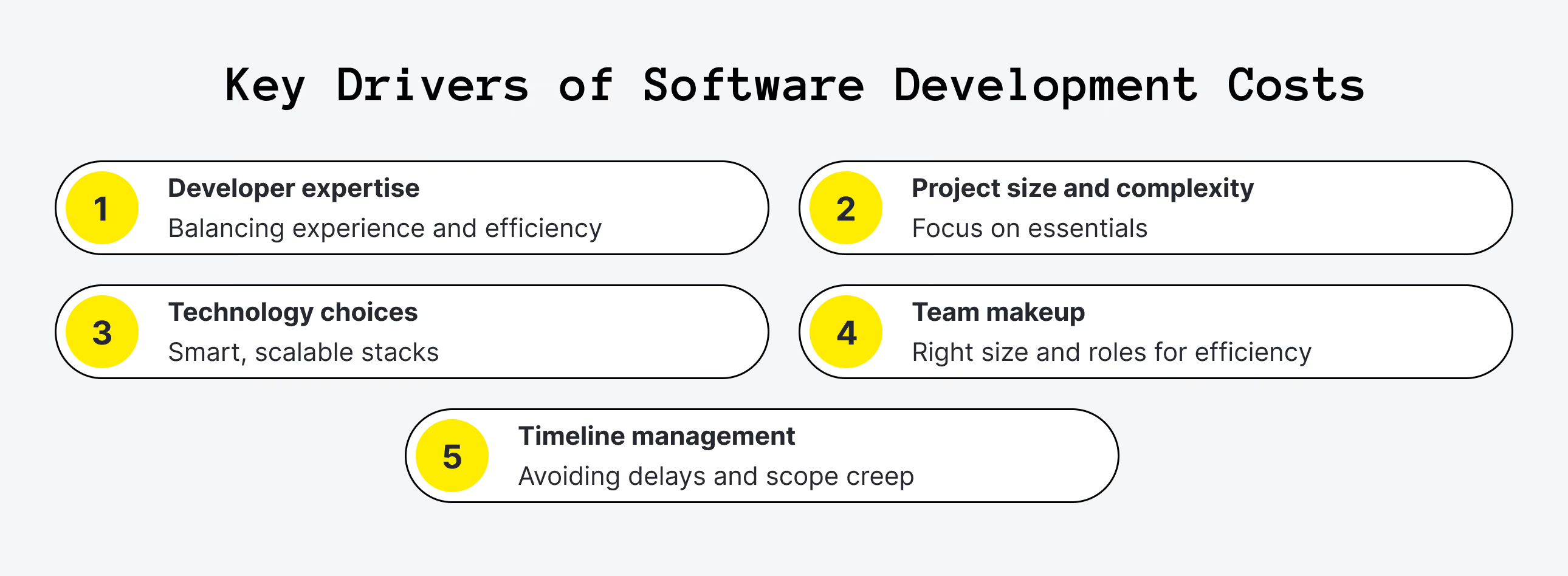
Before making any cuts, it’s crucial to understand what drives the overall expenses of a software development project. Typically, these startup costs stem from several key factors—and by identifying them, you can tackle each one with a focused software cost reduction strategy.
Experience Level of Developers
The expertise of the development team correlates with project costs. Even though seniors are commanding higher salaries, they often bring invaluable experience, solve complex problems much faster, and write cleaner and more maintainable code. With them, you will get fewer bugs, reduced rework, and faster development cycles in the long run.
Conversely, relying on junior developers only seems like a cost-saving measure at a cursory glance. But it can lead to longer development times, increased technical debt, and higher costs of fixing errors and refactoring code.
According to a study by CISQ, the cost of poor software quality in the US was estimated to be $2.41 trillion, meaning skilled developers are instrumental in mitigating these costs.
Scope and Complexity of the Software Project
The sheer size and intricacy of the software being developed are primary drivers of cost. More features, intricate functionalities, and complex integrations require more development effort, QA testing, and resources. Often, startups pursuing an idea with good potential are tempted to build a big product from the outset. However, a bloated initial scope can drain resources faster than you think.
Prioritizing core features and iterating based on user feedback (as we cover later with the MVP approach) is what makes a strong cost reduction strategy. Our in-house analysis of numerous software projects reveals a strong positive correlation between project scope creep and budget overruns.
Team Size and Composition
The number of people and roles in a software project (developers, designers, testers, project managers) influences labor costs, the largest part of the budget. An unnecessarily large team will lead to communication overhead and inefficiencies.
If you optimize team composition from the start (clearly define roles, go for cross-functional teams where possible, and use freelancers or part-time resources), you will reduce software development costs.
Startups should assess the expertise for each stage of the project and avoid overstaffing.


Choice of the Technology Stack
Another factor that boosts or shrinks your budget is the selection of programming languages, frameworks, databases, and other tech. Some tech requires specialized (and more expensive) developers. Licensing fees for proprietary software also add substantial costs.
Sometimes, picking a well-suited but not too complex tech stack, considering open-source alternatives, and taking advantage of the skillsets you already have on your team are effective steps for cost optimization in software development.
For example, you can use a mature and widely adopted framework, which has a larger pool of developers and available resources. Thus, you will lower hiring costs and speed up development.
Project Timeline
Finally, the duration of a software development project has an impact on its cost, too. Longer timelines translate to higher labor costs and increased overhead. Bad processes, scope changes, and delays extend the project duration and inflate the budget.
As a startup, you need to dive into the world of efficient project management methodologies, such as Agile, and maintain a realistic timeline for cost reduction in software development. As the Project Management Institute says, poor project management can waste an average of 11.4% of investment due to scope creep.
So, we've already shared a bunch of tips; it's time to dive into the core of each.
Have a great business idea but a limited budget?
Contact our team—we'll help you choose the right solution: a prototype, a PoC, or an MVP.

10 Strategies to Reduce Software Development Costs for Startups
These are the ten cost reduction strategies for startups you can employ to build high-quality software in your limited budgets. Using them, you will be able to redirect your money into something more meaningful for your launch stage. What's best, you won't sacrifice quality.

Explore Software Development Outsourcing
Software development outsourcing gives access to a wider talent pool and lower labor costs compared to hiring a full-time in-house team. Engaging with offshore or nearshore development teams offers many cost advantages. However, you need to vet potential partners, ensure clear communication channels, and establish quality control processes to mitigate risks.
Many startups leverage outsourcing for specific tasks or even entire projects. According to a Deloitte study, 57% of companies are exploring more outsourcing opportunities to save costs of AI development.
Conduct Comprehensive Discovery Phase
Investing in a discovery phase before commencing development is a straightforward way to reduce downstream costs. In this phase, you or your dedicated team perform:
- in-depth requirement gathering;
- user research;
- prototyping;
- market analysis;
- creation of detailed specifications;
When you have a clear MVP scope, you can minimize ambiguity, reduce the likelihood of scope creep, and ensure that the development team builds the right product from the outset.
On the other hand, if you skip or rush this phase, you will likely face costly rework and delays later in the project. For every dollar spent on upfront planning, up to $10 can be saved in later startup development stages due to reduced errors and rework.


Use Open-Source Solutions
There are many open-source solutions for various components of the software stack: operating systems (Linux), databases (PostgreSQL, MySQL), programming languages (Python, JavaScript), and frameworks (React, Angular, Django). These handy tools can reduce licensing fees and upfront costs of proprietary software. Open-source tech often has large and active communities with ample documentation and support.
What you benefit from most is the maturity and stability of these solutions without incurring financial burdens. No surprise, the adoption of open-source software saves companies trillions of dollars annually. (Harvard Business School).
Leverage Cloud-Based Infrastructure
Cloud-based infrastructure is offered by giants like AWS, Google Cloud Platform, Microsoft Azure, and some smaller vendors like CockroachDB. It eliminates the need for big upfront investments in physical servers and IT infrastructure. Such cloud services give you startup scalability, flexibility, and pay-as-you-go pricing models. With these, you can adjust your resources based on their actual needs.
However, you need to be very cautious about the appealing pay-as-you-go models. If you decide to go for the cloud infrastructure, it will become a subject for analysis during your discovery phase, too. You will need to decide on your cloud provider (s) (multi-vendor approach is getting more and more popular), services, and more.
Cloud is a relatively new tech, which is yet to be understood by the mass business customer. Recent statistics say that 70% of all cloud costs are still wasted. And managing cloud spend is still a challenge for 84% of organizations.
On the bright side, cloud tech helps reduce capital expenditure and operational overhead related to hardware maintenance, power, and cooling, when applied right. Companies can save up to 40% on infrastructure costs by migrating to the cloud.
Use Modular Design and Reuse Existing Components
A modular design means the software is broken down into independent and reusable components. Such an approach can accelerate development and reduce costs big times. Once a module is developed and tested, you can reuse it in different parts of the app or in future projects.
What you get rid of are redundant development efforts and code maintainability issues. Creating a library of reusable components is a valuable cost reduction strategy in the long run. Many large software vendors, like Microsoft and Google, rely on internal component libraries to speed up development for their vast product portfolios.
Apply an MVP-First Approach and Feature Prioritization
Adopting a minimum viable product development approach means you build and release a basic version of the software with only the core functionalities to early adopters. This way, you gather valuable user feedback and validate your assumptions before making investments in a full-fledged product.
Feature prioritization and delivering the most critical features first help reduce development costs for startups because you avoid the development of features that might not be needed or used at all. Eric Ries' The Lean Startup methodology advocates for this iterative approach to minimize waste and maximize learning.

Automate Everything That Can Be Automated
Automation reduces manual effort, improves efficiency, and lowers costs in software development and many other processes. Some of the initiatives you can automate are:
- build processes (CI/CD);
- testing (unit, integration, end-to-end);
- deployment;
- infrastructure provisioning.
Automation tools reduce the time and resources you need for these repetitive tasks and free up developers to focus on core development activities. Plus, you minimize the risk of human errors, which lead to costly debugging.
The adoption of CI/CD pipelines, for example, can reduce the time to release by more than 90%.
Adopt Agile Project Management
We've already mentioned that agile project management methodologies, such as Scrum and Kanban, emphasize iterative development, collaboration, and continuous feedback. And it's worth mentioning again. MVP agile development gives you greater flexibility in responding to changing requirements and market conditions, so you can reduce the risk of building the wrong product.
Frequent communication and short development cycles (sprints) enable early detection of issues and prevent costly rework. Agile projects have a higher success rate and are more likely to be delivered on time and on budget compared to traditional waterfall methodologies.
Invest in Quality Assurance and Automated Testing
Investing in quality assurance throughout the development lifecycle is your next winning software cost reduction strategy. It must include testing at various stages to prevent costly bugs and defects in the final product. Implementing automated testing frameworks is even better. With them, you will enhance efficiency by automating repetitive test cases, getting faster feedback, and improving code quality.
Early detection and resolution of bugs is much (and we mean it) cheaper than fixing them after deployment. Fixing a bug post-production can be 15 times more expensive than fixing it during the earlier development phase. (IBM)
Implement DevOps Practices
Last but not least, DevOps is your final ally among startup cost reduction strategies. It's a set of practices that aims to integrate and automate the processes between software development (Dev) and IT operations (Ops). It helps foster collaboration, automate deployments, and monitor the software in production. DevOps practices lead to:
- faster release cycles;
- improved system stability;
- reduced operational costs.
When you implement DevOps, you streamline your whole software delivery pipeline and get significant cost optimization in software development. Other companies that have adopted DevOps report improvements in deployment frequency, lead time for changes, and mean time to recovery (MTTR), all of which contribute to cost savings.
And once you choose the startup growth strategies that best fit your current setup, don't forget to turn to the tools that'll help you on the way to implementing them.
Best Cost Reduction Software Tools and Technologies
The right tools help you control costs and make the most of your resources. Here’s a list of the best tools for managing project budgets in startups to help you reduce software development costs at every product development stage.
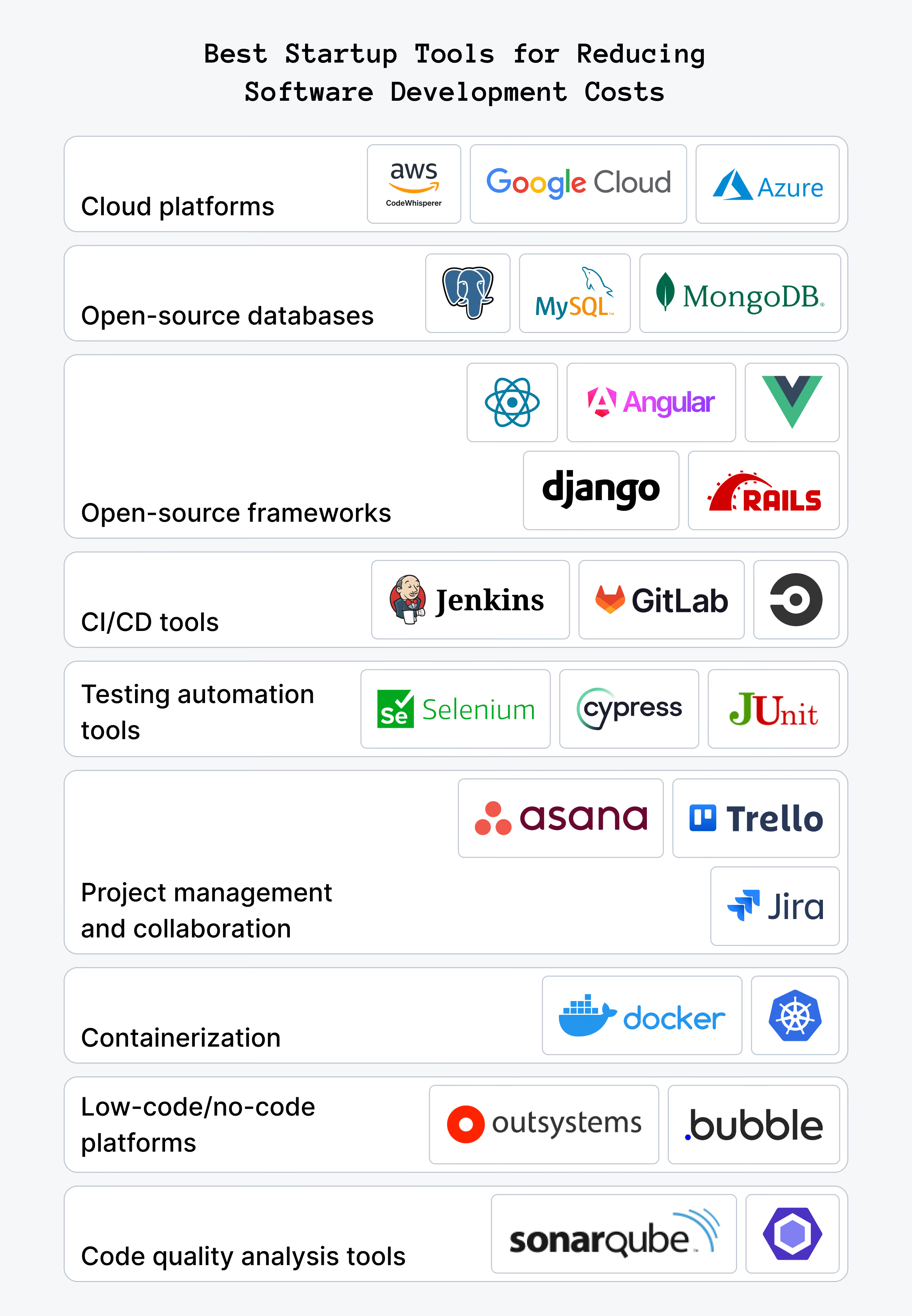
- Cloud platforms (AWS, GCP, Azure): Give you scalable and cost-effective infrastructure.
- Open-source databases (PostgreSQL, MySQL, MongoDB): Cut licensing fees.
- Open-source frameworks (React, Angular, Vue.js, Django, Ruby on Rails): Give you robust foundations at no cost.
- CI/CD tools (Jenkins, GitLab CI, CircleCI): Automate build, test, and deployment processes.
- Testing automation tools (Selenium, Cypress, JUnit): Automate testing.
- Project management and collaboration tools (Asana, Trello, Jira): Improve team communication and task completion cycle.
- Containerization technologies (Docker, Kubernetes): Enhance deployment speed and resource usage.
- Low-code/no-code platforms (OutSystems, Bubble): Let you develop certain types of apps faster with less coding. (Note: For specific use cases, their suitability depends on project complexity and customization needs.)
- Code quality analysis tools (SonarQube, ESLint): Help identify and fix code issues early.
The same principle applies to industry-specific projects. The choice of cost reduction software should align with the project requirements, team expertise, and budget constraints.
If you're stuck exploring the pool of startup tools and strategies, another cost optimization strategy will help. You can always opt for a dedicated team that has developed a range of similar solutions and speaks frameworks natively.
Going for a dedicated development team will save you hours of research on cost reduction ideas, learning, and solo implementation.
Still not sure how to save on SaaS development?
Our experts will thoroughly analyze your product and help you unlock cost-saving opportunities.
How Upsilon Can Help You Reduce Software Development Costs
As you’ve seen, keeping software development costs under control can be the difference between a startup’s success and failure. By using the right strategies, you can save money without sacrificing quality. Remember, managing costs isn’t about cutting corners—it’s about making smart choices that set your startup up for long-term growth.
At Upsilon, we’re always ready to help startups minimize development expenses while maintaining high standards. Our team can support you with:
- Strategic outsourcing: Get skilled developers for your project at fair prices, so you never pay more than you should.
- Discovery phase: We help you clearly define your project’s goals and requirements early, saving you time and money later.
- Technology consulting: Our team will help you choose the best and most affordable technology for your startup.
- MVP development: We build and launch your product quickly, making it easy to test your idea and get feedback from early users.
- Automation: We set up tools to automate testing and updates, helping your team work faster and make fewer startup mistakes.
- Agile project management: We follow proven methods that keep your project moving quickly and focused on your main goals.
- Quality assurance: We check your software carefully to make sure it’s strong, reliable, and ready to grow.
When you team up with Upsilon, you get a partner who truly understands the unique needs of startups. We make your development process smooth and budget-friendly—from validating your idea with an MVP to launching and scaling your product.
Have a project in mind and want to make sure you’re making the most of every dollar? Contact our team to see how we can help you build smarter, grow quickly, and bring your startup vision to life.
FAQ
1. How do startups reduce project costs while maintaining quality?

Startups can maintain quality and reduce costs at the same time by:
- Focusing on a well-defined MVP;
- Leveraging open-source technologies;
- Automating testing;
- Adopting agile methodologies for better adaptability and early issue detection;
- Strategically considering outsourcing to access cost-effective talent.
A thorough discovery phase is also crucial to prevent costly rework later in the development cycle.
2. How can startups manage project budgets effectively?
Effective budget management means detailed planning and estimation, regular monitoring of expenses against the budget, use of project management tools to track progress and costs, prioritization of features to avoid scope creep, and maintaining transparent communication in the team and with stakeholders about budget status.
Contingency planning for unexpected issues is also essential.
3. What are common financial mistakes in startup project management?
Common financial mistakes include:
- Underestimating the project scope and complexity;
- Neglecting the discovery phase;
- Inadequate planning and budgeting;
- Scope creep due to poorly defined requirements;
- Delays caused by inefficient processes;
- Lack of communication;
- Insufficient investment in testing.
All these lead to costly fixes post-launch. Overspending on non-essential features or premature scaling also drains resources.
4. Which tools help startups with project cost optimization?
Many tools aid in software development cost optimization: cloud platforms for scalable infrastructure (AWS, GCP, Azure), open-source databases and frameworks, CI/CD tools for automation (Jenkins, GitLab CI), project management software for tracking progress and resources (Asana, Trello, Jira), and communication platforms for efficient team collaboration (Slack, Microsoft Teams).
What tool is right for you depends on the needs and technical expertise of your venture.



to top