Hiring LLM Developers for Your AI Project: 2026 Guide


In 2026, the demand to hire LLM developers has never been stronger as organizations across industries race to integrate AI capabilities into their products and services. Large language models (LLMs) are at the heart of innovations ranging from automated customer support and content creation to data analysis and personalized learning systems. However, successfully building and scaling these solutions requires not just access to cutting-edge tools, but also the right talent to architect, fine-tune, and maintain them.
As LLMs become embedded in core business processes, the bar for talent keeps rising. It’s no longer enough to have solid coding skills. Teams need specialists who understand how LLMs behave in real-world environments, where data is fragmented, usage is high, and accuracy, security, and compliance are non-negotiable. That’s why it’s critical to know how to hire LLM developers who can design, scale, and support LLM-powered solutions — all with a strong business perspective at the core.
For many companies, bringing on dedicated LLM developers has become a strategic priority, not just a feel-good enhancement. According to a recent report, demand for AI skills has grown by about 21% annually since 2019, yet the supply of qualified professionals is failing to keep pace, creating a widening talent gap that’s slowing AI adoption. Nearly 44% of executives say a lack of in-house AI expertise is a major barrier, and in the U.S. alone AI job demand could reach 1.3 million by 2027 while fewer than 645 000 skilled professionals are projected to be available, meaning many roles may remain unfilled without new hiring strategies.
For founders, CTOs, and hiring managers, this means the old playbook won’t work. Generic job descriptions and standard interviews won’t attract or properly evaluate top-tier AI talent. In this guide, you’ll learn which skills truly matter, where to find qualified developers, how to structure your hiring process step by step, and what budget to realistically plan for in 2026.
Key Takeaways:
- Modern AI projects demand domain-specific expertise. General AI engineers often lack the skills for advanced LLM workflows, prompt engineering, vector search, and secure, compliant deployment. Dedicated LLM developers fill this critical gap.
- Hiring models matter. Startups can choose between freelancers, in-house teams, or AI development partners. Dedicated partners, like Upsilon, provide ready-made teams with technical depth, project management, and scalability while reducing hiring risks and time-to-market.
- Key skills to evaluate include hands-on LLM experience, RAG expertise, fine-tuning knowledge, cloud deployment, and AI safety awareness. Assessing these ensures candidates can handle production-level AI tasks, not just prototypes.
- Budgeting and hiring strategies are essential. Costs vary by experience, region, and hiring model. Using step-by-step processes, including trial projects, technical assessments, and clear scope definitions, helps startups find LLM developers for hire efficiently and confidently.
What Is an LLM Developer
An LLM developer is a specialized AI engineer who turns advanced foundation models into scalable, production-ready solutions that drive measurable business impact. Their role extends far beyond basic API integration. They design robust system architectures, adapt and fine-tune models for specific domains, integrate AI into existing enterprise environments, and continuously refine performance. Above all, they ensure that AI applications are reliable, secure, cost-efficient, and aligned with long-term strategic goals.
Key Responsibilities:
- Model adaptation and enhancement (customizing and refining foundation models using domain data, prompt engineering, fine-tuning, and retrieval-based methods);
- AI workflow and agent development (creating structured pipelines, autonomous agents, orchestration logic, and tool integrations);
- RAG implementation (building retrieval-augmented systems powered by vector databases such as Pinecone, Weaviate, Milvus, or FAISS);
- Enterprise system integration (embedding LLM capabilities into CRM, ERP, analytics platforms, and internal knowledge repositories);
- Performance and cost optimization (improving inference speed, managing cloud infrastructure, and reducing token and compute expenses);
- Security and regulatory alignment (implementing generative AI cybersecurity measures and ensuring compliance with standards like GDPR and HIPAA).
Why Your AI Project Needs an LLM Developer
The era of generic AI solutions is over. As companies invest in industry specific LLM applications across healthcare, including systems connected to primary care EHR platforms, fintech, legal tech, ecommerce, and enterprise automation, the technical demands have increased significantly. Modern AI systems require domain aware fine tuning, secure data integration, advanced RAG pipelines, and continuous performance optimization. This level of specialization goes far beyond what general AI developers are typically prepared to deliver.
A general AI engineer may understand machine learning fundamentals, but production grade LLM systems require deeper expertise in prompt engineering, vector search architecture, multi model coordination, and cost efficient inference management. Industry specific solutions must also integrate with proprietary datasets, meet strict compliance requirements, and operate reliably at scale. Without this focused experience, AI projects often struggle with hallucinations, unstable outputs, security risks such as a malicious payload in cyber security terms slipping through an unvalidated input field, and uncontrolled infrastructure costs.
That is why many organizations choose to hire dedicated LLM developers who specialize exclusively in language model customization and deployment. These professionals ensure that your AI initiative is aligned with business objectives, technically robust, and capable of delivering sustainable competitive advantage in an increasingly AI driven market.


AI Projects That Require LLM Developers
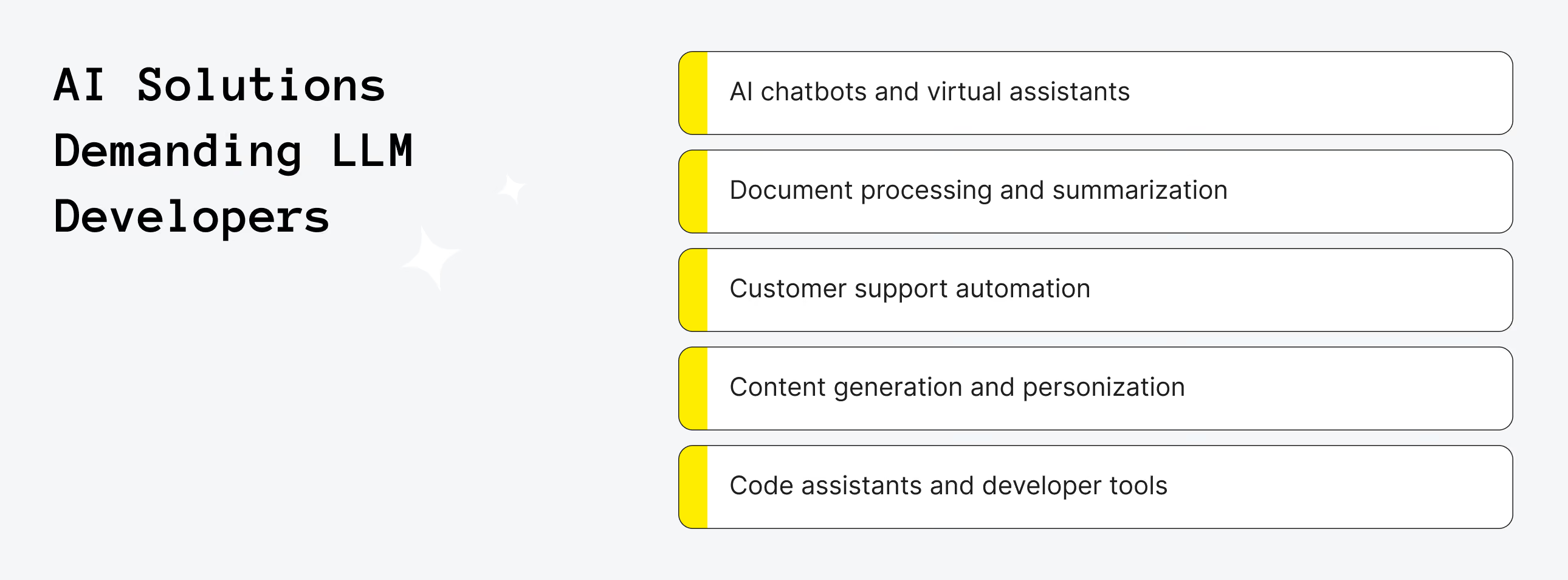
As AI systems become more sophisticated, companies increasingly need to hire expert LLM developers to move from experimentation to scalable production solutions. Many high impact AI initiatives rely on deep language model expertise, structured data retrieval, workflow orchestration, and performance optimization. Below are the core project types where specialized LLM knowledge is essential.
AI Chatbots and Virtual Assistants
Modern AI chatbots and virtual assistants require far more than scripted responses. LLM developers design context aware conversational systems that handle multi turn dialogue, maintain memory, integrate with internal knowledge bases through RAG, and connect to external tools and APIs. They also implement guardrails and monitoring mechanisms to ensure accurate, safe, and consistent interactions at scale.
Document Processing and Summarization
LLM developers build intelligent document processing systems that can classify, extract, summarize, and analyze large volumes of unstructured data. These solutions often combine semantic search, structured data extraction, and domain adapted fine tuning to improve accuracy. The result is faster information retrieval, improved decision support, and automation of time intensive text based workflows.
Customer Support Automation
Advanced customer support automation relies on LLM expertise to deliver accurate, personalized, and context aware responses. Developers create systems that integrate with knowledge bases, automate ticket triage, detect sentiment, and escalate complex cases when needed. For service-based businesses, AI workflows can integrate with practice management software to access client information, automate inquiries, and assist with scheduling. They also optimize response quality and infrastructure efficiency to ensure consistent performance under high demand.
Content Generation and Personization
Scalable content generation platforms require careful prompt design, model tuning, and workflow orchestration. LLM developers enable dynamic content creation and AI-driven personalization tailored to user data, brand voice, and business objectives. They implement testing frameworks, quality controls, and personalization logic to ensure generated outputs remain relevant, consistent, and aligned with performance goals.
Code Assistants and Developer Tools
Building AI powered coding assistants demands deep understanding of model capabilities and developer workflows. LLM developers create systems that generate, refactor, and document code while integrating seamlessly into IDEs and version control environments. These tools often rely on multi model coordination and retrieval mechanisms to provide accurate, context aware technical support.
Need advice on hiring LLM developers for a startup?
Upsilon was once a startup too, so we'll gladly share business advice based on our experience.

Essential Skills to Look for in LLM Developers
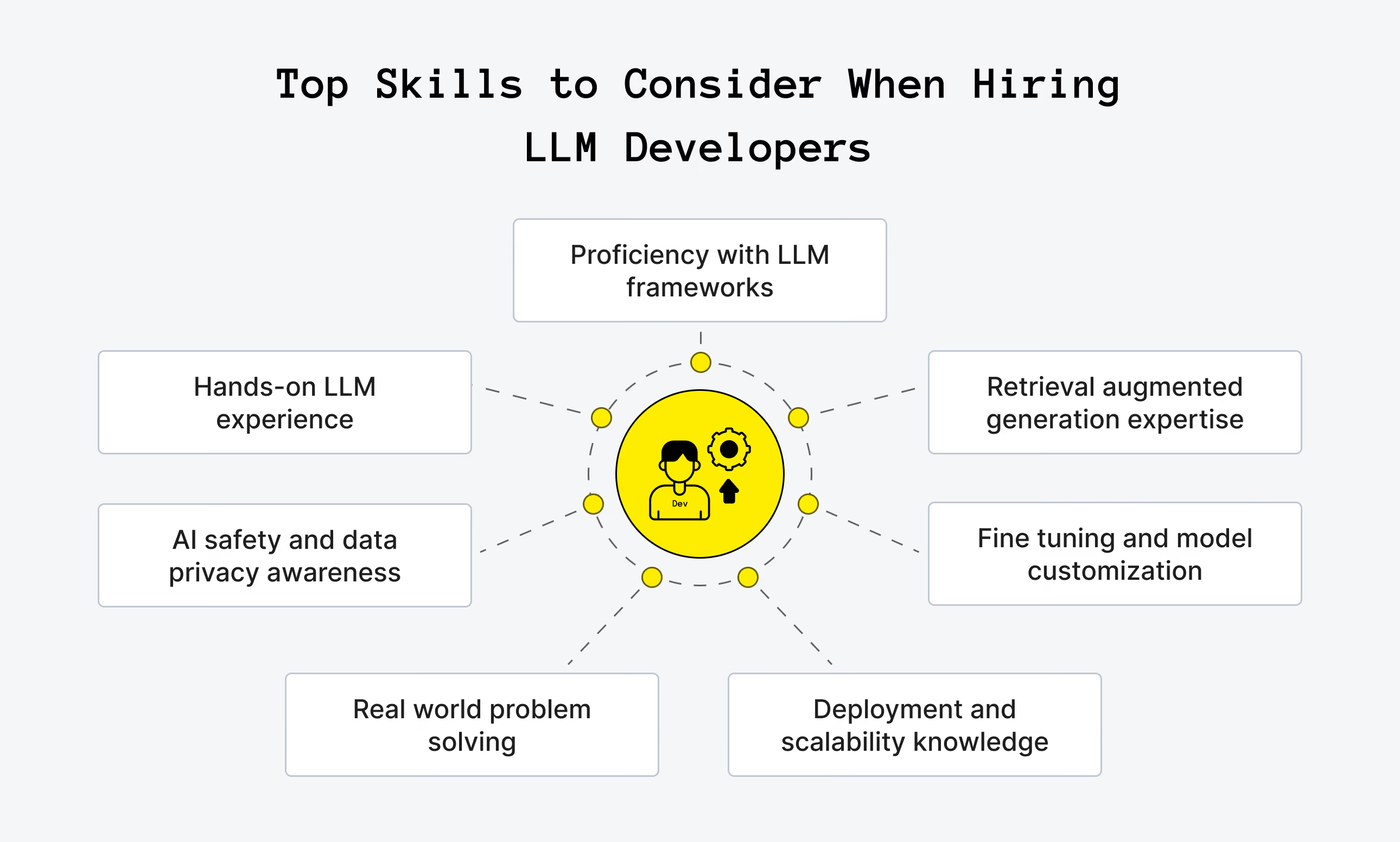
Hiring the right specialist requires a clear understanding of core LLM developer skills that separate production ready engineers from experimental AI enthusiasts. Modern language model projects demand hands-on technical depth, architectural thinking, and the ability to translate business objectives into scalable AI systems. Below are the essential competencies to evaluate when selecting an LLM developer.
1. Hands-On LLM Experience
A strong candidate should have real world experience working with leading foundation models such as GPT, Claude, Gemini, LLaMA, or Mistral. This includes understanding how models behave under different prompts, how they handle long context, where they tend to hallucinate, and how to systematically improve output quality. Practical experimentation and deployment experience matter far more than theoretical familiarity.
2. Proficiency with LLM Frameworks
Developers should be comfortable working with orchestration frameworks like LangChain, LlamaIndex, or Haystack. These tools enable structured workflows, prompt chaining, memory management, and external tool integration. Mastery of such LLM frameworks demonstrates the ability to build scalable, maintainable, and production level systems rather than isolated prototypes.
3. Retrieval Augmented Generation Expertise
RAG capabilities are critical for enterprise grade AI. An experienced developer should know how to connect models to private or proprietary data using vector databases such as Pinecone, Weaviate, or FAISS. They must understand embedding strategies, semantic search tuning, and techniques that reduce hallucinations while increasing factual accuracy.
4. Fine Tuning and Model Customization
Fine tuning expertise is a strong differentiator. Knowledge of techniques such as LoRA, PEFT, or QLoRA indicates that the developer can adapt models to specific domains without excessive training costs. This skill enables performance optimization, domain alignment, and better control over model outputs.
5. Deployment and Scalability Knowledge
LLM expertise must extend beyond experimentation into real world deployment. Developers should understand how to deploy models on cloud platforms like AWS, Azure, or GCP, manage inference costs, monitor product performance metrics, and scale securely under production workloads. Infrastructure awareness is essential for long term success.
6. Real World Problem Solving
Strong LLM developers can translate business requirements into working AI solutions. When presented with practical scenarios such as building an AI assistant or automating internal workflows, they should be able to propose structured architectures, data strategies, and risk mitigation approaches. This ability reflects true product thinking rather than isolated coding skill.
7. AI Safety and Data Privacy Awareness
Responsible AI development is no longer optional. A qualified developer must understand data protection practices, access controls, and regulatory considerations. Knowledge of ethical AI principles and compliance standards ensures that AI systems remain secure, transparent, and aligned with organizational and legal requirements.
To make candidate evaluation more structured and objective, here is a practical table that highlights key technologies and competencies in AI safety and data privacy. You can use it as a quick reference checklist when assessing developers for responsible AI and compliance-focused roles.


Where to Find Qualified LLM Developers
Finding experienced LLM specialists requires a focused approach, as this talent pool is both competitive and highly specialized. Let’s take a closer look at the primary channels where companies successfully source qualified LLM developers.
Freelance Marketplaces
Freelance platforms can be a practical starting point for short term projects or rapid prototyping. Well known marketplaces such as Upwork vs Freelancer, Fiverr, Toptal, and Guru offer access to independent AI engineers with varying levels of expertise. While quality differs significantly, these platforms allow you to review portfolios, client feedback, and past AI related work before committing.
Specialized Developer Platforms
Some of the most capable LLM developers for hire are active within technical communities rather than traditional job boards. Platforms like Hugging Face, GitHub, and Stack Overflow Jobs provide insight into real contributions, open source projects, model experimentation, and community engagement. Reviewing repositories, pull requests, and technical discussions can help identify developers with genuine hands-on LLM experience.
LinkedIn remains one of the most effective channels for sourcing mid to senior level AI talent. It allows you to filter candidates by skills, experience with specific models or frameworks, and current roles. Direct outreach combined with strong employer branding can significantly improve response rates when targeting experienced LLM engineers.
Tech Meetups and Conferences
Industry events, AI meetups, and technology conferences are valuable for connecting with highly engaged professionals. Developers attending these events are often deeply involved in research, experimentation, or production level AI systems. Networking in these environments can help you build long term relationships with specialists who may not be actively browsing job boards but are open to compelling opportunities. Using recruiting business cards to quickly exchange contact information and follow up after conversations can also improve your chances of maintaining those valuable connections.
Digital Product Studios and Agencies
Partnering with a digital product studio means gaining immediate access to a fully assembled, cross-functional team instead of hiring and managing individuals separately. This option is particularly effective when you don’t have strong internal technical leadership or when rapid execution is a priority over gradually building in-house expertise.
In these situations, an experienced product team can help align technical execution with business priorities from day one. Upsilon works as a product-focused partner rather than a traditional external vendor, integrating closely with your processes and goals. By combining AI engineering expertise with product strategy, the team supports concept validation, system architecture design, and efficient production rollout, while staying aligned with long-term business priorities.
How to Hire LLM Developers Step-by-Step
To successfully hire LLM developers, you need more than luck and a generic job posting. As companies race to turn experiments into full-scale AI systems, top talent is in high demand and short supply. A clear, step-by-step hiring plan helps you cut through the noise, evaluate true expertise, and bring on dedicated developers who can turn complex models into real, measurable business results.
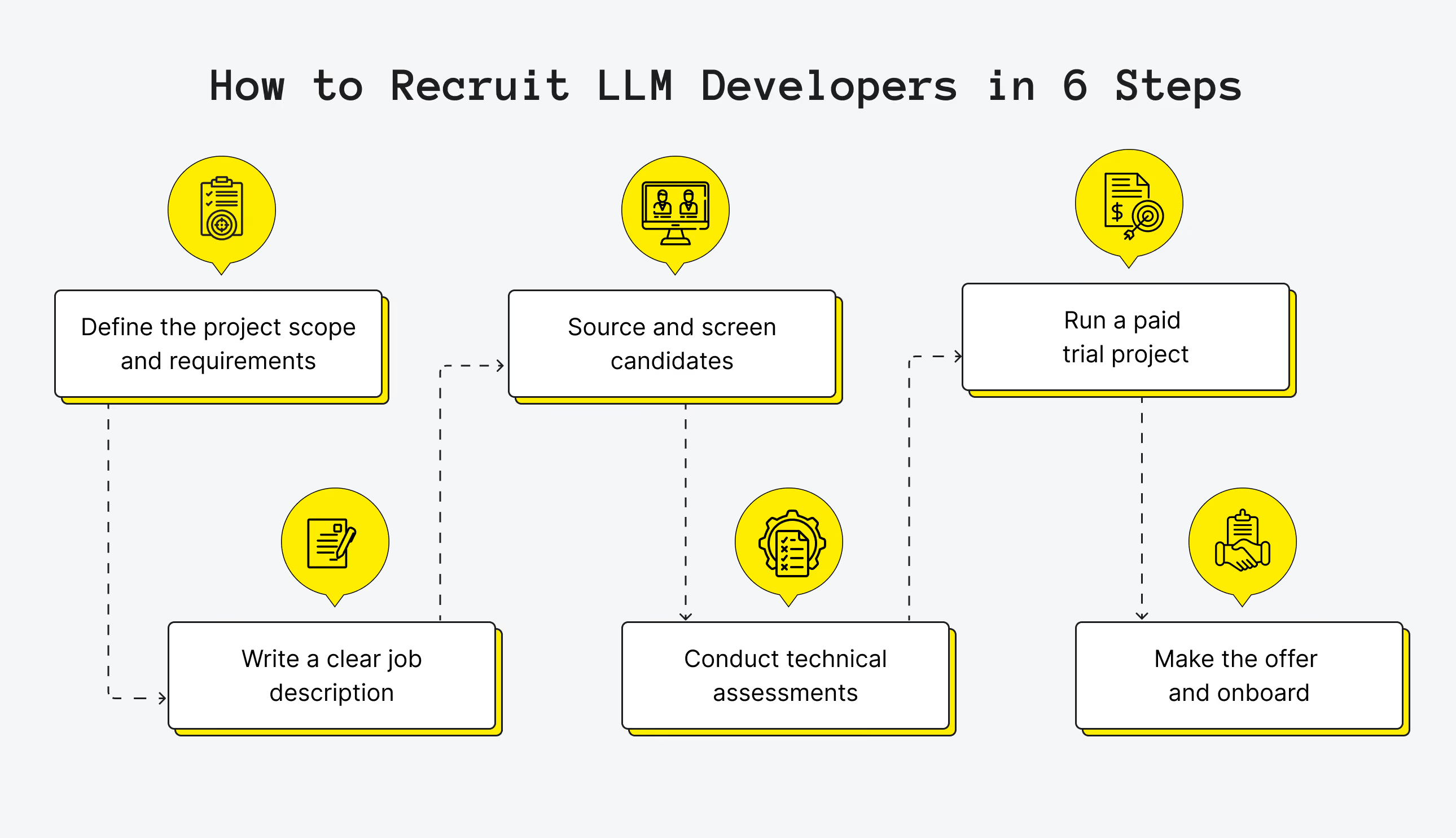
Step 1. Define the Project Scope and Requirements
For starters, you should clearly outline what you want to build. Identify whether your project involves chatbots, document processing, AI agents, internal automation, or multi model orchestration.
At this stage, it is highly recommended to formalize your expectations in a software requirements specification document. A well-structured software requirements specification helps define functional and non-functional requirements, system constraints, user roles, integration points, and performance criteria. It also ensures alignment between stakeholders and the development team.
The next step is to define technical expectations such as RAG implementation, fine tuning, cloud deployment, compliance requirements, and scalability targets. It is also important to consider how infrastructure costs will be managed as your AI workloads grow. AWS cost optimization platforms can help monitor and control cloud spending as the project scales. The clearer your scope, the easier it becomes to evaluate suitable candidates.
Step 2. Write a Clear Job Description
A strong job description is the foundation of successful hiring. Before posting a role, clearly define why you need the position, what the candidate will accomplish, and the key skills and experience required. A focused description helps attract qualified LLM developers and filters out applicants who aren’t a good fit.
Include both essential qualifications and desirable “nice-to-have” skills so candidates know exactly what you’re looking for. Here’s what to highlight:
- Experience with foundation models (GPT, Claude, LLaMA, etc.);
- Proficiency with LLM frameworks (LangChain, LlamaIndex, Haystack);
- RAG implementation and vector database knowledge (Pinecone, Weaviate, Milvus, FAISS);
- Fine-tuning expertise (LoRA, PEFT, QLoRA);
- Cloud deployment and scalability (AWS, Azure, GCP);
- Soft skills (problem solving, collaboration, communication);
- Compliance and security awareness (GDPR, HIPAA, data protection).
Step 3. Source and Screen Candidates
Once you start receiving applications, the next step is sourcing and screening to identify the most qualified candidates. Look through new resumes, reach out to professionals on LinkedIn or other networks, review past applicants in your database, and consider employee referrals. Using clear selection criteria ensures you focus only on candidates who truly match your project needs.
During screening, audit each candidate’s experience, review relevant projects, and shortlist those who demonstrate hands-on LLM expertise. Leveraging recruitment tools or dashboards can help organize applications, track communication, and streamline the process, saving time while maintaining a structured candidate pipeline. This ensures that only the best LLM developers move forward to the next stage.
Step 4. Conduct Technical Assessments
Once candidates are shortlisted, it’s time to evaluate their practical skills through focused technical assessments. Prepare a set of role-specific questions and review their CV beforehand to make the conversation relevant and efficient. Combining HR and technical discussions in a single session can save time while giving a complete picture of the candidate’s experience and fit.
In addition to interviews, include practical exercises that help you verify whether candidates can handle real‑world LLM tasks. Here are examples of concise, realistic exercises you can run in 15–30 minutes of discussion:
- Prompt + RAG debugging exercise. Give the candidate a small repo or notebook with a basic RAG pipeline (documents + embeddings + retrieval) that returns mediocre answers. Ask them to identify likely issues (e.g., chunking, retrieval, prompt structure) and propose changes, explaining how they would measure improvement.
- Mini “design an LLM feature” scenario. Present a short product brief (for example, “We need an internal knowledge assistant for the sales team”). Ask the candidate which model(s) and frameworks they would use, outline a high‑level architecture (data flow, RAG vs pure API, logging), and highlight risks plus how they would mitigate hallucinations and data‑leak issues.
- Prompt engineering and evaluation task. Share 5-10 example inputs and “good” target responses for a simple use case, such as goal‑oriented summarization. Ask the candidate to draft or improve a system and user prompt, then explain how they would test, evaluate, and iterate to improve consistency.
Well‑designed assessments like these make it easier to hire startup developers who can move beyond theory and reliably deliver LLM features in production environments.
Step 5. Run a Paid Trial Project
A paid trial project is one of the most effective ways to assess an LLM developer’s real-world capabilities before committing long-term. It’s best to assign a small but meaningful task that reflects your actual project requirements. This allows you to evaluate coding quality, problem-solving approach, adherence to best practices, and ability to work with your specific AI tech stack.
Here are three concrete trial‑project examples you can use:
- Build a domain‑aware support chatbot that answers questions using a small subset of your help center or documentation.
- Implement a simple RAG pipeline over 50–100 internal documents (e.g., Notion pages, PDFs) and expose it via an API or a minimal UI.
- Create an AI assistant that summarizes and tags customer support tickets, then generates short follow‑up suggestions for your team.
The trial period also provides insight into collaboration, communication, and responsiveness. Regular check-ins and feedback sessions help identify strengths and areas for improvement, ensuring alignment on expectations. By the end of the trial, you’ll have a clear understanding of whether the candidate can deliver production-ready results, making the eventual hiring decision much more informed and low-risk.
Step 6. Make the Offer and Onboard
After completing interviews and any trial projects, promptly communicate your decision to the candidate. If extending an offer, be clear about the role, responsibilities, compensation, and expectations. Providing constructive feedback, even to those who are not selected, helps maintain a positive impression of your company and strengthens your employer brand.
Once the offer is accepted, a structured onboarding process ensures the new LLM developer integrates smoothly into your team. Share documentation, access to tools, datasets, and project context, and schedule regular check-ins to address questions early. A thoughtful onboarding experience accelerates productivity, builds confidence, and sets the foundation for long-term success.

Freelance vs In-House vs AI Development Partner
When companies decide to build AI-powered products, one of the first strategic questions is: who should actually build it? The choice between hiring freelancers, building an in-house team, or partnering with an AI development company directly affects cost, speed, scalability, and long-term product success. Each model has its own strengths and trade-offs, and the right option depends on your goals, timeline, technical complexity, and available resources.
Freelancers
Freelance LLM developers are often the most flexible and cost-effective option, especially for short-term tasks, prototypes, or clearly defined technical scopes. Startups looking to hire LLM developers quickly can leverage freelancers who bring specialized expertise in machine learning model development, data engineering, or LLM integration.
However, freelancers typically work independently, which can create challenges in coordination, long-term ownership, and knowledge continuity. For complex AI systems that require cross-functional collaboration, ongoing iteration, and scaling, relying solely on freelancers may introduce startup risks in stability and maintainability.
In-House Teams
Building an in‑house AI team provides the highest level of control, alignment, and long‑term strategic integration. Internal teams deeply understand the company’s product vision, business logic, and data infrastructure, and they naturally fit into your broader tech company structure. This model works well for organizations planning to make AI a core capability rather than a one‑time project.
On the flip side, hiring experienced LLM engineers, data scientists, and MLOps specialists is expensive and time-consuming. Recruitment, onboarding, and retention can significantly extend time-to-market, especially in competitive talent markets.
AI Development Partner
An AI development partner offers a middle ground between flexibility and structured execution. These companies provide a ready-made team that includes not only AI engineers, but also project managers, solution architects, and QA specialists. This approach accelerates development while maintaining professional processes, scalability, and technical accountability.
Unlike freelancers, partners can handle end-to-end delivery, from the discovery phase and model training to deployment and optimization. Compared to building in-house, they reduce hiring risks and upfront investment. For businesses looking to launch AI solutions efficiently without building a full internal department, this model often provides the best balance of speed, expertise, and reliability.
How Much It Costs to Hire an LLM Developer
What is the cost of hiring LLM developers? It’s one of the first and most important questions founders ask before starting an AI product. The answer isn’t universal. Pricing varies significantly depending on the engineer’s expertise, geographic location, and the hiring model you choose.
We’ve reviewed research from Index and turned the data into clear, easy-to-read tables. The numbers are structured the way founders actually make decisions: cost by experience level, cost by region, and a side-by-side comparison of freelance, in-house, and development partner options, so you can estimate a realistic budget and pick the hiring model that fits your startup development stage and product ambitions.
All figures reflect market conditions as of the end of last year.
Cost by Experience Level
Use this to sanity‑check offers and avoid overpaying juniors or underpaying seniors. Ranges are global ballparks for LLM‑focused roles.
Cost by Region
Location still has a big impact on rates, especially for freelancers and remote talent. These are blended LLM‑oriented ranges, not entry‑level dev numbers.
Freelance vs In‑House vs AI Development Partner Costs
For most founders, the real question isn’t just “how much does an LLM developer cost?” but “what’s the smartest way to pay for this skill set given our runway and roadmap?” Below is a simplified view of how freelance, in‑house, and AI development partners usually compare.
The takeaway?
For early‑stage teams, it usually makes more sense to validate AI ideas with a specialized development partner or a small blended team instead of hiring a full in‑house LLM squad from day one. Once your AI roadmap is proven and you see stable product demand, investing in permanent LLM hires becomes far easier to justify.
Looking for dedicated LLM developers?
Upsilon's team of experienced developers can help your startup quickly grow and scale.
Why Startups Partner With LLM Development Teams
Building cutting-edge AI solutions, especially those powered by LLMs, requires not only technical expertise but also a deep understanding of product strategy, scalability, and user experience. For many startups, the most effective way to hire LLM developers with this level of expertise is by partnering with dedicated teams, as assembling a full in-house team can be challenging, costly, and time-consuming.
This is where partnering with a dedicated LLM development team becomes invaluable. By collaborating with a specialized partner, startups can focus on vision, strategy, and growth while leaving the complex development work to experts who know how to turn ideas into market-ready products.
Upsilon exemplifies this approach as a trusted dedicated development partner. With over a decade of experience, our team has helped more than 30 products reach market success, some evolving from MVPs into remarkable nine-figure businesses. We bring hands-on experience not only in software development but also in understanding the business aspects that make AI products thrive.
Startups benefit from Upsilon’s flexible, top-tier teams, tailored to the specific needs of each project. Whether it’s a three-month MVP development, a long-term product enhancement team, or team augmentation services, our team of experts provides talent skilled in Python and JavaScript, organized in two-week sprints for maximum efficiency. Our transparent pricing model and risk-free two-week trial ensure that startups can partner with confidence, knowing they’re supported by a dedicated team focused on delivering tangible results. Feel free to reach out to us – we’re here to help.
FAQs
1. What is the difference between an LLM developer and a machine learning engineer?

An LLM developer specializes in working with large language models, focusing on fine-tuning, prompt engineering, and integrating LLMs into applications. A machine learning engineer has broader expertise in building and deploying various ML models, including but not limited to LLMs, and often works on data pipelines and infrastructure. Essentially, LLM developers are a specialized subset of ML engineers.
2. What is the cost of hiring an LLM developer for a startup?
Costs vary depending on experience and location, but to hire LLM developers full-time, startups can expect a range of $60,000 to $150,000 per year for junior to senior levels. When planning your budget, understanding the typical LLM developer salary helps set realistic expectations. Startups can also consider dedicated development teams or team augmentation for flexible, cost-effective solutions without long-term commitments.
3. How long does it typically take to hire an LLM developer?
Finding and onboarding qualified LLM developers can take anywhere from 4 to 12 weeks due to the specialized skills required. Startups looking to hire LLM developers efficiently often turn to dedicated development teams or AI partners, which can provide ready-to-go expertise and significantly reduce time-to-product.
4. Why to hire dedicated LLM developers instead of freelancers?
Dedicated developers provide continuity, deep familiarity with your product, and reliable collaboration across the entire development lifecycle. Freelancers, on the other hand, may lack long-term availability and alignment with your business goals and processes. In the worst case, they may simply disappear without notice, which can seriously impact the delivery and overall success of your project.
5. What red flags should I watch for when evaluating LLM developer candidates?
Watch for candidates who cannot clearly explain how they fine-tune or integrate LLMs, or who lack practical experience with production-ready deployments. A lack of understanding of data privacy, scalability, or prompt optimization is also a warning sign.
6. Do I need an LLM developer for a simple chatbot or AI assistant?
Not always; simple chatbots can often be built using off-the-shelf tools and APIs without custom LLM development. However, if you need advanced natural language understanding, customization, or integration into complex workflows, a dedicated LLM developer becomes valuable.



to top