How to Hire a Dedicated Software Development Team in 2026


Business operations are accelerating by the year. If you’re too slow to keep up with the fast pace, chances are, you’ll lose. Assembling an in-house tech team alone can take months, not to mention the time people need for onboarding and learning to work in tune with each other. Why is this bad news? Delayed release can mean missed opportunities.
This is specifically why many owners, especially non-tech founders, seek faster and more efficient solutions. With a big project coming up, more and more companies regardless of size choose to find a trustworthy software outsourcing company instead of hiring their own staff. They do so for multiple reasons, including cutting costs. In fact, numerous in-house teams are getting replaced with outsourced employees, which is especially evident in the software development sector.
But is hiring a dedicated development team a one-size-fits-all solution? In this article, we explore how the dedicated team model works, when it is the right fit, and how to structure a team that matches your project needs. Plus, we share a step-by-step guide on how to hire a development team, estimate costs, choose the right partner, and set your collaboration up for success during the first month.
Key Takeaways
- A dedicated development team is the best fit for long-term, evolving projects, startups building MVPs, and products with changing requirements, but it's usually unnecessary for short, fixed-scope work.
- Before you hire a dedicated development team, define your project goals, evaluate multiple vendors, review case studies and client feedback, interview the actual team, and start with a trial sprint to reduce risk.
- Team composition matters more than team size. Choose specialists based on your project's stage and complexity, and adjust the lineup as your product grows.
- The total cost depends on team structure, seniority, project duration, and planning quality, not just hourly rates. Comparing all-in pricing provides a more accurate picture than comparing rates alone.
- Successful partnerships rely on clear contracts, IP ownership, transparent communication, defined milestones, and regular reviews from the very first sprint.
What Is a Dedicated Software Development Team?
You're probably wondering what sets a dedicated software development team apart from other types of IT outsourcing. This kind of partnership is aimed at a long-term project-based collaboration of a client company and a group of professionals from an outsourcing software development company.

"Dedicated" implies that the development team is hand-picked and assembled by the provider from its talent pool to work specifically on the project. Importantly, every team is assigned to one project at a time to deliver the best results within a given period.
In a way, it's like renting the workforce. During the contract, the remote developers and other hired specialists can be considered as part of the client company. This guarantees that the development team will be completely focused and won't wriggle out or get reassigned to some other tasks until the agreed work is completed.
As a rule, this is not a one-time agreement for a small task scope. We're talking about something broad-scale, for instance, complex site migration or building a custom SaaS solution.
Who typically chooses the dedicated team model? Large enterprises that are planning to launch a big project or need a hand with filling their technical expertise gap often hire such teams. Startups whose goal is fast growth also tend to opt for this collaboration type. For instance, they can explore this hiring option if they need to quickly build an MVP of high quality that won't have to be re-coded from scratch in a few months.
However, a dedicated development team is only one of several ways to access technical talent. The most common models include in-house hiring, freelancers, fixed-price outsourcing, staff augmentation, and dedicated teams. Each option comes with its own structure, level of control, and commitment, making some models a better fit than others depending on your project scope, timeline, and internal expertise. Check out the table below.
For startups without an established technical team, the choice often comes down to staff augmentation versus a dedicated development team. While both models provide access to external specialists, they solve different problems.
The dedicated team model wins when a project is too undefined for a fixed-price quote, too long-running for a single freelancer, and too specialized for your current team to staff alone. A non-technical founder validating a SaaS application over a 4-6 month build is the clearest fit: the scope shifts as user feedback comes in, and a dedicated development team absorbs that shift without a change order every sprint. A founder with one well-specified feature to ship is the clearest case against it: a fixed-price contract or a single contractor gets there faster and cheaper, and a full outsourced development team is overkill for a two-week build.
Staff augmentation fits a different founder: one who already has someone in-house able to manage individual hires and needs capacity, not a pre-formed team.
A dedicated development team is built for founders who need the whole unit, project management and QA included, coordinated from day one without a recruiting cycle for each role.
The difference founders notice most is accountability, not the org chart. On a dedicated development team, the project manager owns the sprint outcome, while an augmented specialist reports to whoever runs the existing team. Across most dedicated team engagements, the pattern holds: the teams that fail are rarely under-skilled, they're under-scoped, asked to build against a brief no one agreed on before sprint one.
Looking for a software development team?
Upsilon has profound experience in creating effective tech solutions, feel free to share your ideas, we'll be glad to help!

When You Should Hire a Dedicated Development Team
The decision to opt for outsource dedicated software development teams can be tough, as their services aren't free and you may have worries about the collaboration. A dedicated partnership is considered the best-fit scenario in the following cases.

Complex and Long-Running Projects
This model is reasonable for large-scale projects that may expand even further in the long run. In this case, you'll need a partner to support you not only during the development process but also in the years to come. Whether it is maintenance or working on side projects that stem from the main one, having the same team with you the entire way is an undeniable perk.
Alternatively, this collaboration type can be a solution if:
- you're lacking an in-house development team altogether;
- your in-house team has a hired CTO but doesn't have the resources to take on a new project;
- or your developers don't have the required expertise in a certain field (e.g., you need an iOS or Android application, but your developers are geared to building e-commerce websites or marketplace development).
New and Growing Startups
A dedicated team model is just as a good fit for startups as it is for established enterprises. Aspiring startups at an early stage can reap many benefits from such collaboration as it saves time and money on recruitment and gets the product running much faster.
And since startups often expand at a quick rate, a large portion of the work can be delegated to an outsourced development team. You can start with a minimum viable product and move on to project or startup scaling as the firm grows.
Projects Without Clear Requirements
If you don't have a final idea of what the project should be like in the end, then it also makes sense to find and hire dedicated software development team partners. This is the right path to follow if you feel that you still need time to:
- finalize the requirements and details;
- determine the vision;
- or when there's a chance that the concept and work scope may substantially change.
It is very common when a project seems vague at the start, implying some time for the discovery stage. But since a dedicated team is flexible, it will spare you the required resources, and you won't end up draining the budget.


When You Should NOT Use a Dedicated Team Model
Of course, there are cases when there are more reasonable alternatives to hiring a dedicated development team.
Short-Term Projects and Those with Strict Requirements
For starters, if your project has clean-cut requirements, you can go for the fixed-price model instead. There's simply no need for a dedicated software development team when the project is small, short-term, and has a specifically defined work scope and chosen tech stack. If you know exactly what you need, make a fixed-price arrangement with outsourced developers. Possibly, even a couple of freelancers may be enough.
For mid-sized projects with a predetermined scope (or one that might slightly change), you may consider opting for a contract with hourly rates instead of a fixed price. The only difference is the lack of necessity to hire a dedicated team that'll be obliged to stick with you till the end.
Again, if you have made accurate project estimations and your scope is planned from task A to task Z, there's no reason to overpay for dedicated developers. And if someone you hire won't be available for some reason or gets reassigned to another project, it'll be simpler to find a replacement.
If You Have a Budget Limit or You're Short on Time
On another note, if the project's budget is tight or your deadlines are highly limited, then maybe you don't need a software development team with dedicated full-time specialists. For example, paying a fixed price for the required workload can be sufficient to reach your goal and supplement your startup team structure for some time.
How to Structure and Size a Dedicated Development Team
On average, dedicated teams have 6 to 8 people, but it doesn't imply only developers. You can request that your vendor add other roles from their pool if needed. Here's a list of specialists in a possible web development team structure:
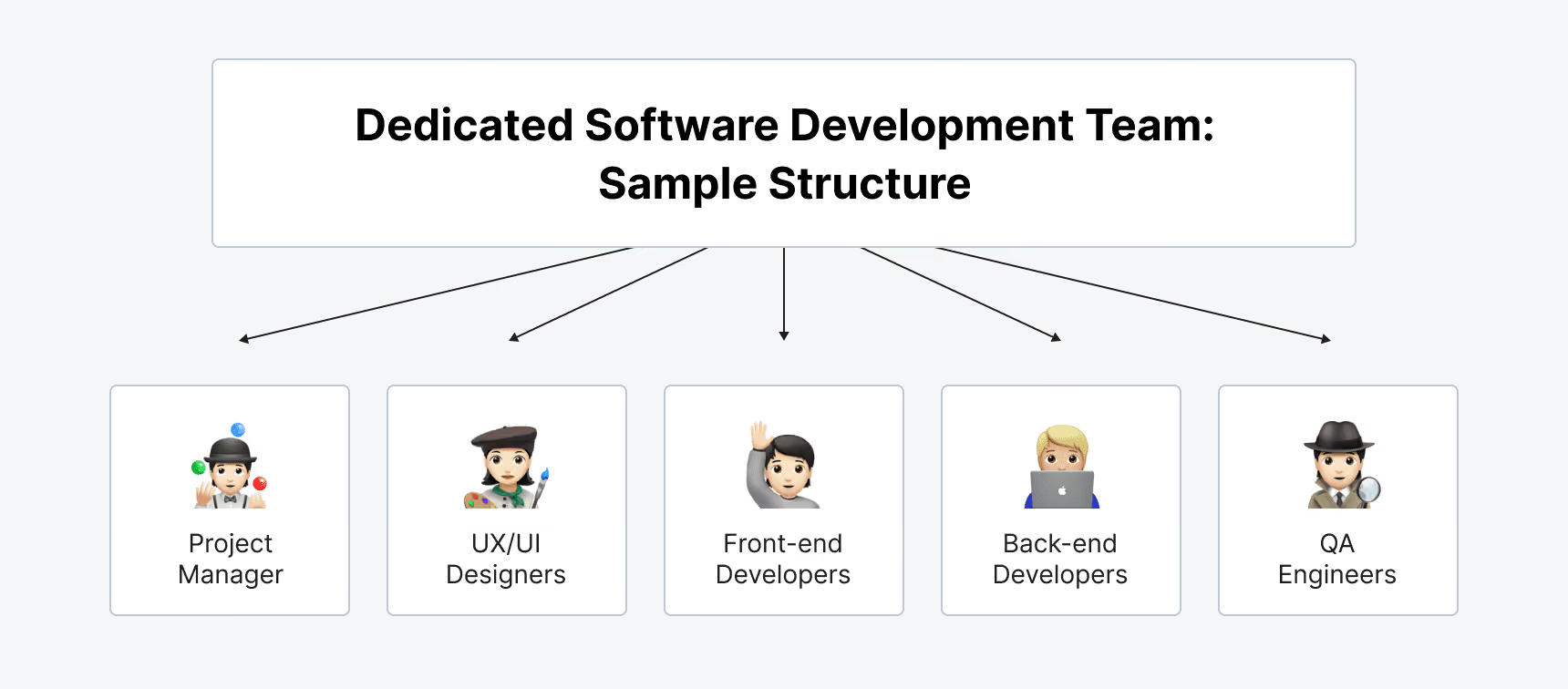
- Project Manager (controls all the project processes from task distribution and deadlines to communication);
- UX/UI Designers (create prototypes, designs, and the overall look);
- Front-end Developers (handle the client side of the code that users see);
- Back-end Developers (create all the code and logic behind what's visible to the users);
- QA Engineers (are responsible for QA testing, checking the code, and allocating bugs).
Based on the specific project goals, a team can additionally include a Business Analyst, Solution Architect, DevOps Engineer, among others. Their hourly rates and the final pricing of the project may vary based on the specialists' experience and qualifications. Let’s take a closer look at other important things to keep in mind when structuring a dedicated development team.
Match Team Size to Project Stage
Team size should match the stage of your project, not a rule of thumb copied from a vendor's pricing page. An MVP that validates a single core workflow typically needs 3 to 5 people: a project manager who also serves as your main point of contact, one or two developers, a designer for the first few sprints, and a QA engineer once there is something to test. A platform with multiple user roles and third party integrations usually needs 6 to 8 people: add a solution architect early to avoid a rebuild later in month four, and split front end from back end once one pair of hands can no longer cover both. An enterprise scale build with compliance requirements often needs 10 to 12 people or more, with a dedicated DevOps engineer and a second QA specialist added once the release cadence becomes frequent.
Example: Scaling a B2B SaaS Team Over Time
A B2B SaaS founder replacing an internal, spreadsheet based workflow is a realistic example. The build starts with a 4 person dedicated development team, one project manager, two developers, and one QA engineer, for the first six week sprint block that covers the core workflow. Once user permissions and a billing integration enter scope in sprint three, the team adds a back end specialist and a part time architect instead of restarting the engagement with a different vendor. This is the scaling advantage a dedicated team has over a fixed price contract: the team grows with the scope rather than triggering a change order negotiation every time a requirement shifts.
Make Every Role Earn Its Place
Every role on the team should exist for a clear reason, not because a template says it should be there. A project manager who only relays status updates is not really managing the engagement, so ask what decisions they are allowed to make without escalating to you. A QA engineer who appears only in the final sprint implies that the first five sprints shipped untested code; a dedicated team worth hiring builds testing into every sprint from the start. A designer who disappears after the first two sprints leaves later features visually inconsistent with the original screens; for any build with more than a handful of screens, keep design involved through at least the midpoint rather than only at kickoff.
Use Team Composition as a Signal
Team composition also reveals how a vendor thinks about your project. An agency that proposes the same 6 to 8 person mix regardless of what you are building is templating instead of scoping. A partner that first asks what is driving complexity, such as integrations, compliance, or real time features, before proposing headcount is doing the job properly. Revisit team composition at every major milestone, including the initial kickoff. A team that is right sized for MVP validation is often wrong sized once the product has paying users and uptime matters more than iteration speed, so a dedicated team engagement should include a checkpoint to adjust the lineup before problems force an urgent change.
What a Dedicated Development Team Costs in 2026
Regional hourly rates set the floor, not the total. Eastern European agencies bill $35-75/hr for a dedicated team, Asian teams run $20-45/hr, and US or UK agencies bill $100-200/hr for comparable seniority. Founders who compare vendors on hourly rate alone, without factoring in team composition, consistently underestimate total project cost; two agencies quoting the same $50/hr blended rate can land $15,000 apart on a 3-month build depending on how much senior versus junior time the vendor bakes into that blend.
The real driver of total cost is team composition and build length, not the hourly rate alone. A 3-month MVP build with a 4-5 person dedicated team typically runs $20,000-$65,000 through most agencies, while a 6-8 month platform build with a larger, more senior team costs proportionally more.
The factors that influence the final cost the most include:
- Team seniority mix: A team with more senior developers costs more per hour but often reduces rework and speeds up delivery.
- Project urgency: Compressing a 12-week timeline into 8 weeks usually requires parallel workstreams and additional resources.
- Project preparation: The clearer your requirements are before the first sprint, the less time and budget you’ll spend on discovery and adjustments.
Statista projects the global IT outsourcing market will reach $806.55 billion by 2030, a sign that the dedicated-team model has become a default sourcing choice rather than a fringe option reserved for cutting costs. That scale also means pricing varies more by vendor quality than by geography alone: a dedicated development team with a rigorous QA process can cost more per hour than a lower-tier team in the same country, and still finish faster with less rework. Founders who search to hire dedicated team options purely by lowest hourly rate tend to relearn this the expensive way, mid-build.
Several expenses are easy to overlook when reviewing an initial quote:
- Ramp-up time: The first 1–2 weeks are usually spent getting the team familiar with your product, codebase, and processes. This period still requires investment, even if productivity is lower.
- Project management costs: Some vendors bill a project manager separately, meaning a quote based only on developer hours can underestimate the actual weekly cost by 15–20%.
- Additional services: Design, QA, DevOps, or architecture support may affect the final budget depending on your team structure.
Before comparing vendors, ask for an all-in weekly or monthly estimate. A per-role hourly rate alone rarely shows the complete picture of what you’ll actually pay.
Payment terms matter as much as the rate itself. Most agencies bill in two-week sprint blocks in arrears, invoicing after the team delivers the work rather than asking for a lump sum upfront; a vendor asking for a large deposit before any sprint has shipped is a term worth pushing back on. NET 15 or NET 30 terms are standard for ongoing engagements; anything demanding full payment before the trial sprint concludes removes the one safeguard the trial period should provide.


How to Hire a Dedicated Development Team: A 6-Step Vetting Process
Hiring a dedicated development team takes one to two weeks if you run these six steps in order. Skip two or three of them and you inherit the 5.4-month average time-to-fill that plagues in-house technical hiring, according to the Linux Foundation's State of Tech Talent Report, except now it's a vendor relationship you're stuck unwinding instead of a single bad hire. Whether the question is how to choose a dedicated development team for a first MVP or how to hire a dedicated software development team for an existing platform, the same six steps apply; only the first one changes.
If you're weighing whether to hire a development team in-house or through an agency, the steps below still apply; only the first one, defining scope, looks different when you're interviewing candidates instead of vendors. Founders who hire development teams sight unseen, based on a proposal and a sales call alone, skip the step that predicts most engagement failures: talking to the people who will do the work, not the people who sold it.
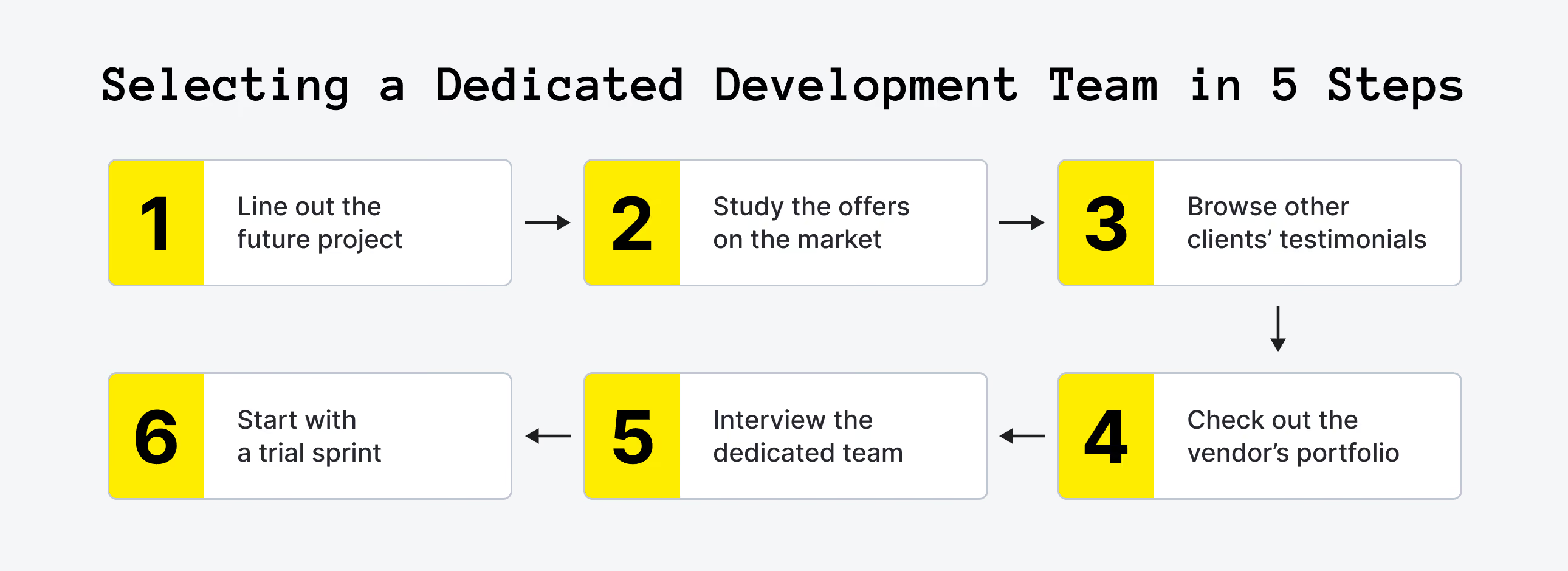
Step 1: Line Out the Future Project
It is best to begin by outlining the future project. What is your business idea and vision? What do you want to achieve? How much time do you have? What are the core requirements and scope ahead?
If you have a project brief or a product roadmap to share with the potential development partner, this will speed up the overall process and bring you better results. Even if some points aren't final yet and you only have estimates, a short overview can set you on the right track to finding perfect dedicated developers.
Step 2: Study the Market
Researching the available offers is a time-consuming step. Yet it will allow you to make a more deliberate decision on which dedicated development team to hire based on facts and numbers.
The first tip would be to think out of the box and broaden your search geographically. Your partner doesn't have to be from your country or continent, there are many great options overseas too. Companies looking to build dedicated offshore teams can also partner with SutraHR to hire skilled tech professionals. Browse platforms like GoodFirms or Clutch to find vendors or use Google search to find corresponding service pages.
Then make a list of five to ten companies worth further consideration. Optionally, create a spreadsheet where you can jot down vital vendor evaluation and scoring points. These can be approximate pricing, years in business, staff size, number of similar projects, etc.
Step 3: Browse the Testimonials
Learning the opinions of other client companies like yours before you hire a development team is considered good practice. You don't necessarily have to limit yourself only to the reviews and catchy short quotes that are posted on the vendor's website. Feel free to look up the dedicated software development company on the various professional platforms we've mentioned earlier. There you can find the verified testimonials of those who have already done business with the outsourcing vendor.
Study as much feedback as you can and note the strong and weak spots that were mentioned by others. This will help you get a better idea of what the company is like and how your cooperation may go. The bottom line is that if the provider is irresponsible, such reviews will allow you to avoid an unsuccessful investment and choose someone else.


Step 4: Check Out the Portfolio
Most vendors with the due expertise usually have a decent portfolio, showcasing detailed case studies on the projects that were successfully delivered or are in progress. Such examples outline the aims, approaches, and solutions that were used by the company to achieve the client's requirements and goals. By looking through several of them, you'll get a general understanding of the processes and whether the outsource development team is a good fit.
Pay special attention to those projects resembling yours. If the provider has already worked on something similar, you may investigate the final result and make conclusions on what you'd like to improve or implement differently. Plus, since the team knows what it's doing, this can bring you the advantage of saved time and costs (rather than if you'd partner up with first-timers in your field).
Step 5: Interview the Dedicated Team
The final step is interviewing the candidates. You can set up video calls, say, via Google Meet, to discuss the project, get to know the vendor, and maybe even the Project Manager or the whole development team.
Prepare a list of questions and state the deliverables. You may ask how they approach hiring software engineers, about the company's previous experience with similar projects, and how they'd approach yours. Bring up questions like employee availability, how big the team could be, and which solutions they suggest.
If you need more details, enquire about specific specialists. After all, it's good to know who you're dealing with as you might need the services of certain individuals for other projects or can decide to ask to replace someone who isn't a good fit.
Step 6: Start with a Trial Sprint Before a Multi-Month Commitment
Even after reviewing a vendor’s portfolio, speaking with references, and interviewing the team, there is still one thing you can’t fully evaluate upfront: how well you actually work together. A trial sprint gives both sides a chance to test communication, development processes, and the team’s ability to deliver against real project requirements before committing to a longer engagement.
During this initial phase, pay attention to more than just the technical output. Look at how the team handles feedback, whether deadlines are realistic, how transparently they communicate progress, and whether they proactively identify potential issues. These early signals can tell you much more about a future partnership than a sales presentation or a polished case study.
For startups and growing companies, a short trial period can be a practical way to reduce risk while finding the right long-term development partner. For example, Upsilon offers a 2-week trial option that allows you to experience the collaboration process firsthand before making a multi-month commitment. If the partnership doesn’t meet your expectations during this period, you can move forward without taking on unnecessary risk.
Contracts, IP Protection, and Your First 30 Days
No competitor guide covering this decision spends real space on what happens after you sign the contract, and that gap is where most dedicated team engagements go wrong. Settle two things in writing before day one, and plan for three things to happen in the first 30 days.
Before Day One: Nail Down Contracts and IP
Before work starts, make sure you have the following in place:
- A signed NDA before any product detail changes hands, not after the first working session.
- A clear IP assignment clause in the contract that states code, designs, and documentation produced during the engagement belong to you on delivery, not the vendor, along with terms describing how the vendor stores source code and who controls repository access.
- A firm stance on IP clarity: if a dedicated development team resists a written IP clause, or offers a vague one, treat it as a signal to keep looking, not a detail to fix later.
- A documented code hosting arrangement that answers where the team will host code during development: in a repository you control from day one, or in one that only migrates to you at handoff. The second option leaves you with nothing to show if the relationship ends early.
- External security validation when needed: for builds touching regulated data, where no one on your side can independently evaluate a vendor's security claims, an outside technical advisor should close that gap before you sign, not after.


Week One: Set Communication and Decision-Making Rules
Once the team starts, agree on a communication cadence in the first week. That means a standing standup time, a shared channel, and a named point of contact on each side, rather than a rotating cast of whoever is available.
Decide explicitly who signs off on design changes and who has final say when decisions need to move quickly. Ambiguity here is how a simple two day question turns into a two week delay.
By the End of Sprint One: Write Down Milestones
Before the first sprint ends, put a rough milestone plan in writing, even if it is only a single page. Both sides need a shared reference for what “on track” looks like at week four versus week ten.
A dedicated team that pushes back on written milestones in the name of “staying agile” is often avoiding accountability rather than working iteratively. Agile and undocumented are not the same thing.
Your First 30 Days: What Good Looks Like
Your first 30 days with a new dedicated development team should look like this:
Week #1: confirm the communication cadence, standup time, shared channel, named point of contact, in writing, and get read access to the team's actual sprint board, not a summary emailed to you weekly.
Weeks #2-3: review the first working demo against the brief you wrote before vetting started. A gap here is far cheaper to fix now than after sprint four.
Week #4: run a short retro covering how the team communicated and delivered, not only the product itself, and confirm the trial-sprint terms held before committing to the next block.
How Upsilon's Dedicated Team of Developers Can Help
If you're considering dedicated outsourcing services, Upsilon's team of pos could be right what you're looking for. With over a decade of experience, we've proudly helped over 30 products achieve market success, with some MVPs transforming into remarkable 9-figure businesses. We have developed several products of our own products, so we know the ins and outs of both the tech and business aspects.
We have top-tier talent available to assist with bringing your ideas to life and are open to customizing the team composition to fit your specific project needs. Our expertise centers around Python and JavaScript, and we break our work into two-week sprints.
We're transparent with our dedicated team pricing. Depending on your needs, we have you covered with several options, including an MVP development team (for smaller projects around 3 months) and a product-based team to enhance and troubleshoot your current offerings. To ensure you feel confident in your decision, we offer a risk-free trial for your peace of mind: if you're not satisfied with the first two weeks of our work, your fee will be $0.
Have a lot of ideas but not sure how to bring them to life in terms of tech?
Our experienced team delivered lots of successful projects and will be happy to help you find the right solution.
Is a Dedicated Software Development Team Right for You?
A dedicated software development team can be a smart choice when you need to build a complex product, scale quickly, or access expertise that is missing in-house. This collaboration model works especially well for startups and growing companies that need flexibility, ongoing support, and a team that can adapt as project requirements evolve. Before you hire a dedicated development team, make sure your goals, budget, and expectations are clearly defined, and choose a partner that offers transparent communication and a proven track record.
While this model may not be the right fit for short-term projects with fixed requirements, it provides significant value for long-term initiatives where consistency, accountability, and technical expertise matter. You can explore the global talent pool to find a partner that matches your needs, as there are many reliable outsourcing companies worldwide offering dedicated development services.
At Upsilon, we have an extensive network of experienced developers ready to help startups and growing businesses accelerate product development with flexible team options and transparent pricing. Feel free to get in touch with us to discuss your project and find the right approach for your goals.



FAQs
What is a dedicated development team?

A dedicated development team is a full remote team, a project manager, developers, and a QA engineer at minimum, assembled by an outsourcing partner and assigned exclusively to your project for the length of the engagement. It differs from staff augmentation, which adds individual specialists to a team you already manage, and from a freelancer, who works alone on a narrower task.
Why do you need a dedicated development team?
If you have a long-running and difficult project, hiring a dedicated team of developers is a reasonable solution. Whether you don't have the needed specialists onboard or aren't sure about what the project should turn out to be in the end, collaborating with hand-picked outsourced experts can save your budget and time.
How do I hire a dedicated development team?
One of the ways to find a decent team for your project is by looking for talent offshore. There are numerous companies offering expert development services for turnkey projects, sometimes at even better rates than you'd find at home. You can make use of data on Clutch or IT Firms to shortlist candidates. These platforms accumulate all the needed information to help you find a dedicated offshore development team in a simple-to-compare format. Then, get in touch with the vendors and settle on the contract that suits you best.
What’s the difference between a dedicated development team and staff augmentation?
A dedicated team is pre-assembled by the vendor, a project manager, developers, and QA already used to working together, and takes ownership of a defined slice of your roadmap.
Staff augmentation adds individual specialists to a team you already run day to day; you manage them directly instead of through a vendor's PM.
Choose a dedicated team when nobody in-house can run the day-to-day; choose staff augmentation when someone already does.
Should you hire dedicated developers individually or a full dedicated team?
Hire individual dedicated developers when you already have a technical lead who can direct their work day to day and only need to fill a specific skill gap. Hire a full dedicated team when you need the whole unit, project management, QA, and development, coordinated without running it yourself. The individual-hire route is cheaper per hour; the full-team route gets you to a working product faster when nobody in-house can manage the pieces.
to top