How to Execute a Successful Software Project Takeover


Letting go of a software project can feel a bit like handing over the keys to a house you have been building and living in at the same time. You know every shortcut, every workaround, and every decision that made sense in the moment, but to someone new it might all look like a maze. That is why a well planned project takeover is not just a formality. It is your chance to make sure everything you have built continues to thrive.
A successful project takeover from the outgoing side is less about simply passing it on and more about setting the next team up for success. The difference becomes obvious very quickly. Without structure, knowledge gets lost, context disappears, and progress slows down. With the right approach, your vendor transition plan turns into a smooth process instead of a painful reset.
According to the recent report, ineffective communication causes project handovers between vendors in roughly one third of all cases. Specifically, 56% of the risk to project outcomes, measured in wasted budget and missed objectives, is tied to poor communication, which plays a central role in every handover or transition process.
In this article, we will walk through how to approach a software project takeover step by step, so you can move in, get comfortable, and gradually turn that inherited space into something that truly works.
Key Takeaways:
- Planning a project handover is the first step. Lay out timelines, responsibilities, and priorities so nothing gets missed.
- A technical audit gives you a clear picture of the codebase, architecture, and infrastructure, helping spot risks and quick wins.
- Capturing knowledge early makes the transition smoother. Update documentation, hold focused sessions, and assign owners for critical areas.
- Transparent communication keeps everyone aligned. Regular updates and honest discussions prevent surprises when switching software development team services.
- Trusting the new team to take ownership lets them assess, suggest, and implement improvements while you focus on bigger priorities.
What Is a Software Project Takeover (and How Does It Work)?
A software project takeover is the process of transferring ownership and responsibility for an existing product from one team, vendor, or group of developers to another. Instead of starting from scratch with a new partner, startup founders hand over the existing codebase, architecture, workflows, and record of past decisions. The goal is to keep the system running smoothly while the new team gradually builds enough understanding to maintain and improve it with confidence.
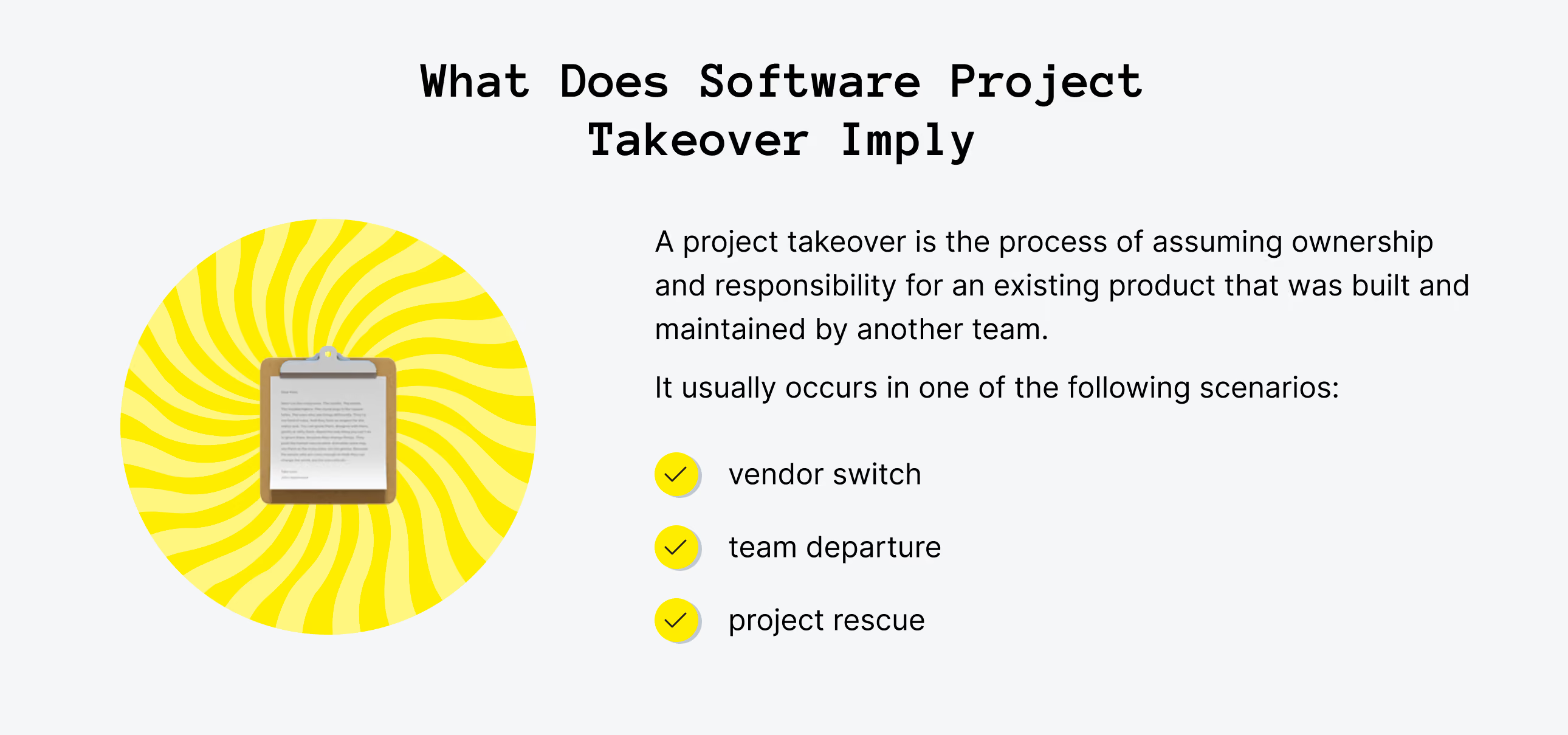
In startups, this usually happens in one of three common scenarios:
- Vendor switch (A company decides to replace an external development partner due to issues with quality, cost, speed, or communication. The new team needs to quickly get up to speed, often with limited documentation and minimal support from the previous vendor);
- Team departure (Internal developers leave the company, sometimes unexpectedly. Along with them goes a large portion of product knowledge, making it critical for the new team to reconstruct context and understand how everything fits together);
- Project rescue (A new team is brought in to stabilize or fix a struggling product. This could mean dealing with technical debt, missed deadlines, or a system that is already failing in production).
In practice, the process starts with knowledge transfer if any is available, followed by codebase analysis, infrastructure access, and identifying critical components. From there, the new team works to ensure stability first, then gradually introduces improvements. A successful takeover is not about immediate changes, but about building understanding, reducing uncertainty, and taking control step by step.
Signs You Need a Software Project Takeover
At some point, many founders start feeling that something is off with their product, even if they cannot immediately explain what exactly. Things slow down, small issues keep popping up, and working with the current team becomes more frustrating than productive. These signals are easy to ignore at first, but over time they usually point to a deeper problem that might require a full rethink of who owns and drives the project forward.
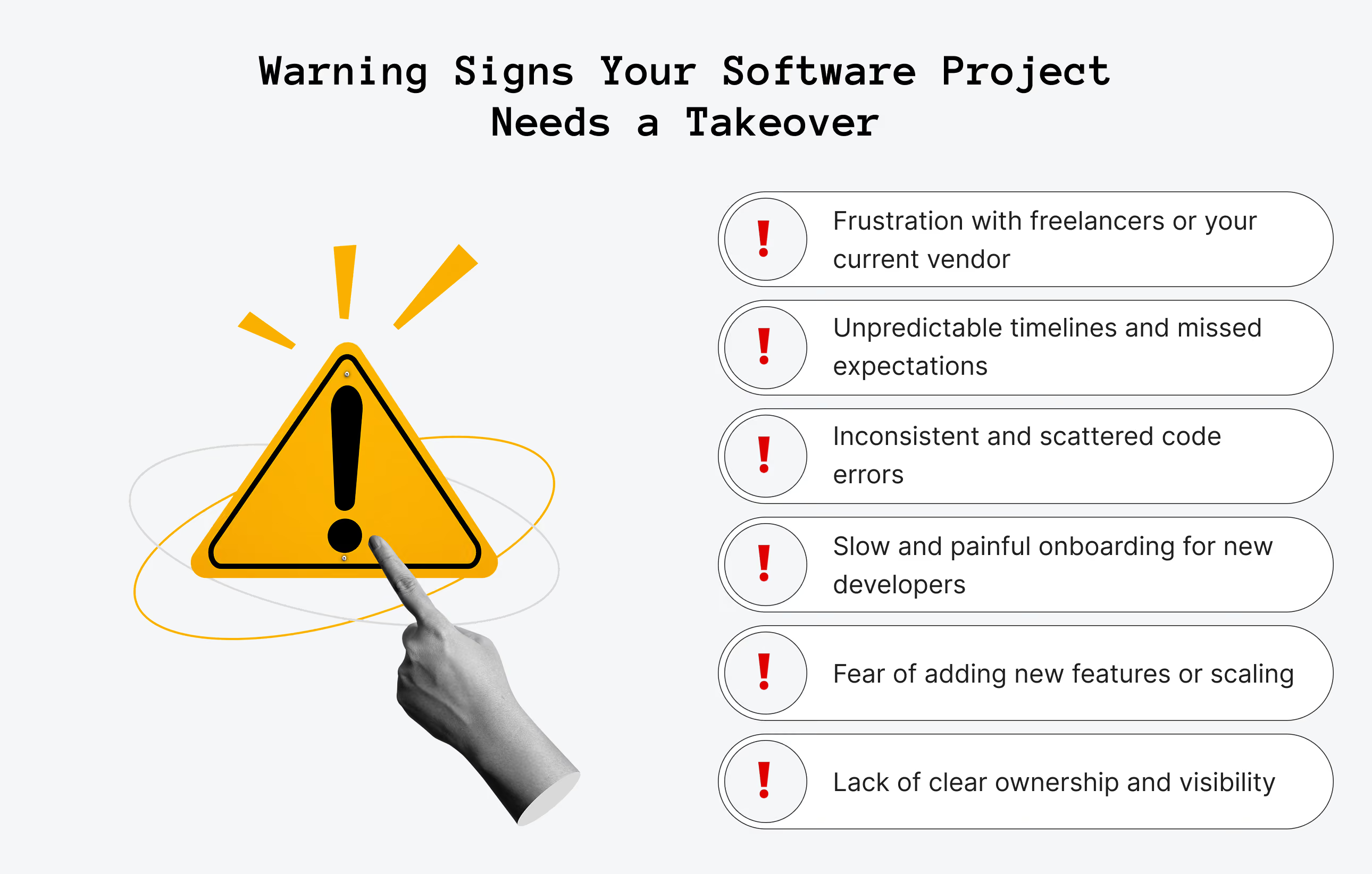
Frustration with Freelancers or Your Current Vendor
You constantly find yourself chasing freelancers you hired on Upwork or Fiverr, clarifying tasks, or repeating instructions that should already be clear. Meetings drag on, updates are inconsistent, and priorities feel misaligned. Over time, this creates a persistent sense of friction and slows down decision-making. When you start spending more energy managing the team than shaping the product, it is a strong sign that a change is needed.
Unpredictable Timelines and Missed Expectations
Development work becomes a guessing game. One feature that should take a few days stretches into weeks, while other tasks finish inconsistently. Deadlines slip without clear reasons, and PERT estimates no longer feel reliable. This unpredictability makes planning new initiatives difficult and can lead to missed market opportunities, leaving you frustrated and unsure of what to expect next.
Inconsistent and Scattered Code Errors
Bugs appear in random parts of the system, often in places that seem unrelated to recent changes. Fixing one issue can unintentionally create another. This lack of consistency indicates that the codebase is fragile and hard to maintain. As things go on, the product starts to feel unstable, and you lose confidence in releasing new updates safely.
Slow and Painful Onboarding for New Developers
Every new team member struggles to understand the project. They spend a long time asking basic questions, hitting blockers, or hesitating to make changes because the system feels fragile or undocumented. This makes scaling the team difficult and costly, as each new developer requires extra effort to bring up to speed.
Fear of Adding New Features or Scaling
Even small updates feel risky. You hesitate to implement new functionality because you are unsure how it will impact the rest of the system. This fear slows product growth, stifles innovation, and makes your MVP roadmap feel constrained. In startups, where speed and adaptability are critical, this is a serious red flag.
Lack of Clear Ownership and Visibility
You cannot easily see who is responsible for what or understand the state of the project at any moment. Progress relies on specific individuals, and if they are unavailable, SaaS development stalls. Without clear visibility, decision-making becomes reactive rather than proactive, leaving the project feeling out of your control.
How to Prepare for a Software Project Handover and Transition
Getting ready for a software project handover is all about setting yourself up for a smooth transition. It’s easy to underestimate how much work goes into passing a project to a new team, but without a clear project takeover plan, knowledge gaps and confusion can slow everything down. Let’s take a closer look at the steps that make the handover more organized, reduce surprises, and help the new team get up to speed efficiently.
Establish Clear Communication, Roles, and Responsibilities
A successful project handover starts with making sure everyone knows their role and how they will communicate. Without this alignment, even small tasks can get delayed, critical details can slip through the cracks, and the handover can quickly turn chaotic.
Key participants in a typical handover include:
- Project Managers (track timelines, oversee deliverables, and ensure nothing is overlooked during the transition);
- Developers and Engineers (responsible for transferring technical knowledge, explaining the codebase, and documenting workflows);
- Product Owners or Business Analysts (provide the business context, strategic goals, and explain how features align with overall objectives);
- IT Operations or Support Teams (handle infrastructure, system monitoring, and ongoing product or app maintenance once the project changes hands);
- Security and Compliance Officers (manage credentials, access control, and ensure regulatory and compliance requirements are met).
Gain Full Visibility into the Current Project’s State
Before a handover can succeed, it’s essential to fully understand the project’s current condition. This includes the technology stack, core features, user base, and the business goals it supports. Without this knowledge, even small changes can lead to unexpected issues. Key steps to gain full visibility include:
- Review all existing documentation (Go through requirements specifications, design diagrams, workflow guides, and user manuals. While these provide a foundation, they rarely tell the full story);
- Meet with the outgoing team (If possible, speak with developers or managers who previously worked on the project. They can share insights about past challenges, reasoning behind key decisions, and hidden quirks in the system);
- Assess the codebase (Examine the structure, quality, and maintainability of the code. Pay attention to scalability, security practices, and areas with technical debt that may require attention);
- Understand business context (Make sure you know the product’s target audience, critical workflows, and strategic goals. This helps prioritize which areas need immediate focus and which can wait).
Set the Stage for a Smooth Software Project Transition
A successful project handover starts with careful preparation and organization. Laying out a clear structure ensures the incoming team can take over confidently without unnecessary delays or confusion.
Gather All the Documentation
A thorough handover starts with collecting and organizing every relevant piece of documentation. The goal is to give the incoming team a complete picture of the project so they can understand both the system and its context quickly. Key materials to gather include:
- Technical documentation: system architecture diagrams, API references, database schemas, infrastructure and deployment guides.
- Code-related information: version histories, branch strategies, and any notes explaining complex or custom parts of the code.
- Business and product documentation: user stories, requirements, workflow diagrams, feature specifications, and design documents.
- Operational materials: troubleshooting guides, maintenance instructions, monitoring setup, and any standard operating procedures.
- Historical context: changelogs, previous release notes, and notes on technical debt or known limitations.
Take Control of Access, Repositories, and Environments
Proper access is critical for a smooth transition. Without it, the new team cannot make changes or investigate issues efficiently. Steps to ensure control include:
- Source code repositories: grant access to all backend, frontend, mobile, and supporting repositories. Ensure branch structures, permissions, and history are documented.
- Environments: provide credentials for development, staging, and production environments. Include server access, cloud accounts, DNS, and SSL certificates.
- Third-party services: transfer or reissue credentials for third party API integration, payment gateways, monitoring tools, and other integrations.
- Security and backups: update passwords, API keys, and tokens securely. Document backup and restore procedures to prevent data loss or downtime. Also document OWASP tools used for application security testing and vulnerability management.
This step reduces delays, prevents accidental errors, and ensures the incoming team can operate independently from day one. Clear documentation of access rights also protects the project from security risks.
Prepare a Brief for the Incoming Team
A concise, high-level brief helps the new team understand the project quickly and focus on what matters most. It should include:
- Current project status: what features are complete, in proеgress, or pending. Highlight high-priority bugs or issues that need immediate attention.
- Business context: strategic goals, target users, and the rationale behind past decisions. This helps the team understand why the system works the way it does.
- Immediate priorities: short-term objectives and tasks to tackle in the first weeks after takeover.
This brief acts as a roadmap for the new team, reducing confusion and helping them start contributing efficiently without needing constant guidance.


Software Project Takeover: A Step-by-Step Plan
A software project takeover isn’t just about handing off code. It’s about transferring knowledge, context, and responsibility in a way that the next team can pick up without chaos. Let’s walk you through the key steps to make this handover smooth, organized, and effective.
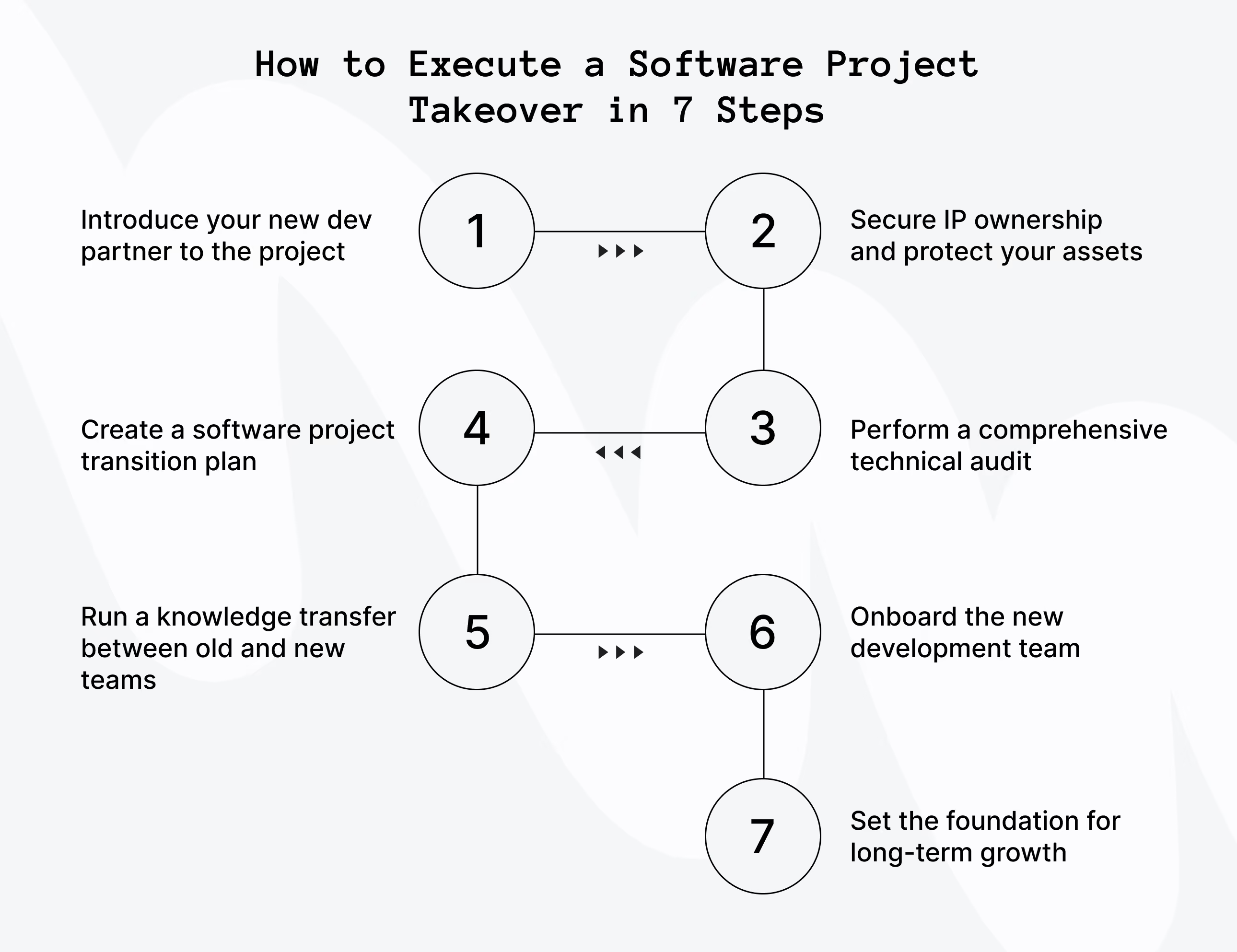
Introducing Your New Software Development Partner to the Project
The first step involves a structured introduction between your outgoing team and the new software development partner. During a kickoff meeting, the outgoing team should walk the newcomers through each module, feature, and key decision.
It’s of vital importance to provide the following information during this handover:
- Overview of the project architecture and core components;
- Key features and functionality, including unfinished or planned tasks;
- Technical debt, workarounds, and known limitations;
- Deployment processes, CI/CD pipelines, and access credentials;
- Dependencies on third-party services, APIs, or libraries;
- Past design decisions and reasoning behind them;
- Known bugs, recurring issues, or potential startup risks.
Secure IP Ownership and Protect Your Assets
Ensuring clear intellectual property ownership is a critical part of any project takeover. Start by reviewing all legal agreements with your current partner to confirm who holds the rights to the code, designs, and related assets. Consulting a legal expert can help clarify any ambiguities and ensure the handover preserves full ownership. At the same time, verify that you have complete access to version control systems and repositories, including all branches, documentation, and history, to prevent future restrictions on managing or updating the project.
It is also important to review third-party licenses and dependencies used in your solution, making sure you have the rights to use and modify them. For additional security, consider Escrow solutions, where a third party holds a copy of the source code and documentation. This guarantees access to your codebase in case of disputes or unexpected circumstances, giving your team full control over the project and safeguarding your investment.
Conduct a Technical Audit
Conducting a technical audit is a crucial step to understand the current state of your software before fully taking over. This involves reviewing the codebase for quality, maintainability, and adherence to best practices. Look for areas with high technical debt, outdated libraries, or inconsistent coding standards that could cause problems down the line. A thorough audit also includes checking the system architecture, database structures, and integration points to ensure they are robust and scalable.
In addition to code, the audit should cover deployment processes, CI/CD pipelines, testing coverage, and documentation. Identify gaps in QA testing, monitoring, or security practices that could impact future development.


Creating a Software Project Transition Plan
Designing a project transition checklist is about mapping out the handover in a structured way so that nothing falls through the cracks. To do this effectively, you should:
- define the key deliverables, milestones, and timelines for the transition;
- identify critical systems, modules, and processes that require special attention;
- determine who from the outgoing team will be responsible for guiding the new team through each area.
The plan should also include knowledge transfer sessions, access provisioning, and documentation handoff. Outline communication protocols, escalation points, and follow-up schedules to ensure any questions or issues are addressed promptly. By having a clear transition plan, you reduce downtime, minimize risks, and provide the incoming team with a roadmap that allows them to take over efficiently and continue MVP development without disruption.
Run a Knowledge Transfer Between Old and New Teams
When transferring a software project, the handover can occur either directly from the client to the incoming vendor or from the previous development team to the new one. No matter the route, the goal is to make sure critical knowledge doesn’t get lost. This is best achieved by combining interactive sessions like Q&As, screen-sharing demonstrations, mentoring, pair programming, and collaborative code reviews with a clear exchange of essential resources.
The handover should cover several key areas:
- Project Requirements: Share all available documentation, from early drafts to the most recent updates, so the new team understands both the project’s history and current state.
- Code Insights: Well-documented, readable source code accelerates onboarding. Ensure comments and documentation follow best practices and are written in a common language, such as English.
- Design and Asset Files: Provide all relevant assets, including mockups, prototypes, and design files, while confirming the formats the new team prefers.
- Access Credentials: Ensure the incoming team can access repositories, CI/CD pipelines, cloud services, task management systems, and other critical startup tools. Create new accounts where necessary and revoke old permissions to maintain security.
- Deployment Instructions: Document the exact deployment process so the new team can safely release updates without errors.
- Other Technical Details: Include any additional information that could affect development, such as integration points, environment setups, or legacy workarounds.
Onboard the New Development Team
Onboarding the new development team is about ensuring they can start contributing quickly and confidently. It involves familiarizing the team with the project’s architecture, workflows, and coding standards. Organize sessions to introduce the system’s core components, deployment processes, and any tools or platforms the team will use regularly.
It’s also essential to integrate the new team into the project culture. Share best practices, team norms, and communication channels so they can collaborate effectively from day one. Pairing new members with experienced stakeholders or key team members for the first few weeks helps answer questions in real time and accelerates their learning curve.
Set the Foundation for Long-Term Growth
As the project moves into the maintenance phase, the focus expands from simply preserving what exists to actively improving it. To support continuous growth and long-term stability, the following practices should be implemented:
- Regular code reviews and refactoring: Continuously evaluate and improve the codebase to enhance efficiency, maintainability, and readability.
- Automated testing and CI/CD integration: Introduce or strengthen automated testing along with continuous integration and deployment workflows to reduce errors and accelerate development.
- Performance monitoring and optimization: Track system performance and make improvements proactively to ensure the software remains fast, reliable, and scalable.
- Documentation updates: Keep technical and user documentation current, reflecting changes in code, architecture, or processes to aid future onboarding and troubleshooting.
- Proactive issue management: Identify potential bottlenecks, security vulnerabilities, or technical debt early and address them before they impact development or user experience.
Need some help with your current project?
Partner with Upsilon to stabilize your development, mitigate risks, and finally hit your launch goals.

Common Challenges During a Software Project Takeover
Even with careful planning, software project takeovers come with their own set of challenges. For startup founders, these issues can have a bigger impact due to limited resources and tight MVP timelines. Here are five common challenges to watch out for:
- Gaps in knowledge transfer
When moving from the previous team to a new one, crucial context can be lost. Missing insights about past decisions, workarounds, or system quirks can slow down progress and lead to mistakes. - Resistance from the outgoing team
Handovers can feel awkward for everyone involved. The previous team might be defensive, or they might simply be too busy to provide much help.
Professional and respectful communication usually smooths these conversations. Sometimes, though, the new team works from repository access alone.
- Legacy code and accumulated technical debt
Outdated dependencies, tangled code, and missing tests are common findings. Rather than attempting a full rewrite, the new team typically prioritizes fixes and addresses the most critical issues first. Incremental improvement tends to work better than wholesale replacement. - Time pressure and delivery expectations
With tight launch schedules or ongoing feature development, the new team may feel pressure to deliver quickly. Rushed work can compromise quality, making it essential to balance speed with careful review.
Recognizing these challenges early helps you prepare strategies to mitigate them. With a capable development team, even complex transitions can be managed without losing momentum or derailing your startup’s growth.
Best Practices for a Smooth Software Project Transition
A software project handoff can feel overwhelming, but it doesn’t have to be. There are some solid, practical tips that can make the whole transition way smoother and less stressful. With the right approach, you can keep everything running without unnecessary chaos. Let’s dive in.
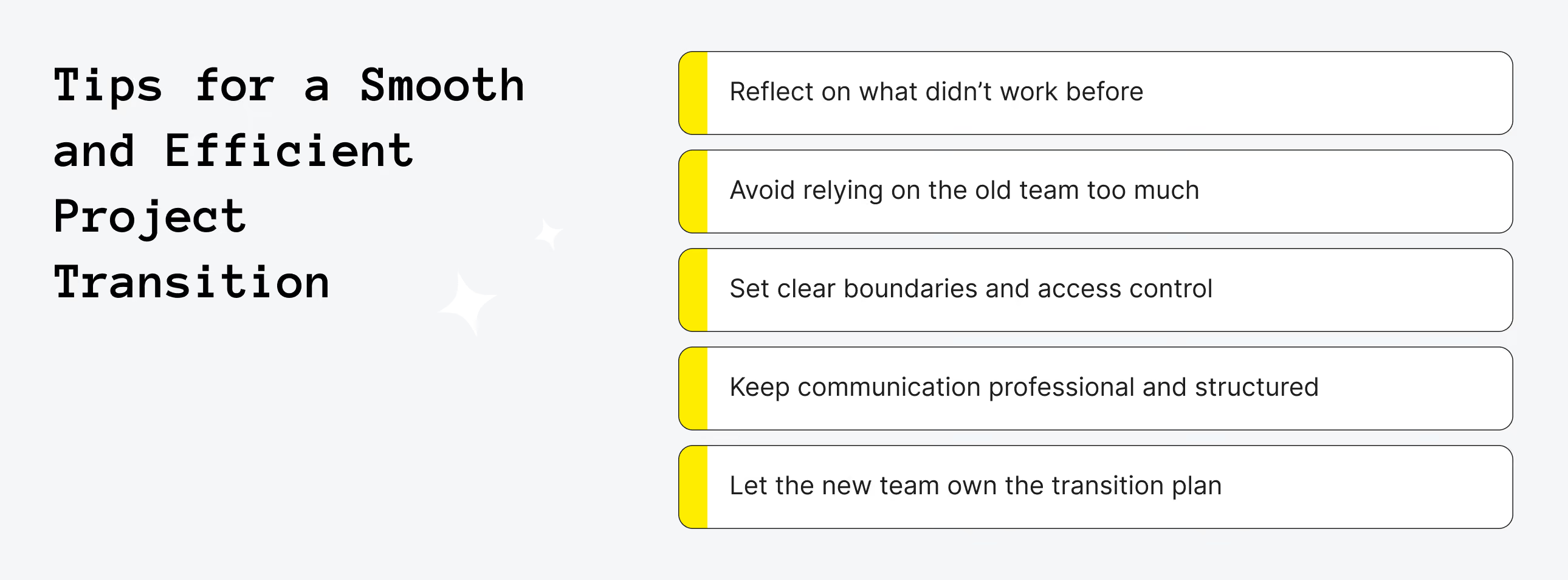
Reflect on What Didn’t Work
Before jumping into a new setup, take a step back and honestly review what went wrong in the previous collaboration. Issues usually come from miscommunication, unclear expectations, or weak processes, not just technical problems.
Be real with yourself about your role in it. Maybe the team didn’t get enough guidance, or feedback wasn’t clear enough. Understanding this helps you avoid repeating the same mistakes and build a healthier working dynamic going forward.
Avoid Relying on the Old Team Too Much
Don’t rely on the outgoing team to document everything during the final days. It rarely works well. Instead, schedule focused knowledge transfer sessions with a clear agenda: architecture overview, deployment process, known bugs, and key business logic.
Record sessions, collect materials, and store everything in one place (e.g., Notion, Confluence, or GitHub). Assign internal owners for each area (backend, DevOps, etc.) who are responsible for verifying and updating the information after each session.
Set Clear Boundaries and Access Control
Once the transition starts, define who has access to what systems. A structured freelancer management system can also simplify permissions and communication during the transition. Grant the new team only the permissions they need to begin (repositories, staging, docs), and gradually expand access as they take ownership.
At the same time, agree on a transition timeline with the outgoing team: what support they provide, how long they stay available, and response expectations. This avoids confusion and ensures you’re not dependent on informal or inconsistent help.
Keep Communication Professional and Structured
Even if the previous collaboration was difficult, keep communication calm and structured. Use short, focused meetings or async updates to request specific information instead of vague or emotional discussions.
Prepare questions in advance (e.g., “How does deployment rollback work?” or “What are the top 5 risks in the system?”). This saves time and makes interactions more productive, especially when the outgoing team’s engagement is limited.
Let the New Team Own the Transition Plan
Give the incoming team responsibility for analyzing the system and proposing next steps. Ask them to review the codebase, infrastructure, and processes, then present a short plan with risks, quick wins, and improvement ideas.
Avoid micromanaging. Instead, align on goals (e.g., stabilize the system, reduce bugs, improve performance) and let them decide how to get there. This builds accountability early and helps them ramp up faster while you stay focused on higher-level priorities.
How to Choose the Right Software Development Partner for a Project Takeover
If you’re planning a project takeover, choosing the right partner is just as important as the transition itself. This is not a typical vendor selection; you need a team of superheroes who can quickly understand what is going on, stabilize the situation, and move forward without losing time or context. Conducting a thorough software vendor evaluation can help you identify a partner with the right experience and capabilities.
Here are the key factors to consider:
- Experience with project rescues
Not every team is good at picking up projects mid-way. Look for a partner who has really handled takeovers before. They should be comfortable stepping into incomplete or unstable environments and bringing structure fast.
- Strong technical audit capability
Before making any changes, a competent partner should be able to assess the existing system thoroughly. This includes reviewing the codebase, infrastructure, and architecture to identify risks, technical debt, bottlenecks, and opportunities for quick improvements. A proper tech due diligence process is essential here.
- Transparent communication
During a takeover, clarity matters more than ever. Your partner should communicate openly about risks, product development timelines, and trade-offs, not just tell you what you want to hear. Regular updates, clear reporting, and honest feedback are essential to avoid surprises.
- Startup mindset and flexibility
If you’re working in a fast-paced environment, your team should match that speed. Look for a partner who understands startup dynamics: changing priorities, limited resources, and the need to deliver value quickly without overengineering.
A partner who combines all these qualities can make the transition to a new development team much smoother. Upsilon has experience stepping into ongoing projects to stabilize development, address critical issues, and help teams regain momentum.
How Upsilon Steps Into Ongoing Projects
Our project takeover process typically starts with a structured technical audit. We review the codebase, infrastructure, and workflows to uncover risks, bottlenecks, and quick wins that can immediately improve reliability and delivery speed. This gives founders a clear picture of where things stand and what needs to happen next.
Transparent communication is central to how we work. Regular updates, clear reporting, and open discussions about risks, trade-offs, and priorities make the transition more predictable and easier to manage for everyone involved, especially for founders who need visibility to make confident decisions.
Our team also brings a startup-friendly mindset. We are comfortable operating in fast-changing conditions, where roadmaps evolve and experiments happen often. Whether you need to refine a prototype, stabilize an existing product, or prepare your solution for scaling, Upsilon’s software project takeover services are designed to support your current stage and help you move toward your goals faster, with less stress and more confidence.
Looking for a reliable development partner?
Contact Upsilon today to identify the bottlenecks and implement a strategic recovery plan before it’s too late.
Final Thoughts on a Project Takeover
Handing over a project can feel a little like passing the baton in a relay race. When you change software development vendor companies, you’re entrusting someone else with the work you’ve invested so much time, energy, and expertise into. The goal in this transition is not just to hand off code, but to make sure everything built continues to thrive. Clear documentation, thorough knowledge sharing, and context around past decisions help the new team get up to speed quickly and avoid unnecessary setbacks.
Every handover comes with challenges, from gaps in understanding to differences in workflows or coding styles. A carefully prepared process makes it possible to confidently take over the project, knowing that the foundation, vision, and hard-earned progress are preserved. Done thoughtfully, the handoff ensures the project can grow, evolve, and succeed long after the original team has stepped aside.
If you’re going through this process, having an experienced team can make a real difference. Upsilon has worked with projects at different stages, helping teams navigate transitions, stabilize development, and move forward with more clarity and confidence. Feel free to contact us – we’re here to help.



FAQs
Can a development team take over a project with no documentation?

It is possible, but much more challenging. Without documentation, the new team must reverse-engineer the code, explore workflows, and figure out system logic through testing. This increases the risk of errors and extends the transition timeline, so thorough knowledge transfer is always preferable.
How long does a typical project handover take?
The duration varies depending on project size, complexity, and documentation quality. For small to medium projects, it may take a few weeks, while larger or poorly documented projects can require several months to complete a smooth transition.
What happens if the previous development team is uncooperative during handover?
An uncooperative team can slow down the takeover, create gaps in knowledge, and leave unresolved issues. In such cases, startups may need to rely on code analysis, internal expertise, or external consultants to fill the missing information and ensure continuity.
Will users experience downtime during a software project transition?
Not necessarily. With proper planning, access management, and staging environments, the transition can happen behind the scenes. Downtime usually only occurs if deployment processes are rushed or critical systems are not properly prepared.
to top