What Is Equity Dilution and How Does It Affect Startups?


When launching a startup and raising capital, you should expect your ownership slice to shrink a bit. But here’s the aim: with each investment round, the company’s value grows, so even though your piece is smaller, it’s a piece of a bigger pie – and ideally, that pie is getting a whole lot more valuable.
For example, let’s say you start with a 25% stake in a company valued at $1 million, making your share worth $250,000. If the company raises another $1 million at a $3 million pre-money valuation (bringing the total valuation to $4 million post-money), you’ll experience some dilution, dropping your ownership down to, say, 18%. However, that 18% is now worth $750,000, giving you a solid $500,000 increase in value.
The challenge, though, is that as the company progresses through the main startup development phases and acquires funds, predicting exactly how dilution will affect your equity over time becomes more complex. And as you look down the road, estimating what your stake could be worth several years into the startup journey takes some careful planning and a bit of strategy.
This was just a quick glimpse into the basics of dilution, but there’s much more to know if you want to stay ahead. On this page, we’ll dive into what dilution of equity means, how it works, ways to calculate it, and practical tips for tackling its impact.
Key Takeaways
- Equity dilution is a natural part of startup growth where ownership percentages decrease, but the overall value of a founder’s stake can still increase as the company grows.
- Dilution most commonly happens during fundraising, employee equity compensation, and the conversion of instruments like SAFEs or convertible notes.
- Non-dilutive funding allows founders to retain full ownership, but often comes with limitations or higher financial risk.
- Strategic planning is essential to manage dilution effectively, including raising only necessary capital and carefully negotiating investor terms.
What Is Equity Dilution?
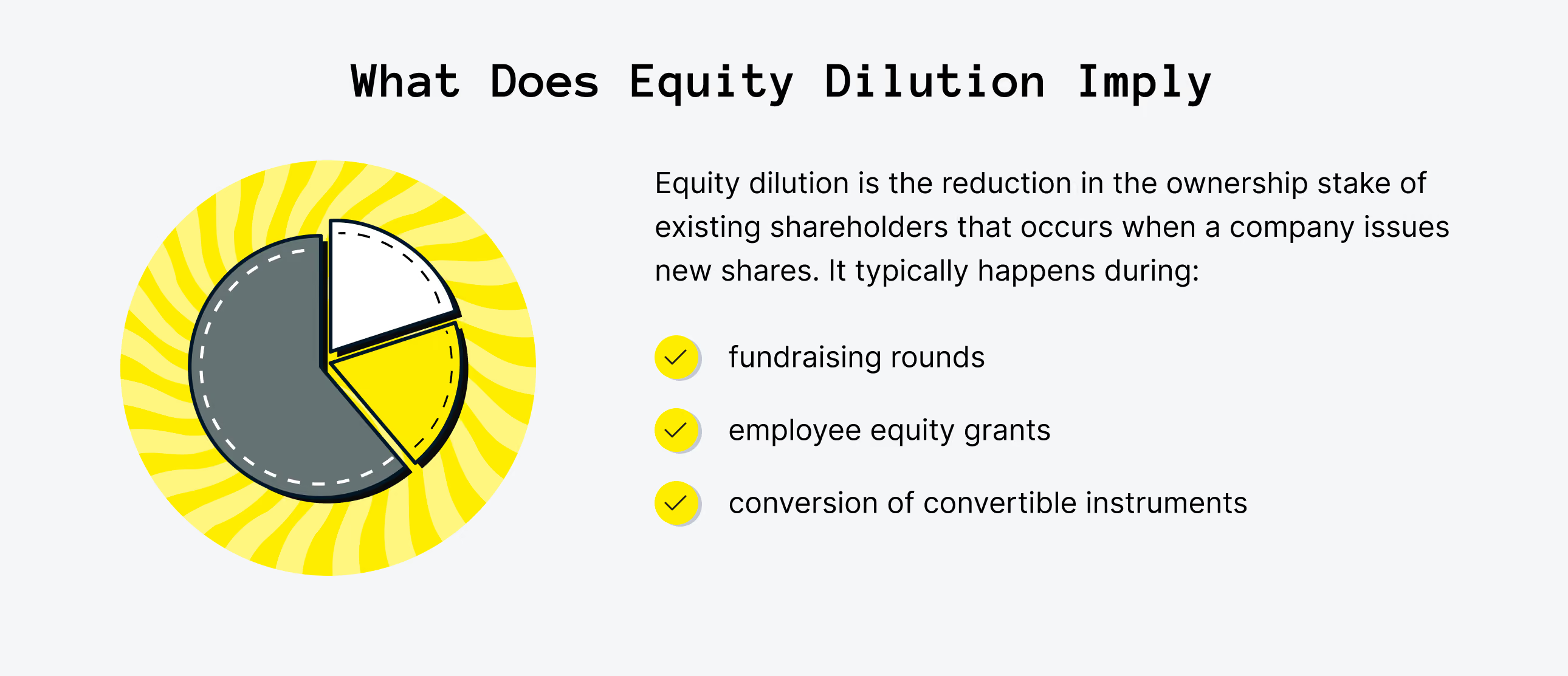
Equity dilution refers to the decrease in ownership percentage that existing shareholders experience when a company issues additional shares. This can happen during funding rounds when investors buy into the company, resulting in the creation of new shares that spread ownership across a larger group of shareholders.
Dilutive capital is typically acquired through various forms of startup fundraising. Unlike traditional loans, this funding doesn't require repayment. Instead, it implies distributing dividends to those who invest in the business. Common sources of dilutive capital include:
- angel investors;
- private investment companies;
- venture capital firms;
- top startup accelerators;
- initial public offerings (IPOs).
But this doesn’t mean they’ll just give away money. Once you’ve moved past the seed stage, typically with support from angel investors or bootstrapping, getting further funding from investors or joining an accelerator will generally require having a tangible product. At the very least, this means building an MVP that’ll be of high quality, demonstrate proven traction, emphasize the product’s unique value and potential, and indicate early adoption. Without this, it’d be tough to capture investor interest, no matter how much equity you’re willing to give up, even if it means more dilution.
Either way, these funding options can accelerate capital-raising efforts without significantly augmenting business risk and often allowing a startup to secure large funds more rapidly. However, accepting this type of financing means that investors and shareholders don’t only expect dividends, they gain a share of ownership in the company, which can sometimes lead to disagreements about business operations.


What Is Non-Dilutable Equity?
There’s another option available. According to the standard startup finance definition, non-dilutable equity involves securing capital without sacrificing ownership stakes in the business. This type of funding allows entrepreneurs to maintain complete control over their companies while benefiting from the financial resources they need to grow.
Bootstrapping a startup without turning to investors has clear advantages, as it enables you to keep full control of the company without the need to sacrifice equity or face dilution. On the other hand, when comparing dilutable vs non-dilutable shares, securing the latter can be difficult and risky, as it often requires taking out loans or leveraging credit. Businesses may face limitations on how much of such funding they can access, as lenders conduct thorough assessments of their credit history and ability to repay.
It is worth mentioning though that cash flow issues are one of the main startup failure causes, so distributing the budget to ensure a safe runway is equally important. For example, founders need to be ready to pay quite a lot for hiring developers for a startup. If the funds aren’t available or the perks aren’t evident enough to lure top talent in-house, startups commonly offer equity as compensation to recruit such specialists. This path also means dilution, but it’s not the only path available, so it’s wise to consider your options.
As such, outsourcing product development parts can be a way to cut costs and deter a startup from giving away equity to employees. It enables startups to access a well-coordinated group of experienced specialists from an external talent pool, which is much faster than finding and assembling your own team and cheaper too (if you count in paid time off, insurance, taxes, and other expenses of keeping in-house employees). Plus, partnering up with such a team can provide the needed know-how which can be handy at any stage, including the early phases like discovery when external expertise can be applied to avoid many mistakes and budget overruns, setting the project off on the right foot.


How Does Equity Get Diluted?
One of the most common questions entrepreneurs ponder is “How does dilution of equity work?” Essentially, equity dilution typically happens when a company raises capital, particularly during the startup funding process. In these rounds, founders negotiate terms with investors, which involves issuing new shares of equity in exchange for the capital needed for startup scaling.
The process begins with discussions about the funding amount and the company’s valuation. Once both parties reach an agreement, new shares are created, increasing the total number of shares in the equity pool.
Although founders retain their original shares, the addition of new ones reduces their ownership percentage. For example, if a startup initially has 100 shares and raises capital by issuing 50 new shares, the founders’ ownership percentage drops from 100% to approximately 66%.
The impact of dilutable equity is influenced not only by the number of shares issued during funding rounds but also by the founders’ retention of their original shares and the overall company or startup valuation. This is why founders often strive to maximize their company's value with each funding round, ensuring that even a smaller ownership stake in a larger, more valuable enterprise still translates to increased personal wealth.
Need a hand with your startup's tech side?
Upsilon is a reliable tech partner that can bring your ideas to life.

How to Calculate Equity Dilution
Calculating startup equity dilution is vital for clearly understanding how funding rounds impact ownership stakes in a startup. Here are a few simple steps to follow.
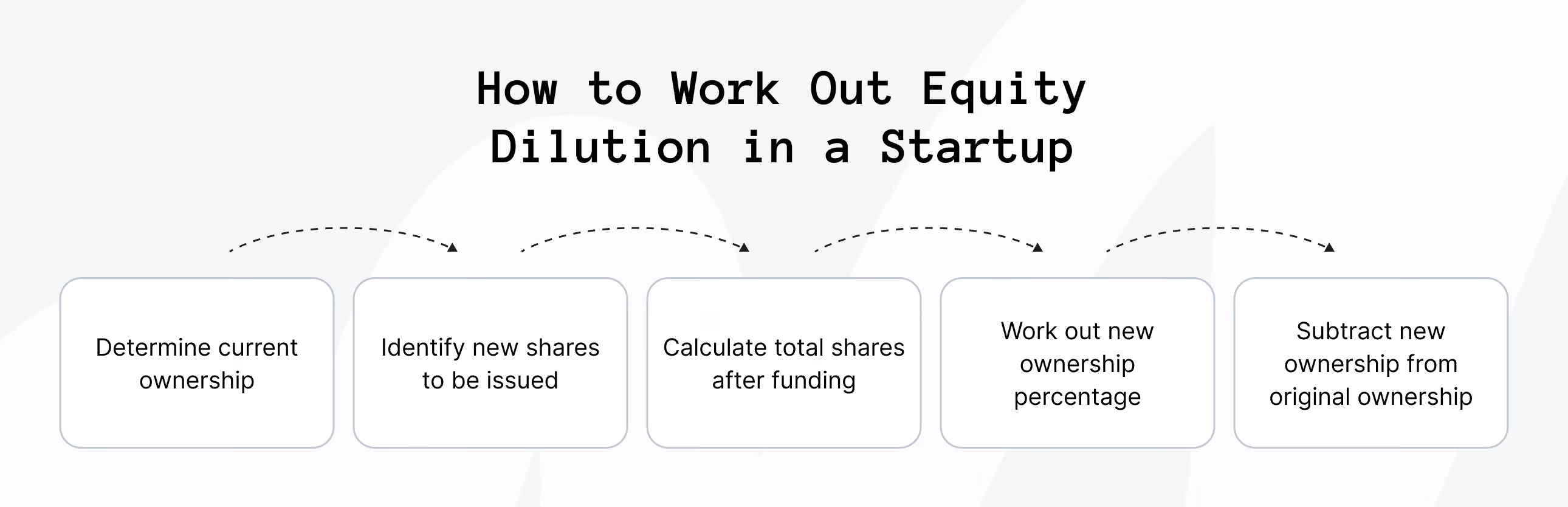
To begin, you need to determine the current ownership. Specify how many shares are owned by the founders or existing shareholders. For instance, let’s say the founders have a total of 100 shares in the company, representing their current ownership.
Next, identify the number of new shares that will be issued during the upcoming funding round. Suppose the startup plans to issue 50 new shares to investors. This addition is significant because it increases the total equity pool.
To find the total number of shares after the funding, add the existing shares to the new shares being issued. In this example, you would have 100 shares owned by the founders plus 50 new shares, resulting in a total of 150 shares in the company post-funding.
Then calculate the new ownership percentage for the founders. To do this, divide the number of shares owned by the founders by the total number of shares after the funding round. Continuing with the example, the founders would take their 100 shares and divide it by a total of 150 shares, which reveals that their new ownership percentage is approximately 66.67%. Obviously, the share size of each stakeholder in this total could be individual.
Finally, to see how much equity dilution has occurred, calculate the difference between the original ownership percentage and the new ownership percentage. Initially, the founders owned 100% of the company, and now they own 66.67%. By subtracting the new ownership percentage from the original, you find that the dilution percentage is 33.33%. This means the founders’ ownership stake has been reduced by that amount due to the issuance of new shares.


Tips for Handling Startup Dilution
Managing dilution is crucial while seeking funding or talent for your startup. Each investment round or piece of the pie offered to someone can impact your ownership, so it's important to understand the average dilution per round and how it affects your equity. Here are some handy tips to minimize dilution and protect your stake.

Raise Just Enough for Strategic Growth
To protect your ownership, secure only the capital necessary to hit your next milestone, especially during the seed round. Otherwise, seed round dilution can take a toll on your equity since this funding typically comes when your company’s valuation is still low, meaning each dollar invested buys a larger share of the business. By carefully forecasting startup costs and planning your growth trajectory, you can obtain just enough to progress without giving up more equity than needed.
Limit Your Time with Convertible Notes and SAFEs
While utilizing convertible notes or SAFEs during the pre-seed stage with friends, family, and angel investors can be an effective way to kickstart a business without assigning a specific valuation, it's crucial not to rely on these instruments for too long. They allow for quick funding but can lead to complications as the total amount raised amplifies.
As you gather more funds through these options, the pressure to eventually raise a priced round at a solid valuation increases. For example, let’s say you bring in $300,000 through SAFEs, and when it’s time for a priced round, you can only manage a $2 million post-money valuation. Your noteholders could end up owning over 15% of the company.
You definitely don’t want to hand over a huge chunk of your company like 40% or more before you even reach Series A since this can really hit Series A dilution, leaving you with much less ownership than originally planned.
Steer Clear of Super Pro-Ratas
When a high-profile investor expresses interest in your startup, they may request the option to increase their ownership in future funding rounds, a setup referred to as super pro-rata. While it can seem appealing to have such an influential backer, agreeing to these terms could lead to excessive founder dilution by round.
Therefore, it's vitally important to weigh the benefits of their investment against the potential impact on your startup equity structure. Instead, consider negotiating terms that allow for a balanced approach, ensuring that you retain control over your company’s future while still benefiting from their support.
Keep Your Option Pool Lean
When it comes to your option pool, it's best to keep it tight and avoid going overboard. Investors might urge you to create a larger pool to help attract top talents, but if you inflate it too much, you risk ending up with more diluted equity. Alternatively, you’d better put together a solid hiring plan that outlines the roles you expect to fill in the near future.
For example, if you know you’ll need five key hires over the next year or so, calculate how many options you'll actually need for those posts. This way, you can provide a well-thought-out reason for your target option pool size, giving you a stronger negotiating position while pitching to investors.
Use Equity Wisely
Key roles, such as a technical co-founder, often require equity to attract and retain top-tier talents. Sometimes it’s one of the few leverages that can help tip the scale. But be careful not to hand out equity to all employees, as this can lead to dilution of your ownership.
What if you don’t have endless funds to build the product but need something high-quality and top-notch? Apart from looking for startup discounts on tools, you can try seeking out strategic partnerships to provide your startup with valuable resources or services. For example, if you're short on funds for development, companies like Upsilon offer tech-for-equity deals for select projects, letting you use your equity sensibly by tapping into development expertise at discounted prices.
Is your startup in search of a tech partner?
Upsilon's team has talented experts who can help you develop your product.
Final Say on Startup Equity Dilution
To wrap things up, grasping the ins and outs of equity dilution is super important for any startup on the talent or funding hunt. Sure, it can shake up your ownership stake and how much your company is worth, but with the right moves, you can deal with these challenges in advance. Think of it like playing chess – you need to plan a few moves ahead and make a solid case to investors to score that cash flow you need to take your startup to the next level.
If you need a hand developing a quality product, Upsilon’s experts provide MVP development services designed just for startups like yours. Our team of seasoned pros is here to walk you through every step of building and scaling your product starting all the way from discovery. So, if you've got a brilliant idea brewing, don’t hesitate to get in touch.
FAQ
1. What is dilution of equity?

Startup equity dilution is the reduction in ownership percentage that existing shareholders face when a company issues additional shares. This often occurs during funding rounds, where new investors receive equity in exchange for their investment, leading to a larger total number of shares outstanding and consequently diluting the stakes of existing shareholders.
2. How does equity dilution work?
Equity dilution works by increasing the total number of shares outstanding when a company issues new shares, often during funding rounds. For instance, if a startup has 100 shares and issues 50 more to investors, the founders' ownership percentage decreases, even though they retain the same number of shares.
3. What is the purpose of using a startup equity dilution calculator?
A startup dilution calculator is designed to help entrepreneurs assess how issuing new shares will affect their ownership percentages. By entering variables like the current number of shares and the number of new shares being issued, users can easily see the impact of dilution on existing shareholders.
4. What does non-dilutable equity mean?
Non-dilutable equity indicates ownership stakes that stay the same even when a company issues new shares. This type of equity safeguards shareholders from losing their ownership percentage during future funding rounds.



to top