50+ Micro SaaS Ideas for 2026 Founders: Trends, Examples, and Validation


Lots of truly powerful things in life are tiny: bacteria, atoms, and yes, even that spark of joy when you find a forgotten dollar in your coat pocket (bet you smiled at this point)! And small but mighty is just as good a mantra for business too.
The thing is that your product doesn't have to be an enormous Salesforce-sized giant if you've decided to start a company or launch a startup. You could start small, you could go micro. And that's exactly what many entrepreneurs are considering for 2026 and onward.
But where do you start? On this page, we share trends and tips on finding unique ideas. Plus, we provide over 50 micro SaaS examples of business ideas that you can fall back on if you’ve decided to build a micro SaaS of your own.
Key Takeaways:
- The strongest micro SaaS ideas solve a narrow, recurring problem for a clearly defined audience rather than trying to serve everyone.
- A good idea needs more than market demand: it should have clear revenue potential, manageable competition, and a customer base you can realistically reach.
- AI automation, e-commerce, professional services, and productivity are among the areas where founders can find the most profitable micro SaaS ideas in 2026.
- A long list of ideas is only a starting point. The real opportunity comes from finding one problem worth paying to solve and shaping the product around it.
- Validation should happen before development through customer conversations, competitor research, demand signals, and early tests of willingness to pay.
What Is Micro SaaS?
Software as a service (SaaS) tools can come in various sizes and scales, but as follows from the name, micro puts small problems under the microscope. The micro SaaS business model embraces simplicity and specificity. Let's break down what it embodies.
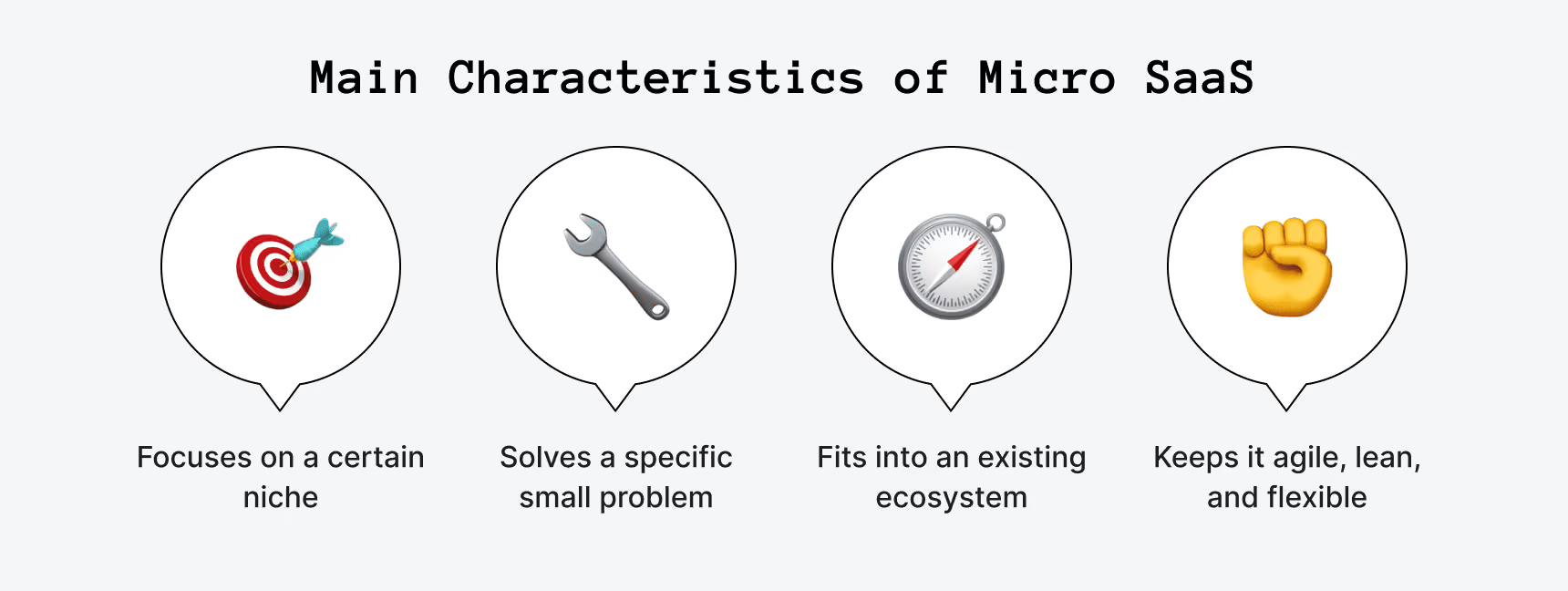
Focuses on a Niche
Catering to a broad range of users and industries is not what micro SaaS is about. Instead, it has a laser-sharp focus on solving a specific problem for a well-defined audience. Think niche corridors, not large avenues. It unveils a single pain or commonly faced struggle and narrows down those who have it.
Solves a Specific Small Problem
It concentrates on carving out a niche and solving a specific problem or unmet need of the target audience exceptionally well. The tool does one thing and does it better than any of the alternatives or complex solutions out there, and that's what makes it great. Perhaps the users don't want to be overwhelmed with tons of intricate features? They might need specialized functionality for a single workflow or something to save them time with a specific task.
Fits into an Existing Ecosystem
Another standout characteristic of micro SaaS is its ability to fit neatly into the existing tools or processes that the user has. Precisely, many of them don't force people to adopt a new ecosystem, complementing what they're already familiar with. This can help cultivate a loyal user base if people are satisfied with the offering.
Keeps It Agile
Micro SaaS solutions are typically built lean and flexible, continuously iterating and changing as needed to better tailor the solution to meet user expectations. Their scope is often small, so they might not require as many resources as a bigger product or a larger MVP development project would.
Need a Micro SaaS Example?
The person handling the accounting of a small-scale e-commerce store could see monitoring and adhering to different tax policies in various states as a struggle. A micro tool that integrates easily with Shopify, calculates, and automatically puts together tax reports could be useful and indispensable.
Or let's take a local bakery as an example. They may be giving out punch cards to their customers, offering a tenth free coffee or snack as part of the loyalty program to incentivize client return. Yet, keeping track of the cards may be time-consuming, not to mention that people could lose them or forget to bring them during their visit. A basic micro SaaS app with a focus on one small, valuable feature may be the answer. It can make punch cards digital, providing the added benefit of analytics on repeat customers, which could be important for sales and marketing.
Such a hyper-focus on solving a certain issue often wins the hearts of users by bringing a solution on a silver platter. If you get it right, you can deliver big value with a small footprint.


What Makes a Micro SaaS Idea Worth Building
The global SaaS market revenue is projected to reach $793 billion USD by 2029. Indeed, this opens up lots of opportunities. Seems like a win-win: you don’t take the challenge of building something massive and bloated with features, choosing in favor of something lightweight. Here are a few additional points on why micro SaaS entrepreneurship could be a good fit for you.
- Could be rather cheap — since the decision to build a micro SaaS usually doesn’t imply a very long or complicated development process, the upfront and overhead costs could be much lower, making entry more accessible without the need to seek outside startup funding or investor support.
- Not overly complex — although these are specialized tools that solve exact user problems, they don’t necessarily have to be very intricate in terms of design and tech, which might mean you won’t need a large development team for the micro SaaS startup or business.
- Quicker time to market — because the MVP scope of a micro SaaS tool isn’t extensive, it might be faster to build, however, fast release shouldn’t overweigh quality.
- Faster adoption — as the product is niche-focused, potential users could be easier to target, which may lead to faster acquisition and higher satisfaction if people get a solution that other bigger or more generic tools couldn’t fulfill.
- Predictable revenue — many SaaS products operate on the subscription-based pricing strategy, so even if the micro SaaS tool is cheap for users, it could bring back recurring revenue over an extensive period of time.
- Scalability potential — just because you start small, it doesn’t mean the product has to stay that way, due to its agile nature, you can extend and expand the micro SaaS to live up to other needs.
A good micro SaaS idea does not need to serve a huge market to be worth pursuing. What matters is whether the problem is painful enough, the audience is reachable, and the product can create value beyond the initial purchase. This quick checklist can help you pressure-test an idea before committing time and money to development.
Micro SaaS Trends Worth Building Around in 2026
No-code and low-code tools keep lowering the bar for a first version, which means the bar for what counts as a differentiated idea keeps rising at the same pace. Building the workflow is easier than it was two years ago; picking a workflow nobody else has built yet is harder.
Integrations matter more than standalone features. A micro SaaS tool that plugs into Shopify, Slack, or a CRM a buyer already trusts spreads faster than one asking for a new login and a new habit. Several ideas on this list work best as an add-on to an existing platform rather than a destination on their own.
AI has moved from a feature to the core mechanic for a real share of trending micro SaaS ideas in 2026: tools that read, summarize, or generate something specific instead of housing a workflow with an AI feature bolted on. The ideas below that lean on AI are the ones where the AI does the entire job, not a sidebar.
Underserved niches, the specific corner of a market bigger platforms haven't bothered building for, remain the strongest source of micro SaaS ideas for solo developers with limited time to compete on features alone. Several ideas below (the sales tax compliance tool, the plant care tracker) exist because a bigger platform decided the niche was too small to serve, which is what makes it a real opening for one person.
AI and Automation Tools
1. AI Content Repurposing Tool
A single piece of content can have a much longer life when it is adapted for different channels instead of published once and forgotten. This tool would turn a blog post, webinar, or podcast episode into social posts, an email draft, and a short video script, giving solo marketers more output without hiring a content agency. $20-50/month per seat.
2. AI Meeting Notes and Action Item Generator
Meeting notes are one of those small tasks that are easy to skip and surprisingly expensive to forget. An AI assistant could capture the conversation, pull out the key decisions, and turn loose discussion points into clear action items that everyone can access afterward. $15-30/month per user.
3. AI Lead Qualification Assistant
Not every inbound lead deserves the same amount of sales attention, but small teams rarely have the time or resources to build sophisticated qualification systems. This tool could evaluate new leads against a company's buying signals and highlight the prospects most worth a sales call. $50-150/month per team.
4. AI Document Analyzer for Legal Professionals
Contract review is often a repetitive first-pass task that takes valuable time away from higher-value legal work. Among practical micro SaaS ideas, a focused AI tool could compare incoming contracts against a firm's preferred terms, flag unusual clauses, and surface areas that deserve closer human review. $100-300/month.
5. AI-Powered Search and Filtering for Existing Sites
For websites with large catalogs or content libraries, finding the right item can be frustrating when users have to work through rigid filters and categories. A lightweight AI search layer could let visitors describe what they want in plain language and get relevant results without forcing the site owner to rebuild its entire search infrastructure. $30-80/month based on traffic.
6. AI-Generated Text Detector
Educators, publishers, and content teams increasingly need a way to assess whether submitted writing may have been generated by an LLM. Rather than presenting itself as a definitive judge, this AI detector could provide a confidence-based signal and highlight passages that warrant a closer look. $10-25/month for individuals.
7. AI Code Quality Checker
Generic linters catch common technical issues, but smaller engineering teams often have their own security concerns, coding conventions, and recurring mistakes that standard tools do not cover. A focused AI checker could review pull requests against those team-specific rules and flag problems before they make it into production. $10-20/month per developer seat.
8. AI Math Tutor for Step-by-Step Problem Solving
Students often need help understanding how to reach an answer rather than simply seeing the correct number on a screen. A focused AI tutor could guide them through each step of an equation, explain where they went wrong, and adjust the difficulty as they improve. $10-15/month per student.
9. AI Customer Support Reply Assistant
Small support teams often spend more time than expected writing nearly identical responses to recurring customer questions. An AI assistant trained on a company's help center, past conversations, and preferred tone could suggest accurate replies while keeping a human in control of the final message. $20-60/month per team.
10. AI Proposal Generator for Freelancers
Winning freelance work often involves spending almost as much time writing proposals as actually discussing the project. This AI tool could turn a project brief into a personalized proposal using the freelancer's previous work, pricing, and experience, making each pitch feel relevant without starting from a blank page. $10-25/month.
11. AI SOP Generator
Documenting everyday processes is important for growing teams, but writing detailed SOPs is rarely anyone's favorite task. A focused AI tool could turn a screen recording, rough instructions, or completed workflow into a polished procedure that is easier to hand off, train against, and update later. $20-50/month.
12. AI Project Planning Assistant
Turning a broad idea into a realistic sequence of tasks, dependencies, and deadlines can be difficult for small teams without a dedicated project manager. An AI-powered project planning tool could turn a project brief into an actionable roadmap, suggest timelines, and flag potential bottlenecks before work begins. $15-40/month per team.
Looking for a reliable tech partner?
Upsilon is an MVP development company that can help build your MVP in up to 3 months!

HR and Recruitment Tools
13. Candidate Screening App
For small companies without a dedicated recruiter, the first pass through hundreds of applications can quickly become a time-consuming bottleneck. A focused screening tool could compare candidates against role-specific requirements and surface the applications most closely aligned with what the hiring team needs. $50-100/month.
14. Skill Assessment Tool for Hiring
Resumes can show where someone has worked, but they rarely demonstrate how well that person can actually do the job. A role-specific assessment platform could give candidates practical tasks and score their submissions against predefined criteria, making it particularly useful for technical, creative, and specialist positions. $30-80/month per active hiring pipeline.
15. Structured Employee Onboarding App
The first few weeks at a new company often involve a messy mix of documents, introductions, access requests, and tasks that someone has to remember to coordinate. A lightweight onboarding app could bring those steps into one structured workflow and automatically surface what needs to happen next. $5-15/month per employee.
16. Interview Question Generator for Specific Roles
Generic interview questions rarely tell a hiring manager much about whether someone can succeed in a particular role. This tool could create role- and seniority-specific questions, suggest useful follow-ups, and provide a simple scoring framework so different interviewers assess candidates against the same criteria. $10-30/month.
17. Employee Pulse Survey Tool
Annual engagement surveys can tell a company how employees felt months ago, while smaller pulse surveys provide a much more current signal. A focused tool could send short recurring questions around workload, communication, management, and team morale without the complexity of a full employee engagement platform. $20-60/month.
18. Employee Recognition Tracker
Recognition often gets lost in day-to-day work, especially when teams are remote or spread across different locations. A lightweight platform could give employees an easy way to recognize colleagues and create a searchable record of contributions that would otherwise disappear in Slack messages or private conversations. $15-50/month.
19. Job Description Optimization Tool
A poorly written job description can discourage strong candidates before they ever apply, even when the underlying role is attractive. This tool could review job posts for vague language, unnecessary requirements, repetitive wording, and missing details, then suggest clearer alternatives tailored to the intended candidate. $15-40/month.
20. Candidate Interview Feedback Collector
Interview feedback tends to end up scattered across emails, notes, chat messages, and individual scorecards, making candidate comparisons harder than they need to be. A simple feedback platform could give every interviewer the same structured evaluation form and bring all responses together for the hiring team. $20-50/month.

Data and Analytics Tools
21. Automated Weekly Report Generator
Weekly reporting can turn into a surprisingly repetitive routine when numbers live across a CRM, ad platform, support inbox, and several spreadsheets. A lightweight reporting tool could pull those figures together and deliver a ready-to-share summary on a set schedule. $20-50/month.
22. Affiliate Program Tracking Tool
Small brands running their own affiliate programs often end up tracking links, conversions, and payouts in spreadsheets. A focused platform could bring those pieces together, making it easier to see which partners generate revenue and calculate what each one is owed. $30-80/month.
23. Multi-Channel Ad Performance Tracker
Marketing performance becomes difficult to read when every advertising platform has its own dashboard and reporting logic. A single lightweight view could bring the most important KPIs and other metrics together and make it easier for small teams to compare campaigns across channels. $40-100/month.
24. SaaS Churn Reason Analyzer
Cancellation surveys contain useful product feedback, but recurring themes can be difficult to spot when responses accumulate over time. This tool could group churn reasons into meaningful categories and show which complaints are becoming more common, giving SaaS teams a clearer picture of why customers leave. $30-80/month.
25. Spreadsheet Change Monitor
A spreadsheet monitoring tool is one of those micro SaaS ideas that addresses a small but potentially costly business problem. A monitoring tool could watch selected spreadsheets for changes to critical cells, formulas, or values and notify the right person when something unexpected happens. $15-50/month.
26. Automated KPI Dashboard for Small Businesses
Small businesses often have plenty of data but no dedicated analytics team to turn it into something useful. A simple dashboard could connect the tools they already use and surface the handful of KPIs that matter most for revenue, sales, leads, and day-to-day operations. $20-70/month.
27. PDF-to-Spreadsheet Data Extractor
Recurring PDF reports often contain exactly the information an analyst or accountant needs, but getting that data into a usable spreadsheet can mean hours of manual copying. A focused extraction tool could recognize tables and structured fields and convert them into clean, spreadsheet-ready data. $15-60/month based on document volume.
28. Broken Link and Redirect Monitor for Marketers
A broken landing page or unexpected redirect can quietly hurt campaigns, SEO, and conversions long before anyone notices. A lightweight monitoring tool could regularly check important marketing URLs and alert teams when links stop working or start behaving differently. $10-30/month.


Marketing and Growth Tools
29. Waitlist Software with Referral Incentives
A pre-launch waitlist becomes much more valuable when every signup has a reason to bring someone else in. This tool could combine signup management with referral rewards, letting founders move users up the queue based on successful referrals and create organic momentum before launch. $20-50/month.
30. Influencer Collaboration and Performance Tracker
Influencer campaigns can quickly become messy once outreach, content approvals, payments, and performance data start living in different places. A focused platform could keep creator relationships and campaign results together, helping smaller brands see which collaborations actually generate clicks, sales, or engagement. $50-150/month.
31. Social Proof Widget
New visitors often look for signs that other people already trust a product before deciding to buy or sign up. A lightweight widget could display recent purchases, signups, reviews, or other genuine activity directly on a website without requiring custom development. $10-30/month.
32. Customer Feedback Annotation Tool
Customer feedback becomes difficult to act on once hundreds of survey responses and support conversations start piling up. This concept stands out among other micro SaaS business ideas by giving small teams a focused way to categorize comments by theme, highlight recurring issues, and identify what customers are consistently asking for. $30-70/month.
33. Competitor Change Monitor
Keeping an eye on competitors manually is easy to postpone, even when changes to pricing or positioning could directly affect a business. This tool could monitor selected competitor pages and send an alert when important details change, giving small SaaS and e-commerce teams a lightweight source of competitive intelligence. $20-80/month.
34. UTM Link Manager for Small Teams
Campaign tracking tends to become messy when multiple marketers create links using slightly different naming conventions. A lightweight UTM manager could keep campaign parameters standardized, searchable, and easy to validate across channels without the overhead of a full marketing operations platform. $10-30/month.
35. Landing Page Conversion Audit Tool
A landing page can look polished while still leaving obvious conversion problems unnoticed. This tool could analyze the page structure, headline, CTA, messaging, and key conversion elements and turn those findings into a practical pre-launch audit for founders and marketers, working on plausible marketing strategies. $15-50/month.
36. Newsletter Sponsorship Tracker
Independent newsletter publishers often manage sponsorships through a combination of spreadsheets, email threads, and calendar reminders. A dedicated tracker could keep inquiries, booked placements, rates, invoices, deadlines, and campaign results in one place without the complexity of enterprise advertising software. $15-40/month.


Freelancer and Professional Tools
37. Client Feedback and Revision Tracker for Designers
Design projects can quickly become difficult to manage when feedback is scattered across email threads, Slack messages, calls, and different file versions. A dedicated tracker could keep every comment connected to the right deliverable and make it clear which revisions are still outstanding. A built-in note-taking tool could also help designers capture decisions and context that come up during client discussions. $15-40/month.
38. Multi-State Sales Tax Compliance Tool
Sales tax becomes increasingly complicated as an online business starts selling to customers across multiple states with different rules and filing requirements. A focused compliance tool could calculate obligations and organize the relevant filings without forcing a small seller into a full-scale accounting platform. $50-150/month.
39. Time Tracking Built Into Invoicing
For freelancers and agencies billing by the hour, the work does not end when the timer stops; those hours still have to become an accurate invoice. A combined tool could connect tracked time directly to client billing, reducing the manual work between recording a project and sending the bill. $10-25/month.
40. Freelance Contract Renewal Tracker
Long-term client relationships often involve renewal dates, notice periods, retainers, and rate changes that are easy to lose track of once several contracts are active. A lightweight tracker could keep those dates and obligations visible and send reminders before an important deadline arrives. $10-25/month.
41. Client Portal for Freelancers
Clients often have to search through emails and shared folders to find project updates, files, invoices, or previous deliverables. A simple branded portal could bring those essentials together in one place, with a knowledge assistant helping clients quickly find relevant project information without having to dig through old conversations. $15-40/month.
42. Scope Creep Tracker
Extra requests can quietly turn a profitable freelance project into an underpaid one, especially when changes are agreed to informally in chat. A scope tracking tool could capture out-of-scope requests, estimate their impact on hours or startup cost, and create a clear record for discussing additional charges with the client. $10-30/month.
43. Freelancer Rate Calculator
Choosing a freelance rate based on what competitors charge can leave out taxes, unpaid administrative work, downtime, business expenses, and vacation. A more useful calculator could factor those realities into a sustainable hourly or project rate based on the freelancer's actual income goals. $5-15/month or a one-time purchase.
44. Client Brief Generator
Client requests rarely arrive as perfectly structured project briefs; they usually start as a long email, scattered notes, or a conversation full of half-formed ideas. A focused tool could turn that raw input into a clear brief covering objectives, deliverables, deadlines, requirements, and unanswered questions. $10-25/month.


E-Commerce Tools
45. Dynamic Pricing Tool
A lightweight pricing solution for small e-commerce sellers that need to respond to changing demand without relying on spreadsheets or hiring a pricing analyst. Pricing recommendations account for demand, inventory levels, competitor prices, and how quickly products are selling. $50-150/month based on catalog size.
46. Review Analysis Tool
A simple way for merchants to turn a large volume of customer reviews into clear insights about what shoppers love, dislike, and want to see improved. Particularly useful for stores where manually reading and categorizing every review has become too time-consuming. $20-60/month.
47. Self-Service Return Management Platform
A smoother return experience for both shoppers and merchants, with self-service return requests on one side and a clear view of return reasons and status on the other. Designed for growing e-commerce brands where handling returns manually is starting to put pressure on customer support. $40-100/month.
48. Low-Stock Alert and Reorder Assistant
A practical inventory safety net for small stores that need to know which products are getting close to running out and when it is time to reorder. Historical sales and current stock levels help flag potential shortages before a popular product goes out of stock and starts costing the business sales. $20-60/month.
49. Product Bundle Recommendation Tool
An easy way for small e-commerce stores to turn common purchasing patterns into product bundles that can raise average order value. Instead of requiring someone to dig through sales data, the tool identifies products that customers frequently buy together and surfaces them as bundle opportunities. $20-70/month.
50. E-Commerce Product Feed Error Monitor
A safety net for merchants selling across multiple shopping channels, where a small feed error can quickly turn into missing or rejected listings. The tool flags issues such as missing images, incorrect prices, invalid attributes, and rejected products before they become a noticeable hit to sales. $20-60/month.
51. Customer Review Request Automation
A hands-off review collection tool for small e-commerce brands that want more customer feedback without keeping track of every order manually. Requests are timed around delivery, while customers who have already responded are automatically excluded from further follow-ups. $15-50/month.
52. Digital Punch Card for Repeat Customers
A simple digital loyalty option for businesses that want the familiarity of a traditional punch card without introducing a complicated POS system. The system could include basic attendance tracking to show how often individual customers return and identify the most loyal visitors. $10-25/month flat.
Personal and Lifestyle Tools
53. Guided Mental Wellness Journal
A more structured alternative to a blank digital journal, centered around one specific journaling method and a clear daily flow. A good fit for people who want to measure personal growth over time but struggle to stay consistent without prompts or guidance. $5-10/month.
54. Plant Care Tracker
A personalized care companion that turns a plant photo into a tailored watering and maintenance schedule. Designed for plant owners who want advice based on the specific species they own rather than another generic reminder app. $3-8/month or a one-time purchase.
55. Digital Subscription Cancellation Tracker
A simple dashboard for keeping recurring subscriptions, renewal dates, prices, and cancellation windows under control. Useful for people who have gradually accumulated streaming services, software, memberships, and other recurring expenses they rarely think about until they get charged again. $3-8/month or a one-time purchase.
56. Travel Packing Planner
A personalized packing companion that takes the destination, weather, trip length, activities, and luggage limits into account. It is designed for frequent travelers who need a smarter starting point than a generic packing checklist and want to avoid both overpacking and forgetting essentials. $3-8/month or a one-time purchase.
57. Home Maintenance Reminder
A centralized place for all the household tasks that are easy to forget, from changing filters and servicing appliances to seasonal maintenance and routine inspections. A simple drip campaign flowchart could even organize recurring maintenance reminders into seasonal sequences for different types of homes. $5-10/month.
58. Personal Document Expiration Tracker
A lightweight reminder system for important expiration dates, from passports and licenses to warranties and memberships. It gives users advance notice without requiring them to upload sensitive documents or adopt a full personal finance and organization platform. $3-8/month or a one-time purchase.

How to Validate an Idea Before You Build It
Finding promising micro SaaS ideas in 2026 is only the first step. Before writing code, the real question is whether a specific group of people has the problem, cares enough to solve it, and would actually pay for a better solution. A few simple validation steps can help separate a business opportunity from an idea that only sounds good on paper.

1. Define the Exact Buyer
You should start by identifying exactly who would pay for the product and what they use today instead of it. “Small business owners” is too broad to validate against, while “independent hair salon owners tracking loyalty punches on paper” gives you a specific audience to research. The more precisely you can describe the buyer, the easier it becomes to find people with the problem and understand what they already pay for.
2. Research the Existing Competition
It’s vital to look at who already solves the problem and, more importantly, how well they solve it. A crowded category does not automatically mean there is no opportunity, because existing products may be too expensive, too complicated, or poorly suited to a specific niche. An empty market is not automatically promising either; it can mean the problem is difficult to monetize or simply not painful enough to solve.
3. Talk to Potential Customers
It’s worth talking to at least ten people who experience the problem before writing a line of code. You should ask what they use today, how often the problem happens, what they have already tried, and what makes the current solution frustrating. A polite “that sounds cool” is weak evidence, while someone describing an annoying workaround they already use is a much stronger signal.
4. Test the Idea With a Landing Page
The next step is to create a simple landing page that explains the outcome the product promises rather than listing every feature it might eventually have. This will help you send relevant traffic to it and track signups, demo requests, or other actions that require genuine interest. Real conversions from people who fit your target audience are much more useful than positive feedback from friends or people who already want to support you.
5. Set the MVP Scope Before Building
Remember to set a realistic budget and timeline before development starts, and make the first version just large enough to answer the main validation question. The goal is not to launch every feature you imagined, but to learn whether people will use and pay for the core solution. If the idea relies heavily on AI, the scope may need to account for model costs, data quality, and evaluation as part of the MVP rather than treating AI as an afterthought.
Need a hand with SaaS development?
Upsilon is a trustworthy tech partner that can help bring your SaaS ideas to life.
Concluding Thoughts on Micro SaaS Business Ideas
As you see, small can indeed be spectacular. The key is knowing how to find micro saas ideas that solve a specific problem for a clearly defined audience and deliver enough value to justify paying for the solution. The opportunities are broad, from e-commerce and professional services to education, personal productivity, and beyond.
If you've decided to build your own micro SaaS tool and need the tech minds to make it happen, Upsilon's team can offer all the needed guidance. This includes proper tech planning for future scaling, choosing optimal development timelines and technologies to use, user-friendly design, and a skilled team to bring it to life. So, feel free to check out our SaaS application development services and contact us to chat about your ideas.



FAQs
How much does it cost to build a micro SaaS MVP?

A no-code micro SaaS MVP can launch for a few hundred dollars in tooling costs. A custom-built one runs $8,000 to $30,000, depending on how much of the product needs real infrastructure (accounts, billing, data storage) rather than a workflow built on top of existing tools. The narrower the idea, the lower the number lands.
How long does it take to launch a micro SaaS product?
A focused MVP with one core workflow can launch in 4 to 8 weeks. Ideas that lean on no-code tools and existing APIs move toward the faster end; ideas needing custom infrastructure, like the sales tax or legal-document tools on this list, take longer because the core logic can't be assembled from existing pieces.
What are the most common mistakes first-time micro SaaS founders make?
Building the full feature list before anyone has paid for the narrow version, picking an idea in a category three established players already dominate, and treating marketing as a step that starts after launch instead of before it. The idea list above skips categories like generic to-do lists and habit trackers for this reason: the market is real, but so is the competition already in it.
Can I build a micro SaaS while working a full-time job?
Yes. Most of the ideas on this list fit a solo builder working part-time, which is why the narrower ones (a plant care tracker, a wellness journal) sit alongside more involved ones (a sales tax compliance tool). Pick the scope that matches the hours you have, not the one with the biggest addressable market.
What makes a micro SaaS idea more likely to succeed than a generic SaaS idea?
A specific, named buyer who already has the problem and a budget for solving it, not a broad audience, a bigger competitor already serves well. All micro SaaS business ideas in 2026 mentioned on this list name that buyer, because the buyer, not the feature list, is what determines whether the idea is worth building.
to top