How to Build AI Proposal Automation Software: Key Features, Steps, and Costs


In B2B, the team that moves fastest usually gets the signature. The first company to send a well-crafted, personalized proposal gains a significant competitive advantage. The challenge is that creating a proposal manually can take up to 25 hours. While organizations are busy copying content between documents, formatting pages, and searching through old folders for relevant case studies, competitors may already be discussing contract terms with the prospect.
That's why more and more companies today are investing in AI proposal automation software instead of relying on traditional templates. The numbers speak for themselves. Businesses that automate proposal creation can reduce response preparation time to less than five hours while increasing win rates by up to 45%.
Rather than asking employees to manually search through years of company documents, AI analyzes historical proposals, case studies, and internal knowledge bases in seconds. This helps organizations receive accurate, context-aware responses tailored to each client's request.
In this article, we'll break down what AI RFP response software is, review the key features every solution should include, walk through the development process step by step, and provide a realistic estimate of the timeline and budget required to build a custom AI proposal generator. We'll also compare custom development and off-the-shelf alternatives to help stakeholders choose the approach that best aligns with their business goals.
Key Takeaways
- AI proposal software reduces proposal preparation time by 40–60% and can increase win rates by up to 45%, allowing teams to focus on strategy and client relationships rather than repetitive document work.
- Manual proposal workflows create compounding bottlenecks, such as human errors, communication gaps, and scalability limits, that become increasingly costly as business grows.
- While off-the-shelf solutions offer a fast start, custom AI proposal generators deliver long-term advantages: full data ownership, deep system integrations, and a proprietary competitive asset built on your unique knowledge base.
- An effective custom solution should include 7 core capabilities: AI-powered generation, intelligent knowledge base, large-scale personalization, scope and pricing recommendations, collaboration with version control, buyer analytics, and CRM integrations.
- Building a custom AI proposal generator typically costs from about $25,000 for an MVP up to $90,000+ for a full solution, with ongoing infrastructure and maintenance costs adding 15–20% annually.
What Is AI Proposal Software?
AI proposal software is a solution that helps companies create sales proposals, RFP responses, bid submissions, and project proposals faster and with less manual effort. Using artificial intelligence and machine learning, these tools analyze client requirements, generate relevant content, personalize responses, and help teams produce more professional and persuasive documents.
Instead of spending hours copying information from previous proposals, updating numbers, and rewriting the same sections over and over again, employees can generate a high-quality first draft in minutes. In many cases, the system can complete 80–90% of the proposal automatically.
The impact goes far beyond saving time. By eliminating repetitive administrative work, AI business proposal generators allow businesses to focus on activities that actually influence revenue growth: understanding client needs, refining proposal strategy, and building stronger relationships with prospects.
How AI Transforms the Proposal Process
Research shows that sales representatives spend only 40% of their working hours actually selling. The remaining 60% goes to administrative and operational tasks, including responding to RFPs. This isn't surprising, especially for companies that still create proposals manually. Before exploring how AI transforms the process, let's look at the challenges teams face when managing proposals the traditional way.
The Bottlenecks of Traditional Proposal Management Process
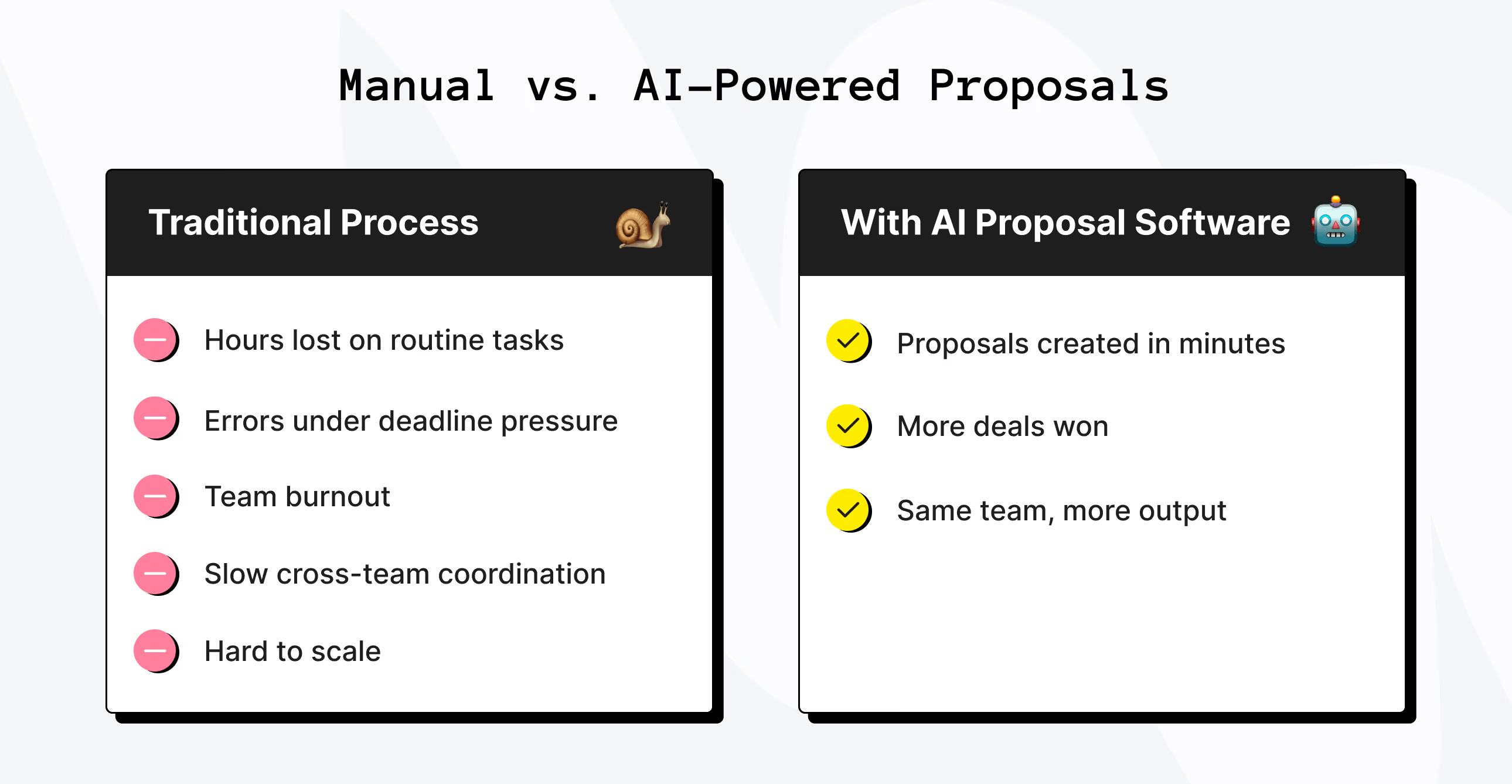
Manual proposal creation may seem manageable when request volumes are low. But as a business grows, the process quickly becomes a bottleneck that slows down sales and limits scalability. Here are the biggest challenges:
Too Much Time Spent on Repetitive Work
Instead of focusing on sales strategy and client needs, companies spend hours copying content from previous proposals, updating company names, searching for relevant case studies, and manually formatting documents. The result? Highly skilled teams spend a significant portion of their day performing tasks that add little strategic value.
Human Errors Are Inevitable
When proposals are assembled manually under tight deadlines, mistakes happen. Sometimes it's a minor typo. In other cases, the proposal may include outdated pricing, references to deprecated features, or even the name of a previous client left behind from an old template. These errors damage credibility and can cost companies valuable business opportunities.
Employee Burnout and Lower Engagement
When employees spend too much time on repetitive tasks, their motivation drops more quickly, and their overall effectiveness suffers. Instead of focusing on higher-impact work, teams get bogged down in routine administration. Over time, this can hurt engagement, lower performance, and increase the risk of burnout.
Communication Breakdowns Across Teams
Preparing a proposal often involves several departments, each responsible for providing specific information. Gathering technical details, compliance requirements, pricing, and other data can take time, especially when teams rely on manual communication and approval processes. This back-and-forth slows down the workflow, creates unnecessary interruptions, and can delay proposal submissions.
Limited Scalability
Scalability is one of the biggest challenges of manual proposal management. Employees can only prepare a limited number of high-quality proposals each month. As demand increases, companies face an uncomfortable choice: hire more people, reject opportunities, or rush proposal creation. None of these options is ideal.
Eventually, businesses hit a ceiling where proposal volume grows faster than their ability to deliver quality responses. Win rates start to decline, and revenue opportunities are left on the table. Fortunately, these challenges can be addressed with AI-powered proposal automation tools.
Let's take a closer look at how artificial intelligence is changing the way organizations create proposals and respond to RFPs.
The Advantages of AI Proposal Software
Traditional proposal management forces companies to make a difficult trade-off between speed and quality. Creating a well-researched, personalized proposal takes time. But the longer teams spend preparing a response, the higher the risk that a competitor will get there first. On the other hand, rushing through the process often leads to mistakes, inconsistencies, and lower-quality submissions that can hurt the company's chances of winning the deal.
AI proposal writing tools eliminate this trade-off. By automating the most time-consuming parts of proposal creation, they allow teams to produce more customized proposals at scale without sacrificing quality. Instead of spending hours on repetitive tasks, businesses can focus on strategy, personalization, and customer engagement.
Let's look at the key benefits provided by proposal automation software:
Significant Time Savings
Studies show that AI proposal generators can reduce proposal preparation time by 40–60%. Machine learning algorithms analyze incoming requests, identify relevant information from previous proposals and company knowledge bases, and automatically generate much of the required content.
Instead of starting every proposal from scratch, teams begin with a high-quality draft that already contains the majority of the information they need. This dramatically reduces administrative workload and allows businesses to spend more time on revenue-generating activities.
Higher Win Rates and Better Proposal Quality
Proposal automation doesn't just make teams faster, it helps them create stronger submissions. Companies that implement AI proposal management software report higher satisfaction with the proposal creation process, while many also see a measurable increase in proposal win rates.
With less time spent on repetitive work, teams can focus on tailoring proposals to each prospect's specific challenges and objectives. At the same time, AI helps ensure that important requirements, supporting information, and compliance details are not overlooked. The result is a more relevant, consistent, and persuasive proposal that stands out from competing offers.
Sales Scalability Without Growing Headcount
Manual proposal processes can work well at a smaller scale, but they become harder to manage as demand grows. More proposal requests mean more time spent on drafting, editing, reviewing, and approving documents, which forces founders to hire more people or reduce proposal quality. AI changes that equation. Document verification can also help teams quickly check proposal documents for missing or inconsistent information before submission.
By automating repetitive tasks, AI for proposal writing significantly increases the throughput of existing teams. The same group of employees can handle a much larger number of incoming opportunities while maintaining consistent quality standards. For growing businesses, this means scaling sales operations without scaling administrative overhead at the same pace.
Why Build Custom AI Proposal Generator Instead of Buying
Since tools for proposal writing with AI offer a lot of benefits, demand for these solutions is steadily growing. According to Fortune Business Insights, the global proposal management software market is expected to grow from $3.66 billion in 2026 to $9.19 billion by 2034. Companies want their teams to spend less time searching for information, updating templates, and managing documents — and more time focused on strategy, customer relationships, and revenue growth.
As businesses evaluate proposal automation software, a key question inevitably arises: is it better to buy an existing solution or invest in building a custom product? At first glance, the answer seems obvious. The market already offers hundreds of proposal management tools with AI capabilities. It’s enough to subscribe, configure the system, and start using it almost immediately.
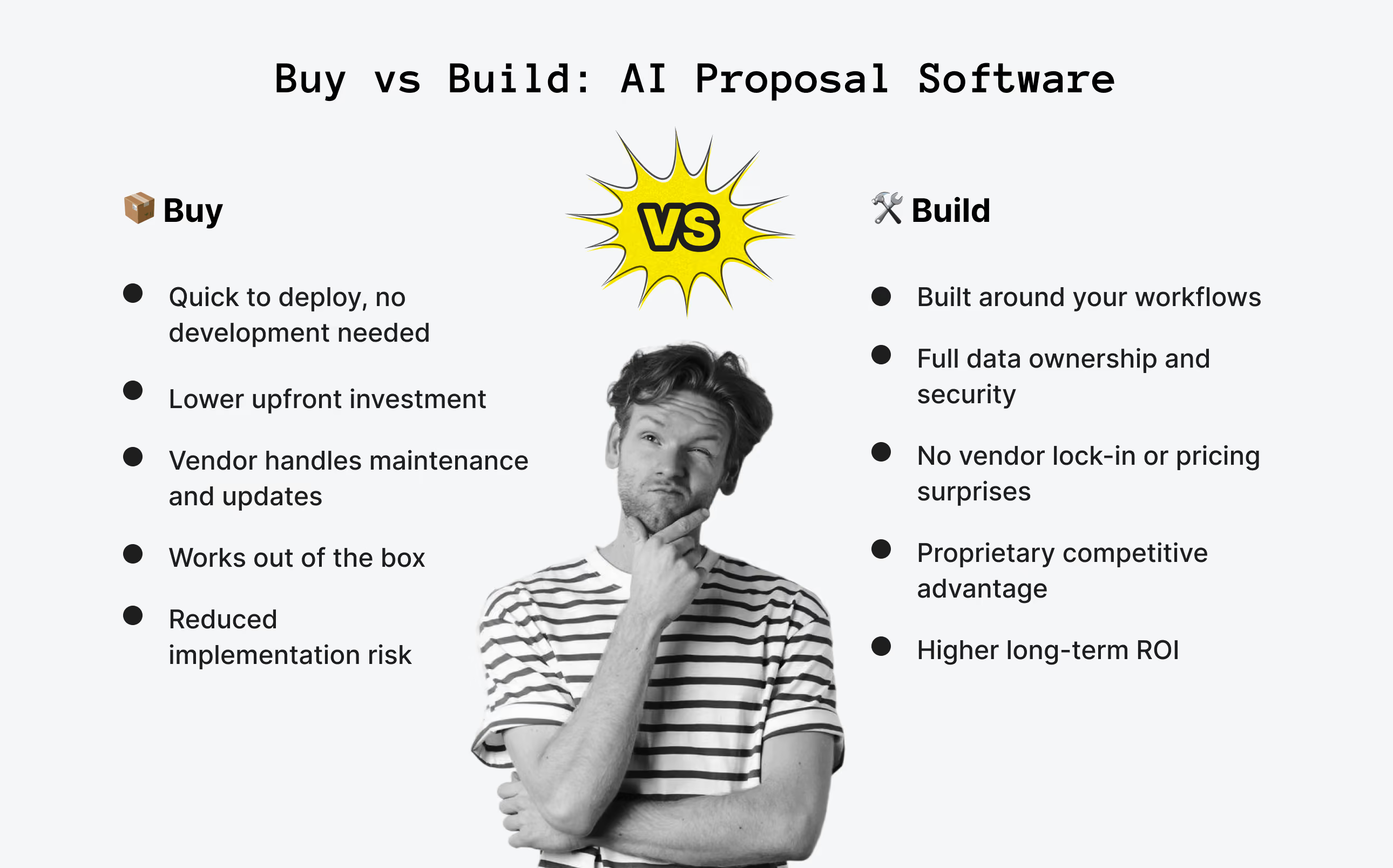
However, many companies eventually discover that off-the-shelf solutions come with limitations. In some cases, subscription costs increase significantly as usage grows. In others, the platform doesn't align with internal workflows, lacks critical integrations, or simply fails to support the way the business actually operates.
As a consequence, what initially looked like a quick and cost-effective solution can become a constraint on efficiency and growth. That's why it’s important to choose the right approach because it can directly impact the company’s competitive advantage in the future.


AI Proposal Software: Custom Development vs. Ready-Made Solutions
When evaluating ready-made platforms and custom-built solutions, the decision usually comes down to three key factors:
- How well the software fits the organization’s internal processes;
- The total cost of ownership today and in the long run;
- The level of flexibility and control the company requires.
Ready-made platforms offer speed and convenience, while custom development provides greater adaptability and ownership. The right choice depends on the company’s business goals, operational complexity, and growth plans.
Let's compare the key differences between these two approaches side by side:
Off-the-shelf solutions are often a good starting point. They allow teams to validate use cases quickly and begin automating proposal workflows without a major upfront investment. However, as businesses grow, these solutions can become increasingly restrictive. Subscription costs rise, customization options remain limited, and founders often find themselves adapting their processes to the software rather than the other way around. Developing a custom AI proposal generator requires more investment at the beginning, but it gives companies greater flexibility, ownership, and long-term scalability.
When Custom Development Makes Sense
When do businesses need custom RFP response software? Let’s see where custom software development has a clear advantage:
Software That Adapts to Your Business
The biggest benefit of custom development is alignment. Most ready-made tools are designed for the average customer. Because of this, companies often have to adjust their internal workflows to fit the software's limitations. A custom solution takes the opposite approach.
The AI proposal writer is built around the organization’s existing processes, approval flows, content libraries, and reporting requirements. Founders decide which features matter, how information is displayed, and which data sources the AI should prioritize.
Complete Control Over Data and Security
In B2B sales, proposal data often contains highly sensitive information, including pricing models, margins, customer details, and strategic business knowledge. When working with existing documents, teams may also need to redact PDFs to remove confidential information before sharing or processing them. When using third-party AI services, businesses inevitably give up a degree of control over how that information is processed and stored.
With a custom solution, companies are fully protected. Data remains within their infrastructure, access controls can be tailored to internal policies, and compliance requirements can be implemented according to their customers' expectations. For many enterprises, this level of control is a critical requirement rather than a nice-to-have feature.
Deep Integration with Existing Systems
AI proposal software needs information from CRMs, project management tools, knowledge bases, document repositories, and other internal systems. While off-the-shelf solutions often offer standard integrations, they may not fully support the company’s technology stack or specific workflows.
A custom tool can be integrated directly into the organization’s existing ecosystem, allowing it to automatically retrieve customer information, previous proposals, project data, and internal expertise. This results in more accurate, personalized, and context-aware proposals.
Independence from Vendor Roadmaps
Functionality of ready-made AI proposal template generators depends on the vendor's plans and development priorities. If a business requires a specific feature, there is no guarantee that it will ever be added. Even if it appears on the product roadmap, implementation could take months or years.
A custom tool provides more control and flexibility. Companies can introduce new features, fine-tune AI models, and adapt the system whenever their business requirements change. This flexibility becomes increasingly valuable as markets evolve and organizations expand into new services or industries.
Building a Proprietary Competitive Asset
One of the cool advantages of custom AI development is that it transforms organizational knowledge into a strategic asset. LLMs learn from the company’s successful proposals, sales methodology, industry expertise, and writing style. Over time, the generator becomes increasingly aligned with what works specifically for its business. Competitors can purchase the same commercial software you use. But they cannot purchase an AI platform trained on your internal knowledge, best practices, and winning strategies.
So, building custom AI proposal software requires a larger investment of time and resources upfront. Nevertheless, the long-term benefits will outweigh the initial costs. Such tools don’t simply automate document creation. They will help teams respond faster, improve proposal quality, protect sensitive information, and scale sales operations more efficiently.
Need a hand with custom software development?
Upsilon can help you design and build a solution that fits your business and scales as you grow!

Key Features of AI Proposal Software
Let's assume you've realized that off-the-shelf solutions fall short of your business or market needs, and a custom AI proposal generator is exactly what you need. Now, your primary task is to thoughtfully design the feature set of your future product. Here are 7 features worth building into your solution from the start.
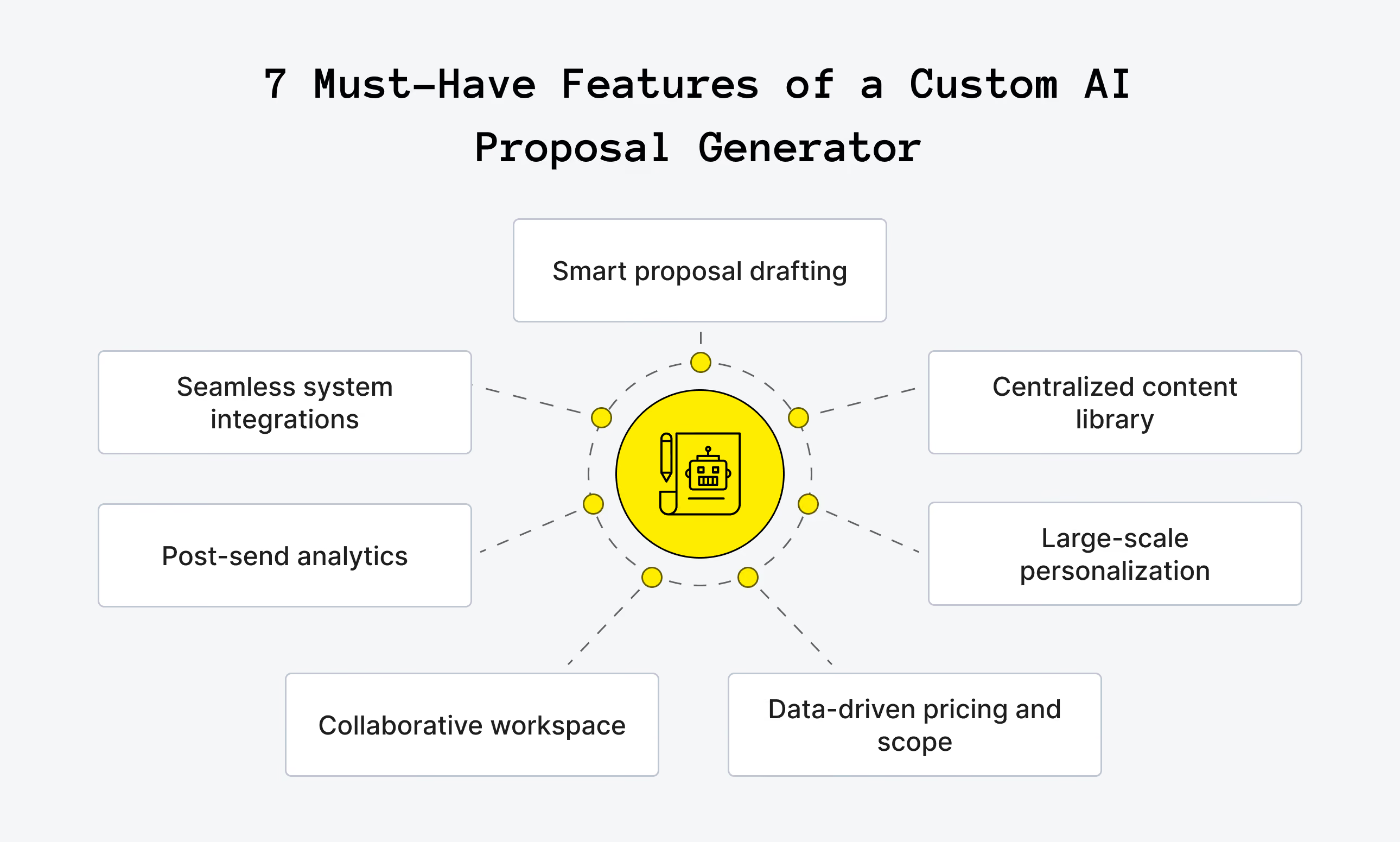
AI-Powered Proposal Generation
Many companies still rely on a familiar workflow: copy content from previous proposals, update client information, modify a few sections, and hope nothing important gets overlooked. AI business proposal generators are able to reduce this process from several hours to several minutes.
Modern LLMs can analyze client requirements, project specifications, CRM records, and internal knowledge bases to generate a complete proposal draft, including the descriptions of the solution, project scope, expected outcomes, deliverables, and supporting business arguments.
Intelligent Knowledge Base and Content Management
One of the most common challenges in proposal creation is finding the right information at the right time. Case studies, service descriptions, customer testimonials, presentations, and previous proposals are often scattered across multiple systems. As a result, employees spend valuable time searching for relevant materials or may accidentally rely on outdated content.
AI proposal software helps address this challenge through a centralized content library. Businesses can also use knowledge base software to organize and manage company information, documentation, case studies, and other approved resources in one accessible place. Company materials can be stored in one place, while AI helps teams find relevant information based on meaning rather than keywords alone. For example, when preparing a proposal for a logistics company, an AI powered writing tool can surface relevant case studies, successful project examples, industry specific content, and supporting materials from previous engagements.
This approach saves time and helps maintain consistency across customer facing documents. Before a proposal is sent, teams can also use a plagiarism detector to identify reused or overlapping text and review the content for originality. Centralized knowledge libraries and AI powered search are increasingly common in proposal workflows because they make approved content easier to find, validate, and reuse appropriately.
Personalized Proposals at Scale
Customers expect proposals tailored to their specific needs. Generic documents that look identical for every prospect rarely stand out in competitive sales processes. Delivering personalization manually becomes increasingly difficult as proposal volume grows. AI makes large-scale personalization possible.
By analyzing industry data, company size, business objectives, historical interactions, and customer challenges, the AI proposal generator can automatically adapt messaging, prioritize relevant benefits, and emphasize the value propositions most likely to resonate with a specific prospect. Automatically generated messages may still sound templated, so inserting them into an AI text humanizer helps to polish the wording into natural, human-sounding copy. A proposal like this feels more thoughtful and helps businesses build trust with potential customers faster.
For example, an RFP response for a financial institution may emphasize compliance, risk management, and security, while a proposal for a technology startup may focus on scalability, speed of implementation, and growth potential. Teams will start with a strong first draft rather than a blank page.
AI-Assisted Pricing and Scope Recommendations
Defining project scope and pricing is often one of the most challenging stages of proposal preparation. Organizations need to balance customer expectations, profitability targets, resource availability, and project risks. Even experienced professionals can underestimate effort, overlook costs, or recommend suboptimal service packages.
AI proposal management software helps improve decision-making by learning from historical project data. By analyzing previous engagements and their outcomes, the system can recommend realistic budgets, project timelines, team compositions, and additional services that are likely to increase project success. This creates a more consistent and data-driven estimation process while reducing the risk of costly miscalculations.
Collaboration and Version Control
Creating a proposal usually involves several teams across an organization. Technical details, legal requirements, pricing information, and final approvals often come from different stakeholders. Without proper collaboration tools, they will quickly end up managing dozens of document versions, email threads, and approval requests.
AI-powered writing assistants provide a centralized workspace where all stakeholders can contribute simultaneously. Teams can review content, leave comments, approve sections, and track changes in real time. AI can further streamline collaboration by highlighting updates, summarizing revisions, and identifying inconsistencies across different sections of the document. This significantly improves transparency and reduces approval bottlenecks.
On top of that, any updates made to shared content blocks, whether it's a revised pricing section, updated legal clause, or refreshed service description, can be automatically rolled out across all relevant documents, keeping everything consistent without any manual effort.
Proposal Analytics and Buyer Insights
The proposal process doesn't end when the document is sent. Understanding how prospects interact with RFPs can provide valuable insights for businesses. That’s why advanced AI tools for proposal writing should include analytics instruments that track document views, engagement levels, time spent on specific sections, and overall content performance. Some solutions provide detailed dashboards that help companies evaluate both proposal effectiveness and team productivity.
These insights allow teams to refine their messaging, improve proposal structure, and focus follow-up conversations on topics that matter most to potential customers. Instead of relying on assumptions, founders can make decisions based on actual buyer behavior.
CRM and Business System Integrations
Even the most advanced AI platform delivers limited value if it operates in isolation. Companies apply a broad ecosystem of tools, including CRM platforms, contract management systems, project management software, financial applications, and document-signing services. Switching between disconnected systems slows down workflows and increases the likelihood of errors.
That's why seamless integrations have become a critical requirement for AI proposal software. It should connect directly to CRM systems, electronic signature tools, project management applications, and other core business systems. This enables customer data to flow automatically into proposals, triggers contract workflows after approval, and initiates project delivery processes once agreements are signed.


How to Build AI Proposal Software (Step‑by‑Step Guide)
If existing off-the-shelf tools don't address your business requirements or product vision, building custom proposal automation software may be the right path forward. Below is a step-by-step guide to creating a solution that automates proposal workflows and delivers real business value.
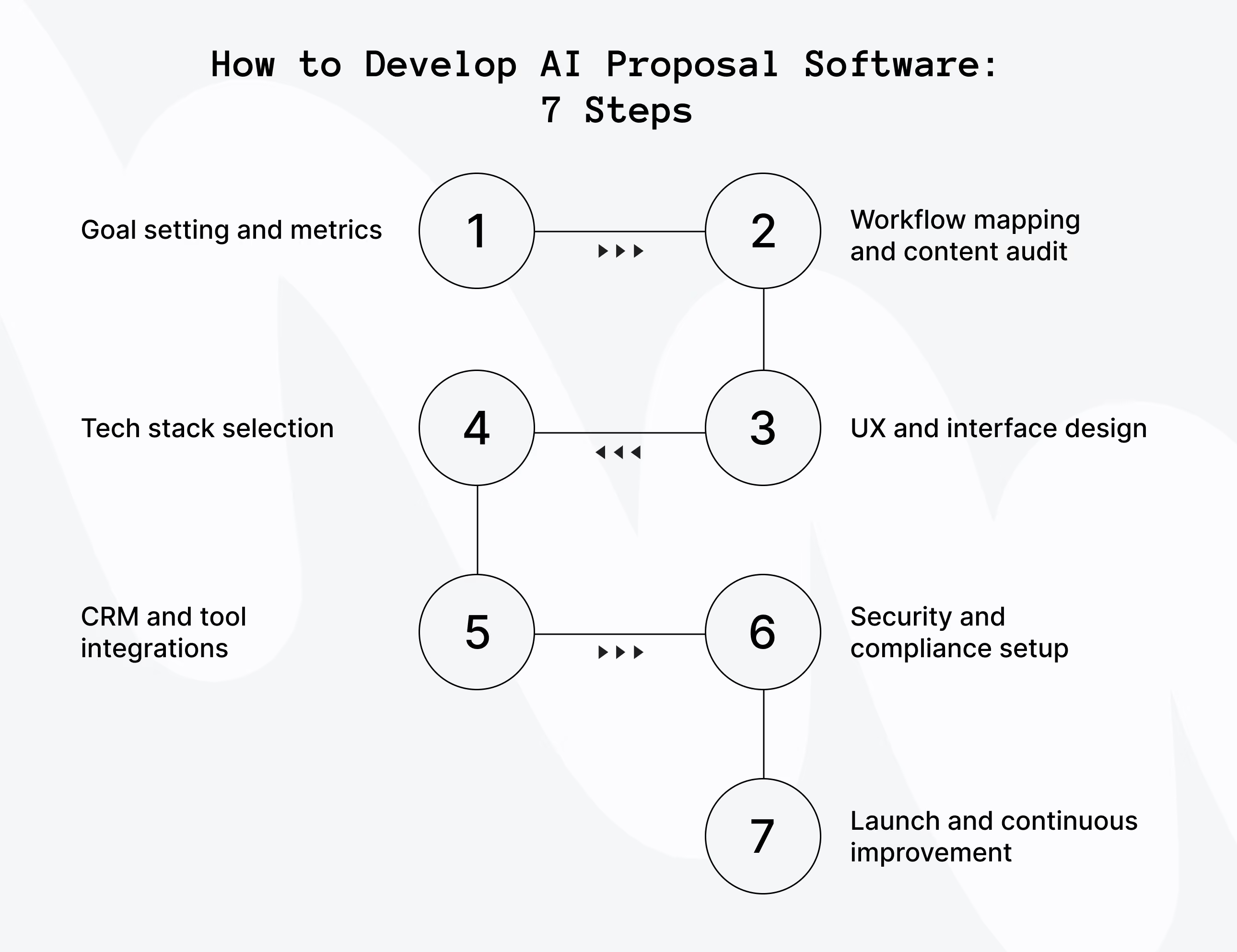
Step 1: Define Your Proposal Goals, Use Cases, and Metrics
Before discussing features of the future solution, it's important to understand the problem it is meant to solve. For some organizations, the primary goal is reducing proposal preparation time. Others may focus on improving document quality, reducing administrative workload, or scaling proposal operations without increasing headcount. If you're building an AI business proposal generator for the market, defining your target audience and understanding their proposal-related challenges should be the starting point.
Once the goals are clear, the next step is identifying key use cases. For example, AI may help:
- generate proposals from scratch;
- create proposals by mixing and matching pre-written content sections;
- retrieve relevant content from a data base;
- adapt specific parts of the proposal (such as pricing) based on the client (for example, their size or industry).
It's equally important to define measurable success metrics. Common KPIs include:
- proposal creation time;
- number of proposals generated per month;
- content reuse rate;
- approval cycle duration;
- user adoption and engagement;
- win rate;
- ROI from proposal automation process, etc.
These metrics provide a clear way to evaluate the effectiveness of the solution after launch and identify future improvement opportunities.
Step 2: Map the Proposal Workflow and Content Sources
The success of AI proposal software depends not only on the technology itself but also on how well it fits existing workflows. This stage involves analyzing the current proposal creation process, identifying bottlenecks, and determining which tasks should be automated first.
At the same time, it's vital to conduct a content library audit and organize existing materials into a centralized content hub. Proposal templates, case studies, service descriptions, customer testimonials, and other assets should be structured in a way that allows AI to retrieve and use them efficiently.
Organizations should also define approval workflows, user roles, and interactions between various external systems. Creating standardized templates for common proposal scenarios helps maintain consistency and accelerate document preparation. Once the solution is launched, workflows can be continuously refined based on usage data and user feedback.
Step 3: Design the AI Proposal Experience
Research shows that 68% of users stop interacting with a tool if its navigation feels confusing or difficult to use. That's why the interface of the AI proposal generator should be as intuitive as possible. A well-designed dashboard helps users quickly navigate projects, proposal statuses, deadlines, and approvals without overwhelming them with information. The system should automatically pull data from connected platforms, suggest document structures, surface relevant content, and handle repetitive tasks wherever possible.
It's also crucial to recognize that proposal workflows vary across industries. Different markets have unique requirements, templates, and approval processes, which makes flexibility and customization critical. In addition, modern SaaS products should provide a consistent experience across desktop, tablet, and mobile devices while meeting accessibility requirements. Ultimately, users should interact with a unified environment where AI, content, and workflows work together seamlessly.
Step 4: Choose the Right Tech Stack
The technology stack directly affects performance, scalability, security, and long-term maintenance costs. A typical AI proposal software consists of several layers, including the user interface, backend services, AI components, databases, and cloud infrastructure. A common technology stack may include:
- Programming language: Python
- AI frameworks: TensorFlow, PyTorch, Keras
- Databases: PostgreSQL or MySQL for structured data, as well as MongoDB for unstructured data
- Cloud platforms: AWS, Google Cloud, or Microsoft Azure
The final stack should be selected based on product requirements, expected scale, security needs, and budget.
Step 5: Integrate with CRM and Other Services You Use
Most of the information required to create proposals already exists somewhere within the organization. Customer records live in CRM systems, documents are stored in cloud repositories, technical information resides in knowledge bases, and approvals often happen through collaboration platforms. If users are forced to move information manually between these systems, much of the value of automation is lost.
The goal of integrations is to create a seamless workflow. For example, when a new opportunity appears in a CRM, the AI proposal generator can automatically retrieve client information, identify relevant content, and generate a proposal draft without additional data entry. The deeper the integration with existing tools, the higher the level of automation and the lower the administrative burden on users.
Step 6: Implement Data Security and Compliance
Security should be built into the architecture from day one. AI proposal software often processes highly sensitive information, including customer data, pricing strategies, contracts, technical documentation, and proprietary business knowledge.
Key security measures usually include:
- Data encryption at rest and in transit;
- Role-based access control (RBAC);
- User activity auditing;
- Compliance with standards, such as SOC 2 Type II and GDPR.
Special attention should also be paid to the requirements of the target industry and the types of proposals being generated. For example, organizations working with government contracts or operating in regulated industries may face additional security, compliance, and data retention requirements. In addition, the tool should provide transparent audit trails that make it possible to track who accessed specific documents or data and when. This approach not only reduces the risk of data breaches and compliance violations but also helps build trust among customers, partners, and other stakeholders.
Step 7: Launch, Measure, and Continuously Improve Your AI Proposal Generator
Launching the RFP response automation tool is only the beginning. Once the platform is in production, teams should monitor key performance indicators, such as proposal creation speed, user engagement, content quality, and feature adoption. These insights help determine how effectively the solution is addressing its intended goals and identify opportunities for further improvement. For teams adopting new AI-driven workflows, a microlearning platform can also help reinforce best practices through short, focused lessons that support user adoption, process consistency, and continuous improvement.
AI proposal software is not a static product. As new data becomes available and user feedback accumulates, AI models can be improved, workflows optimized, and new capabilities introduced. This iterative approach helps ensure the platform continues to deliver value as business requirements evolve.
How Much Does It Cost to Build AI Proposal Software?
The cost of building proposal automation software depends heavily on the feature set, integrations, and level of AI sophistication.
A basic MVP with AI-powered content generation, templates, and core workflow automation usually costs between $25,000 and $40,000. This approach is often sufficient for validating an idea, launching a startup, or automating a limited set of use cases.
A more advanced solution with collaboration features, CRM integrations, content management capabilities, document approvals, and additional core AI functionality generally falls within the $45,000–90,000 range.
Enterprise-grade platforms with advanced analytics, role-based permissions, compliance controls, knowledge base search, custom-trained NLP models, and complex workflows can cost $120,000–300,000 or more.
It's also important to account for ongoing expenses, such as cloud infrastructure, AI API usage, maintenance, model updates, and security improvements. As a rule, these costs add another 15–20% of the initial development budget annually.
Planning to build an AI proposal generator?
Upsilon has the expertise to take your idea from concept to launch quickly and within budget.
AI Proposal Software Development: Upsilon Experience
Let's look at a real-world example from our portfolio. An American startup serving freelancers and small creative teams reached out to Upsilon. The founders wanted to build an AI-powered document creation platform. Their goal was to automate the proposal creation process, and they partnered with us to bring that idea to life.
The Problem
Creative professionals spend a lot of time on admin work that has nothing to do with their actual craft. Proposals are put together by hand, contracts live in separate tools, and approvals bounce around in messy email threads. As a result, the sales cycle slows down, mistakes slip in, and deals lose momentum before they even start. Our client wanted to pull all of that into a single, easy-to-use platform.
Beyond just automating document creation, they wanted proposals to feel personal and credible, with the ability to embed vendor videos and real client testimonials directly into the pitch, so trust is built before the first conversation even happens.
Solution
Upsilon joined at the product planning stage, helping the client refine the MVP scope and choose the right technical approach. Our team built a platform centered around an AI copilot that handles the heavy lifting, from generating a first draft based on project details to converting an approved proposal into a ready-to-sign contract.
Tech Stack
- Frontend: React
- Backend: Python
- AI orchestration: LangChain
Key Features
- AI-generated proposals: the copilot drafts a full proposal from a short project brief
- Intelligent pricing suggestions: recommends rates and terms based on project scope
- Embedded media support: add videos and testimonials directly inside proposals
- Automatic contract creation: once a proposal is approved, a contract is generated instantly
- Built-in approval flow: clients review, leave comments, and sign without leaving the platform
- Flexible sharing: send via email or a direct link, no client account required
- Consistent brand voice: AI maintains the user's tone and formatting across all documents
Results
- MVP shipped in 22 weeks, on schedule and on budget
- Proposal preparation time cut from hours to minutes
- The full workflow — pitch, approval, contract, signature — handled in one tool
- Fewer follow-up emails, shorter decision cycles
- Product ready for market validation and growth
%20for%20Startups.png)

The Bottom Line on AI Proposal Automation Software
Creating proposals, bid submissions, and RFP responses remains one of the most resource-intensive business processes across many industries. AI proposal software helps automate repetitive work, accelerate document creation, improve proposal quality, and scale operations more efficiently.
When you weigh buying an off‑the‑shelf product against building a custom tool, the advantages of going custom are hard to ignore. It is valuable not only for businesses that want to streamline internal workflows; for many founders, it also opens the door to solving industry‑specific problems and delivering a user experience that truly stands out.
Ultimately, the success of any RFP response software depends less on the underlying AI models and more on a deep understanding of user needs, workflow design, content quality, and system integrations. Organizations that invest in proposal automation today gain more than operational efficiency, they build a long-term competitive advantage.
Planning to build AI proposal software for your company or launch a proposal automation platform for the market? At Upsilon, we help founders turn ideas into production‑ready AI solutions, covering everything from market research and MVP planning to development, launch, and scaling. A good first step is to try our AI MVP Estimator and get an initial view of your project’s features, timeline, and development budget. And if you are ready to discuss specifics with a technical expert and get detailed feedback, you can schedule a call with our team.
FAQ
1. What’s the difference between AI proposal software and traditional proposal tools?

Traditional proposal tools primarily help users manage templates, documents, and approval workflows. AI proposal software goes further by generating content, finding relevant information across knowledge bases, personalizing proposals, recommending pricing or project scope, and automating many of the tasks that would otherwise require manual effort. In short, traditional tools help manage proposals, while AI-powered solutions help create them.
2. How long does it take to build an AI proposal generator?
The timeline depends on the complexity of the product. A basic MVP with AI-powered proposal generation, templates, and core workflows can often be built in 2–4 months. More advanced solutions with CRM integrations, collaboration features, analytics, compliance capabilities, and custom AI workflows usually require 4–8 months or longer.
3. Which AI models work best for generating business proposals?
Most modern proposal platforms rely on large language models (LLMs), such as GPT, Claude, Gemini, or open-source alternatives like Llama. The best choice depends on the project's requirements, including content quality, customization needs, security considerations, and infrastructure preferences. In many cases, the model itself is less important than the quality of the data and knowledge sources it can access.
4. What if my existing proposal data is messy or incomplete?
It’s not a problem because AI doesn't need perfect data to get started; it needs enough data to find patterns. Even a limited set of old proposals, case studies, and service descriptions gives the platform enough information to generate useful drafts from day one. What matters is a basic content audit: identifying which documents are still relevant and consolidating them in one place. The worst approach is waiting until the data feels ready. It never will be, and the tool improves alongside your content library anyway.
5. What common mistakes should be avoided when building AI proposal automation software?
The most common mistake is focusing on AI features before understanding the actual proposal workflow. Other frequent issues include poor-quality data, insufficient integrations with existing systems, lack of security planning, and attempting to automate every process at once. Successful projects usually start with a clearly defined use case, a focused MVP, and gradual expansion based on user feedback.



to top