Types of SaaS Explained: Categories, Models, and Examples

Every founder remembers the moment they realized their "simple app idea" was actually a business model decision in disguise. You start sketching features and tech stack, thinking about users, maybe even naming the product, and then someone asks, "So what kind of Software as a Service (SaaS) are you building?" Suddenly you're stuck. Is it a tool? A platform? A vertical solution for one industry, or something broader? The types of SaaS aren't just labels — they're the fork in the road you're already standing on.
Here's the thing nobody tells you early enough: picking among the different types of SaaS software isn't a branding exercise, it's a strategic one. It shapes your pricing, your onboarding flow, who you hire first, and even how investors will evaluate your traction. And the stakes are bigger than they look: SaaS end-user spending hit nearly $300 billion in 2025, growing 19.2% year over year, while the average organization already runs 305 SaaS applications. Your category is how buyers decide whether you're worth a 306th.
We've watched dozens of founders wrestle with this exact question, and the pattern is always the same: clarity comes from examples, not definitions. So instead of throwing jargon at you, we're going to walk through real SaaS categories, show you where popular products actually live on that map, and help you figure out where your own idea belongs.
Key Takeaways:
- Every SaaS product fits into three categories at once: its function, its target industry, and its business model. Looking at only one of them gives you an incomplete picture.
- Function-based SaaS explains what the product does, such as CRM, ERP, accounting, project management, HR, payments, or collaboration.
- Industry-based SaaS explains who the product is built for. Horizontal tools serve many industries, while vertical SaaS adds workflows, terminology, and compliance for one specific market.
- Business model affects how the product is built and sold. A SaaS product can be micro, white-label, open-source, API-first, or enterprise-focused regardless of its function or industry.
- Your SaaS type should shape your MVP scope from the start. Compliance, integrations, security controls, and admin features may be essential for one type of product and unnecessary for another.
- Pricing needs to match the way customers receive value. Horizontal tools often use per-seat pricing, API-first products tend to charge by usage, and enterprise SaaS usually relies on custom annual contracts.
- The right classification helps you avoid expensive early mistakes. It keeps the budget, timeline, feature set, and go-to-market strategy aligned with what your product actually needs.
What Are the Types of SaaS?
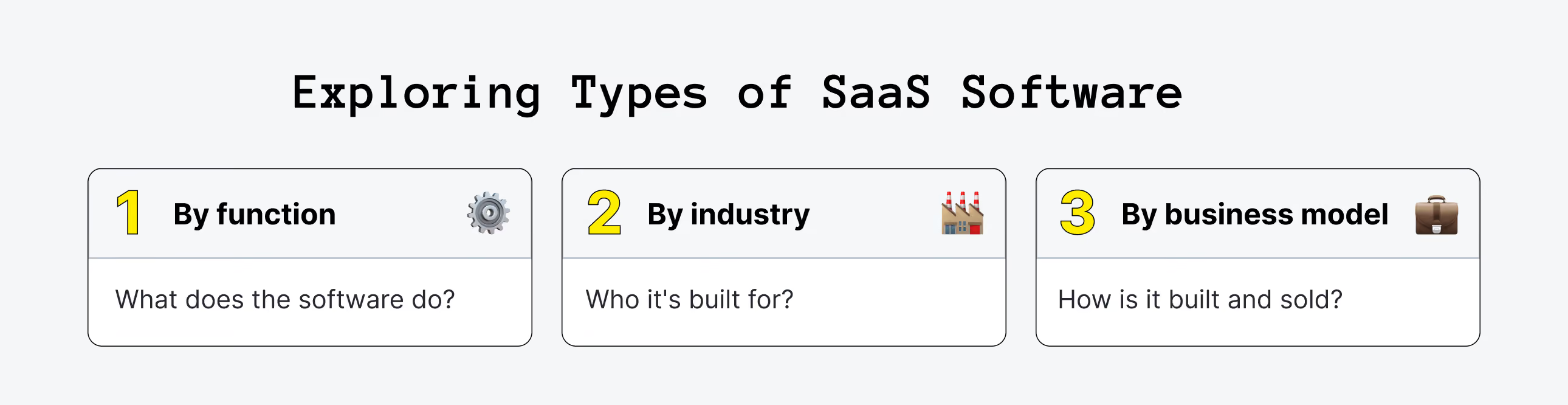
The types of SaaS software on the market today can be grouped into three independent categories. Most real products fit into all three at once rather than just one. The function category describes what the software does, such as CRM, accounting, or payments. The industry category explains who it is built for, whether businesses across multiple industries or a specific niche with its own rules. The business model category describes how the product is developed and sold, whether as a founder’s side project, a white label tool resold by agencies, or a platform for enterprise buyers.
Let’s look at Toast, the restaurant point-of-sale platform, that checks all three boxes clearly:
- Its function is payments and order management;
- Its industry is restaurants, not retail and not healthcare;
- Its business model is an enterprise sale with hardware bundled in.
Another example is an AI-powered business operating system GoHighLevel that looks completely different:
- Its function is marketing and CRM;
- Its industry is any small business;
- Its business model is white-label, so agencies can buy it once and resell it under their own name.
Two products, three axes each, and no overlap between their answers. Asking "what type of SaaS is this" without naming all three axes gives an incomplete answer.
Some products just don't have a clean industry answer. A scheduling tool could work for salons, gyms, or medical offices, none of them stands out as the "real" buyer. In that case, the product is horizontal by default, even if its first customers all happen to come from one industry. What actually matters isn't who signed up first, it's whether the product depends on industry-specific logic to function at all.
Here's the same idea laid out in one place, so you can run any product through all three questions at once instead of guessing which one matters most.
Notice that none of these three companies compete with each other. Salesforce, Procore, and Stripe answer three completely different questions, not three versions of the same one. That's the whole point of the framework: once you know which axis you're actually asking about, "what type of SaaS is this" stops being a trick question. Let’s explore each axis in detail.


SaaS Types by Function
Function-based types of SaaS applications answer just one question: what job does the software actually do. This is the axis most people picture when they hear "SaaS product ideas": it's familiar, concrete, and easy to point to. It's also usually the first thing founders say when you ask what they're building, which is exactly why it gets mistaken for the whole answer, when really it's only one piece of it.
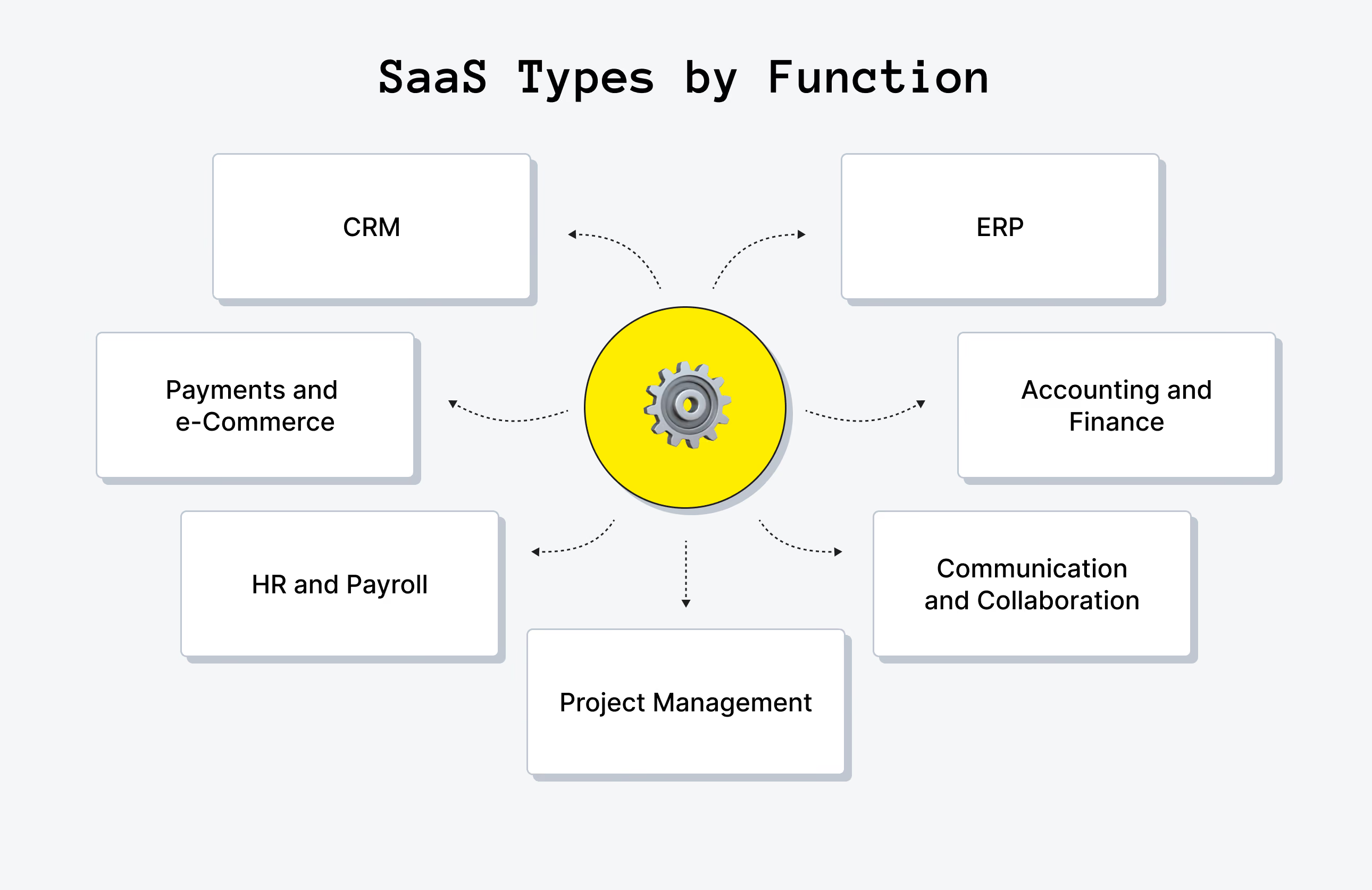
Here's how the most common function-based categories break down, and which products define each one.
CRM
CRM stands for customer relationship management, and that's exactly what it does: it keeps track of every prospect and customer as they move through your sales pipeline. Salesforce and HubSpot are the names everyone knows, and both work just as well for a law firm as they do for a logistics company. A CRM built for just one industry is rare enough that it's worth calling out specifically.
ERP
Enterprise Resource Planning, or ERP, software manages a company’s core operations within one connected system. It typically brings together inventory, finance, and supply chain management. NetSuite and SAP are leading solutions in this category, serving organizations ranging from midmarket businesses to large enterprises.
Accounting and Finance
This is the software that handles bookkeeping, invoicing, and financial reporting. QuickBooks and Xero dominate the small-business side of things; both essentially replaced old-school desktop accounting programs with a monthly subscription.
Communication and Collaboration
This is the software that lets teams talk and stay in sync in real time. Slack and Zoom are the obvious examples here. Neither cares what industry you're in, a law firm and a logistics company use them the exact same way.
Project Management
This software tracks tasks, deadlines, and who's responsible for what across a team. Asana and Monday.com both play in this space, competing on the same turf as CRM tools: one product, sold into every industry, with no industry-specific logic baked in.
HR and Payroll
This is software that handles hiring, payroll, and employee records. BambooHR and Gusto both go after small and mid-size companies, a different buyer entirely from the enterprise HR platforms built for much bigger organizations.
Payments and e-Commerce
This is software that either moves money or runs an online store. Stripe takes care of the payments side; Shopify handles the storefront on top of it. Both are defined purely by function, and both end up getting used as building blocks inside other SaaS products — something you don't really see in the other categories.
SaaS Types by Industry
Industry-based types of SaaS companies, often called vertical SaaS, answer a completely different question: which single industry is this actually built for. A vertical product gives up a bigger market on purpose, trading it for something more valuable: workflows, terminology, and compliance built specifically for one industry, instead of loosely bolted onto a generic tool. This industry-specific approach can also be applied to specialized service businesses. For instance, tree care software can bring scheduling, customer management, and field operations together in a solution designed around the needs of tree care companies.
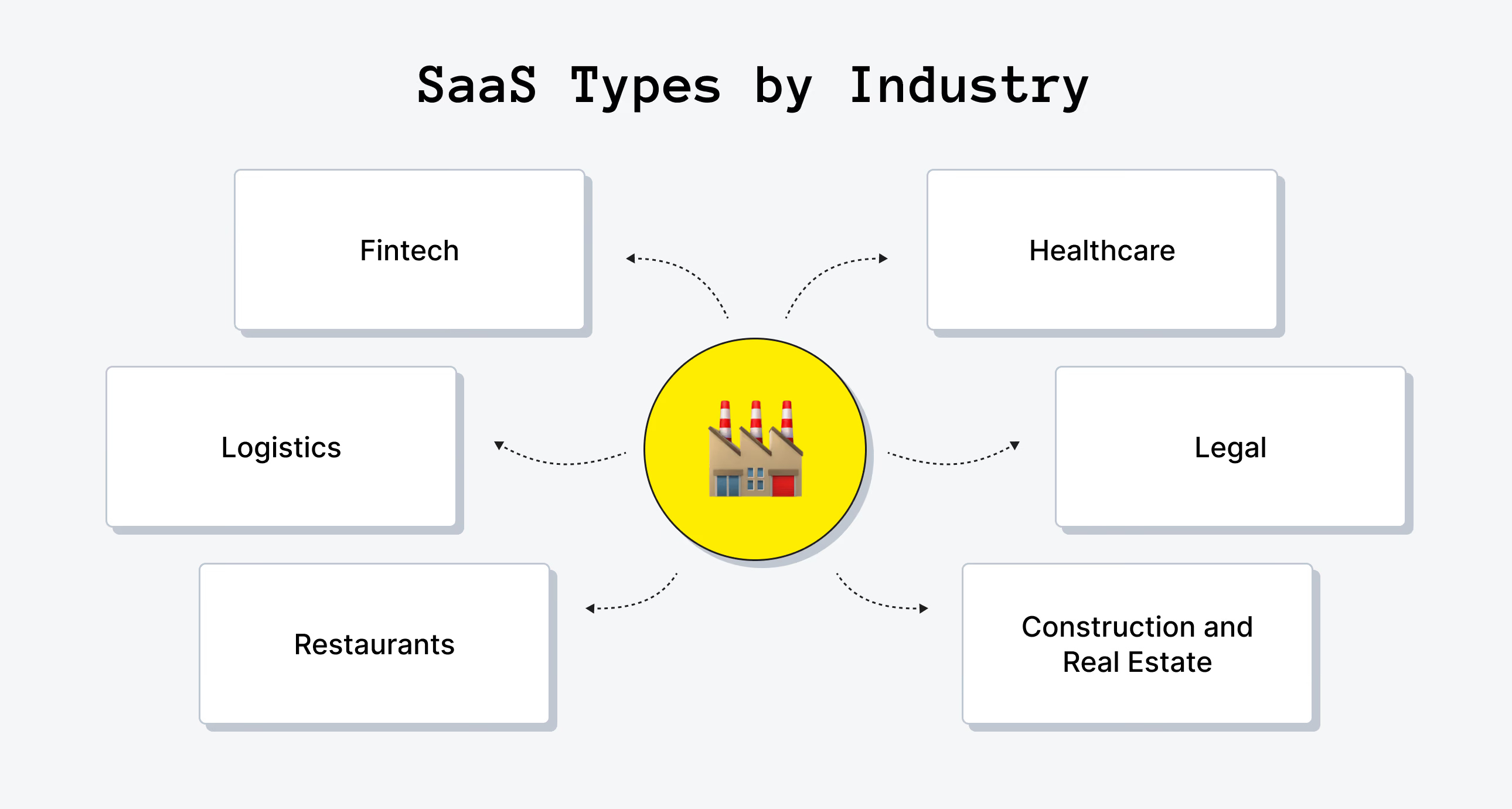
Here's what that looks like across the industries where vertical SaaS shows up most.
Fintech
This is software built to move money, issue lending, or manage spend for one specific financial use case. Brex and Ramp both build corporate cards and spend-management tools, and both carry fraud detection and compliance logic that a regular accounting tool simply doesn't need.
Healthcare
This is software built around patient records, scheduling, or clinical workflows, carrying HIPAA compliance as a built-in requirement, not an add-on. Epic and Athenahealth both run on this model, and neither could function as a generic horizontal tool with a healthcare skin.
Legal
Legal SaaS is designed around the day to day operations of law firms, including case management, billing, and document workflows. Clio is a leading example in this category. Its billing system tracks time and connects each entry to a specific case, a requirement that rarely applies in the same way across other industries.
Construction and Real Estate
This category includes software designed to manage project timelines, coordinate subcontractors, and maintain job site documentation. Procore is a clear example. A construction project management platform differs significantly from a general purpose tool such as Asana because it must support permits, inspections, and billing across multiple parties.
Restaurants
Restaurant software is built around order management, table service, and point of sale hardware. Toast is a defining example, combining payment processing and operational tools for a specific physical workflow that does not translate directly to retail or service businesses.
Logistics
This is software built around tracking fleets, planning routes, and keeping shipments visible in real time. Samsara owns this category by pairing hardware with software for fleet management: that real-time vehicle and driver data is something a generic operations tool has no reason to build.
SaaS Types by Business Model
Business-model types of SaaS products answer a third question, and it has nothing to do with what the software does or who buys it: how is this thing actually built, funded, and sold. Two products can do the exact same job and still run on completely different business models, and that difference shapes everything from team size to pricing.
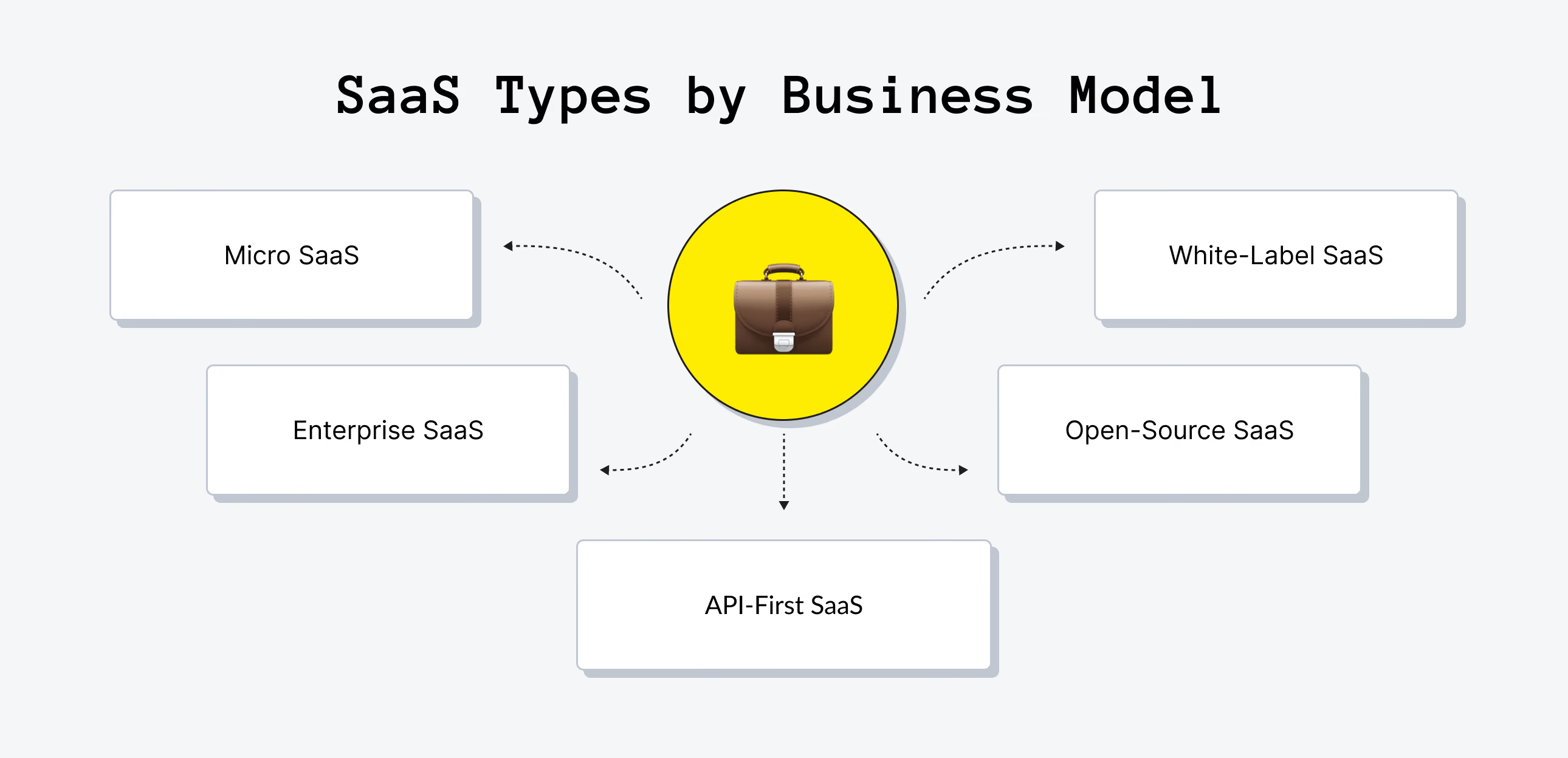
Here's how that plays out across the most common models.
Micro SaaS
This is a small product, usually built by one founder, solving one narrow problem. There is no outside funding, just a small user base that's already profitable. It’s a very popular business model since there are a lot of micro SaaS ideas that one person can build, launch, and maintain the entire product alone.
White-Label SaaS
Here, a product gets built once and then resold under someone else's brand. Vendasta and GoHighLevel both work this way: agencies buy the platform, slap their own logo on it, and sell it to their own clients as if they built it themselves.
Open-Source SaaS
It is a product with source code anyone can inspect, monetized through hosting, support, or premium features layered on top of the free core. GitLab is the clearest example at scale — the core product stays free and transparent, while the company charges for the hosted, fully managed version.
API-First SaaS
It’s a product built to be integrated into other software rather than used on its own through a standalone interface. Stripe and Twilio both lead with an API; sure, there's a dashboard, but the real customer is a developer writing code, not someone clicking through screens.
Enterprise SaaS
This is software sold through an actual sales team to large organizations, with contracts, security reviews, and hands-on onboarding baked into the price. Workday and Salesforce both operate this way; the sales process and rollout demand just as much investment as building the product itself.
At this stage, you have three ways to evaluate the same product: what it does, who it serves, and how it is sold. However, identifying your SaaS type is not the final step. It is where the real planning begins.
Every choice across these dimensions influences your MVP development timeline, budget, and essential feature set. Getting those decisions right early helps prevent costly mistakes later.
Need a hand with SaaS development?
Upsilon is a trustworthy tech partner that can help bring your SaaS ideas to life.

What These Types of SaaS Mean for Your MVP
Classifying your SaaS type isn't some academic exercise you can skip. Each axis directly changes what your MVP actually needs before it can go live. A vertical fintech or healthcare product needs compliance and identity verification built in from day one, something a regular SaaS MVP never has to worry about.
A horizontal product competing on breadth needs to plug into the other tools its buyers already use, since there's nothing about the product itself keeping customers locked in. And an enterprise product needs security documentation and admin controls ready before the first enterprise buyer signs, no matter how simple the core features are.
That is why the cost range can vary so widely. A clearly scoped MVP may cost between $20,000 and $60,000, while a full SaaS product can exceed $150,000 when compliance, integrations, and enterprise requirements enter the picture.
At Upsilon, we build MVPs for founders across all three dimensions. A vertical fintech solution and a horizontal project management tool can require very different scopes, even when the available budget is the same. That is why it is worth involving a product development studio as early as the business problem definition stage. During the discovery phase, an experienced team can help you scope the solution accurately, validate key assumptions, and set realistic priorities. This early work can prevent costly planning mistakes before development begins.
Pricing follows the same logic, and getting it wrong keeps costing you money long after the product ships. Horizontal function tools like CRM and project management charge per seat, because more people using it means more value delivered. Vertical products charge more per seat than a horizontal tool doing the same job, simply because buyers are paying extra for that industry-specific fit.
API-first products charge by usage (per API call, per transaction) since the real buyer is a developer plugging the product in, not a team logging in every morning. Enterprise products skip per-seat pricing entirely for a negotiated annual contract, because the sales process alone is expensive enough to justify it. Matching your pricing model to your actual type, instead of copying whatever a competitor in a different category does, is part of the same scoping decision as the build itself.
Timeline follows the same pattern as cost. Our average MVP ships in about three months; a vertical product with compliance or identity-verification requirements adds another two to four weeks, while a horizontal tool doing a well-understood function can ship faster than the average. Knowing your type before you start scoping tells you which end of that range you should expect to land on.
So, naming your type before you write a scope document is what keeps the build matched to what your product actually needs. Of course, knowing all this in theory doesn't stop founders from getting it wrong in practice, and the same handful of mistakes show up again and again once real scoping decisions get made.


Common Mistakes Founders Make When Choosing Types of SaaS
The framework itself is simple enough, but applying it under real deadlines and real budgets is where founders tend to slip. Let’s explore the following six mistakes that they make when choosing types of SaaS software.

Treating "Vertical" and "Micro" as Opposites
These terms describe different dimensions of a SaaS business, not mutually exclusive choices. A product can be vertical, meaning it is designed for a specific industry, and micro, meaning it is built and operated by a single founder, at the same time. The two characteristics can coexist naturally, and viewing them as opposite ends of one spectrum may lead founders to overlook viable product opportunities.
Copying a Horizontal Competitor's Pricing Model for a Vertical Product
Buyers of vertical products aren't paying for breadth; they're paying for industry-specific fit, and most will happily accept a higher per-seat price for it. Price a vertical tool the same way you'd price a horizontal one, and you're leaving real revenue on the table.
Underestimating Compliance Cost in a Vertical Build
Fintech and healthcare products come with real regulatory requirements, such as Know Your Customer (KYC) and Health Insurance Portability and Accountability Act (HIPAA), that a horizontal SaaS MVP simply never has to deal with. Scope a vertical product without pricing that in, and your budget is wrong before development even starts.
Building Enterprise-Model Complexity before There's Enterprise-Level Traction
Security reviews, admin controls, and custom contracts cost real engineering time. Building them into a first version before a single enterprise buyer has asked for them delays the product reaching the users who would validate it.
Assuming the Function Tells the Whole Story
Two products can share the same core function, such as CRM platforms or project management tools, yet require very different types of MVPs once their industry focus and business model come into play. A vertical CRM designed for law firms and a horizontal CRM intended for small businesses may fall under the same category, but their workflows, compliance requirements, user expectations, and feature priorities can be entirely different.
Borrowing a Pricing Model from the Wrong Axis
Say a founder builds an API-first product but prices it per seat because that's how CRM tools do it, that misreads the buyer entirely. A developer integrating an API doesn't think in seats. Pricing has to match the types of SaaS software you're actually building, not the category you happen to know best.
Looking for a reliable tech partner?
Upsilon is an MVP development company that can help build your MVP in up to 3 months!
Final Word on Choosing Your Own SaaS Type
The useful answer to “what types of SaaS should I explore?” or “what type of SaaS application am I building?” is never just “a CRM,” “a fintech tool,” or “a micro SaaS.” Start with all three questions in order:
- What does the product do?
- Does it serve one specific industry with its own rules or does it work the same way across any business?
- How do you plan to sell it?
Together, those answers give you a much clearer picture of the product than any single label can.
That clarity matters long before you ask your developers to write the first line of code. It tells you whether compliance belongs in version one, whether integrations are essential, whether usage-based or per-seat pricing makes sense, and how much functionality you can realistically postpone. A horizontal scheduling tool and a healthcare scheduling platform may sound similar at first, but their MVPs, budgets, and go-to-market paths are not even close.
You don’t need to lock every decision forever before launching. But you do need a working hypothesis: your core function, the industry logic that is truly necessary, and the model that matches how customers will buy. Use that hypothesis to keep the first version focused, validate it with real users, and adjust as the market gives you better answers.
Still not sure which path to choose? Our team helps founders turn that early product hypothesis into a buildable MVP scope. Whether you are launching a narrow micro SaaS, a vertical platform with compliance requirements, or a product aimed at enterprise buyers, we can help you define the right feature set, estimate the work, and build a first version that is ready for real-world validation. Share your thoughts with us, and we’ll find the right way together!
FAQ
1. What is a SaaS type?

A SaaS type is simply a way to classify subscription-based software. One product can belong to three categories at the same time. The first is its function, meaning what it does, such as CRM, accounting, or payments. The second is its industry, meaning who it is built for, such as fintech, healthcare, or construction. The third is its business model, meaning how it is created and sold, such as micro SaaS, white-label SaaS, or enterprise SaaS. To clearly describe a product idea, founders should consider all three.
2. What's the difference between horizontal and vertical SaaS?
Horizontal SaaS is designed to work for businesses in many different industries. For example, Slack can be used by a law firm, a construction company, or a marketing agency in nearly the same way.
Vertical SaaS is built for one specific industry. It includes the workflows, terminology, and compliance requirements that industry needs. Clio is designed for law firms, while Procore is built for construction businesses. Because vertical products need more specialized functionality, they often cost more to develop and can usually charge more per user.
3. What's the difference between SaaS, PaaS, and IaaS?
SaaS is a finished product that users access through a browser. Salesforce and Slack are common examples. You sign in and start using the software without setting up the technical infrastructure behind it. Platform as a Service (PaaS) gives developers a ready-made environment for building and deploying applications. We can name Heroku and Vercel as examples here.
Infrastructure as a Service (IaaS) provides the basic technical resources, such as servers and storage, that a team configures itself. AWS EC2 is a well-known IaaS product. Most SaaS products run on top of PaaS or IaaS services. The difference is not about which option is better. It’s about which layer of technology you need to buy.
4. Is micro SaaS a real business model?
Yes. Micro SaaS is a small product that solves one focused problem, often built and run by a single founder. It usually doesn’t depend on outside funding and can become profitable with a relatively small group of paying customers. It’s not a smaller or less serious version of a SaaS company. Its advantage is focus: a narrower product usually means a smaller MVP, a faster launch, and a more realistic path to profitability.
5. How much does it cost to build a SaaS product?
A focused SaaS MVP typically costs between $20,000 and $60,000. A full-scale SaaS product can cost $150,000 or more once you add advanced features, integrations, compliance, security, and enterprise requirements.
The final cost depends on the type of product you are building. For example, a vertical SaaS product for healthcare or fintech will usually cost more than a horizontal tool with the same core feature because it may need compliance and industry-specific workflows. A small micro SaaS product can often be built for less because its scope is intentionally limited.



to top