Landing Page MVP: How to Validate Your Idea With One Page


Building a product before knowing whether anyone wants it can turn a promising idea into an expensive experiment. A landing page MVP offers a faster way to test demand: instead of spending weeks or months on development, founders can put a clear product proposition in front of a real audience and measure whether people are willing to take action.
The numbers also show why landing page performance is worth taking seriously. A recent analysis of more than 41,000 landing pages, 464 million visitors, and 57 million conversions found a median conversion rate of 6.6% across industries. For SaaS specifically, the median was 3.8%, highlighting how difficult it can be to turn initial interest into action in a competitive software market.
But the goal of a landing page MVP isn’t to create a polished marketing website or chase an impressive conversion rate. It’s to answer a much more important question: “Is there enough real demand for this idea to justify building the product?” In this guide, we’ll look at what a landing page MVP is, what it needs to test real demand, real-world landing page MVP examples, which elements matter most, and how to turn the results into a clear decision about what comes next.
Key Takeaways:
- A landing page MVP tests real demand, not whether people will consistently use the finished product.
- A clear value proposition, one primary CTA, relevant traffic, and conversion tracking are essential for getting reliable validation data.
- Stronger actions, such as viewing pricing, joining a referral waitlist, or pre-ordering, provide a more meaningful demand signal than a simple email signup.
- Landing page results become more useful when they are combined with A/B testing, user feedback, beta access, and paid pilots.
- A successful landing page is only the beginning. Once demand is validated, the next step is defining the right MVP scope, priorities, technical approach, timeline, and budget.
What a Landing Page MVP Is
A landing page MVP is a page that presents a product idea before the product itself exists. Its purpose is to get a real answer to one question: will someone take action if this product becomes available? That action can be as simple as leaving an email address or as meaningful as clicking on a real pricing option, joining a waitlist with a referral mechanic, or placing a pre-order. The stronger the commitment, the stronger the signal about actual demand.
A landing page MVP measures demand signals, not product usage. Someone who enters their email is essentially saying, “Tell me more.” They are not necessarily saying, “I will use this every day once it exists.” This distinction is easy to overlook, especially when early results look promising.
A landing page can be useful for validating questions such as:
- Does this problem matter to potential customers?
- Does the proposed solution sound valuable enough to act on?
- Are people willing to make a meaningful commitment?
However, it cannot tell you whether people will actually use the product consistently. Some ideas only demonstrate their value through real usage. A marketplace needs active buyers and sellers, while a team collaboration tool may require an entire team to adopt it. Both can attract signups from people who like the concept but never change their behavior.
That is why a landing page MVP works best as a test of “Does this problem matter to anyone?”, rather than “Will people use this product?” Treating these as the same question is one of the easiest ways to misread a landing page result.
What a Landing Page Needs to Test Real Demand
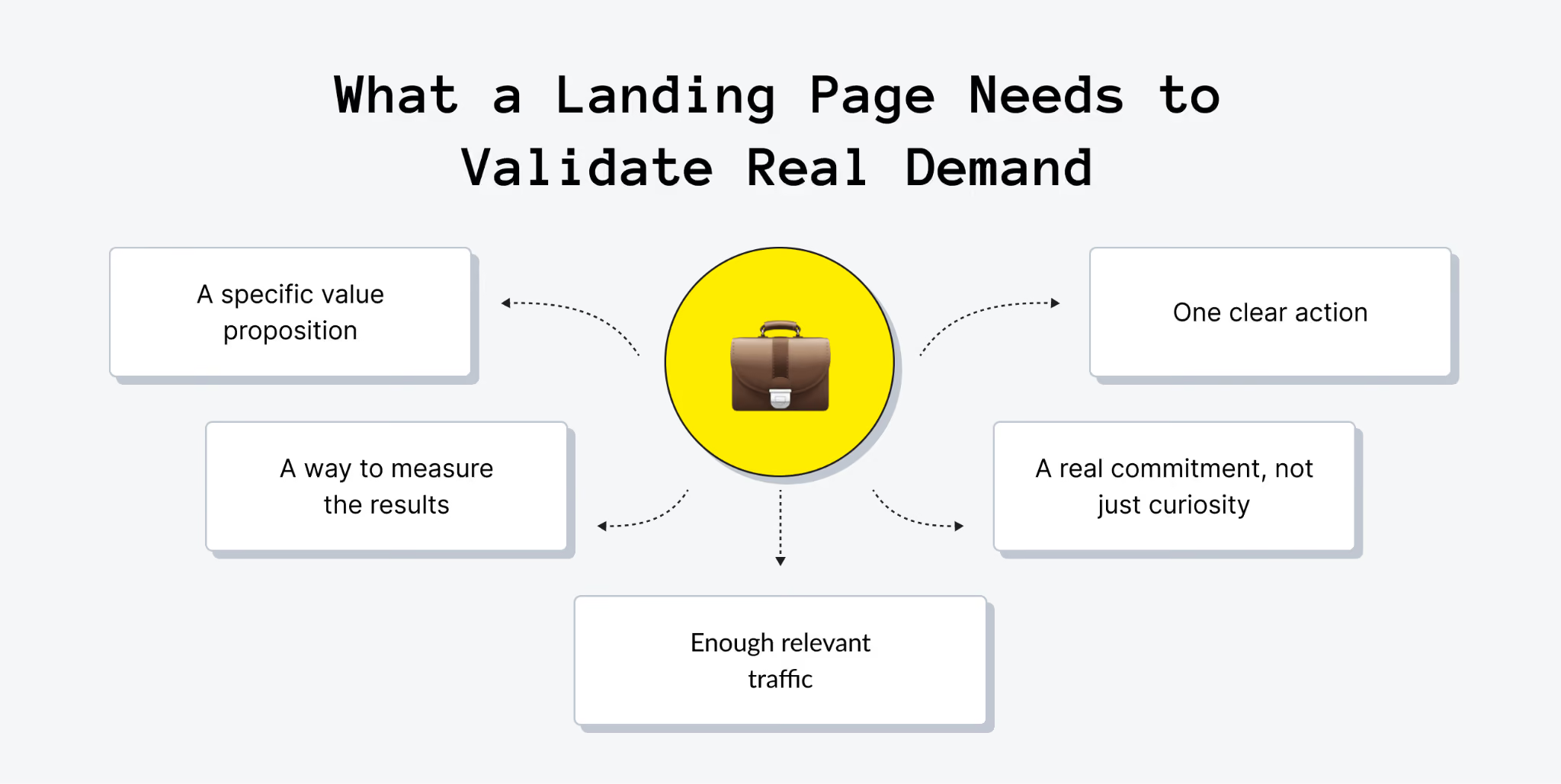
A landing page MVP does not need to be complicated to produce a useful validation result. Instead of adding more sections and features, focus on five elements that help turn visitor behavior into a meaningful demand signal.
A Specific Value Proposition
The page needs one clear sentence that explains the problem and identifies who has it. A broad description of the product category does not give visitors a strong reason to act or give founders a specific assumption to test. For example, “Track your team’s PTO without a spreadsheet” communicates a concrete problem and target use case. “The future of HR software” is too vague to validate anything meaningful.
One Clear Action
Every landing page MVP should guide visitors toward one primary action. This could mean signing up, joining a waitlist, viewing pricing, or requesting early access. When a page offers several competing actions, the resulting data becomes harder to interpret because visitors are responding to different prompts.
A Real Commitment, Not Just Curiosity
An email signup can show interest, but it does not necessarily indicate strong purchase intent. A more meaningful test could involve asking visitors to view real pricing, place a pre-order, or join a waitlist with a referral mechanic. The more effort or commitment an action requires, the stronger the demand signal it can provide.
Enough Relevant Traffic
A conversion rate means very little if only a handful of people have visited the page. Traffic should come from sources that resemble the product’s future acquisition channels, such as a relevant subreddit, targeted cold outreach, or a small paid advertising campaign. This makes the results more representative of how the actual target audience responds to the idea.
A Way to Measure the Results
A landing page MVP needs basic analytics to show what visitors actually did. At minimum, track visits, signups or other conversions, and the sources that brought people to the page. Without this data, it is difficult to distinguish genuine demand from random interest, and the landing page produces an impression rather than a result.
Need a hand with your startup's MVP?
Upsilon was once a startup too, so we can help build and scale your product!

The Elements of a High-Converting MVP Landing Page
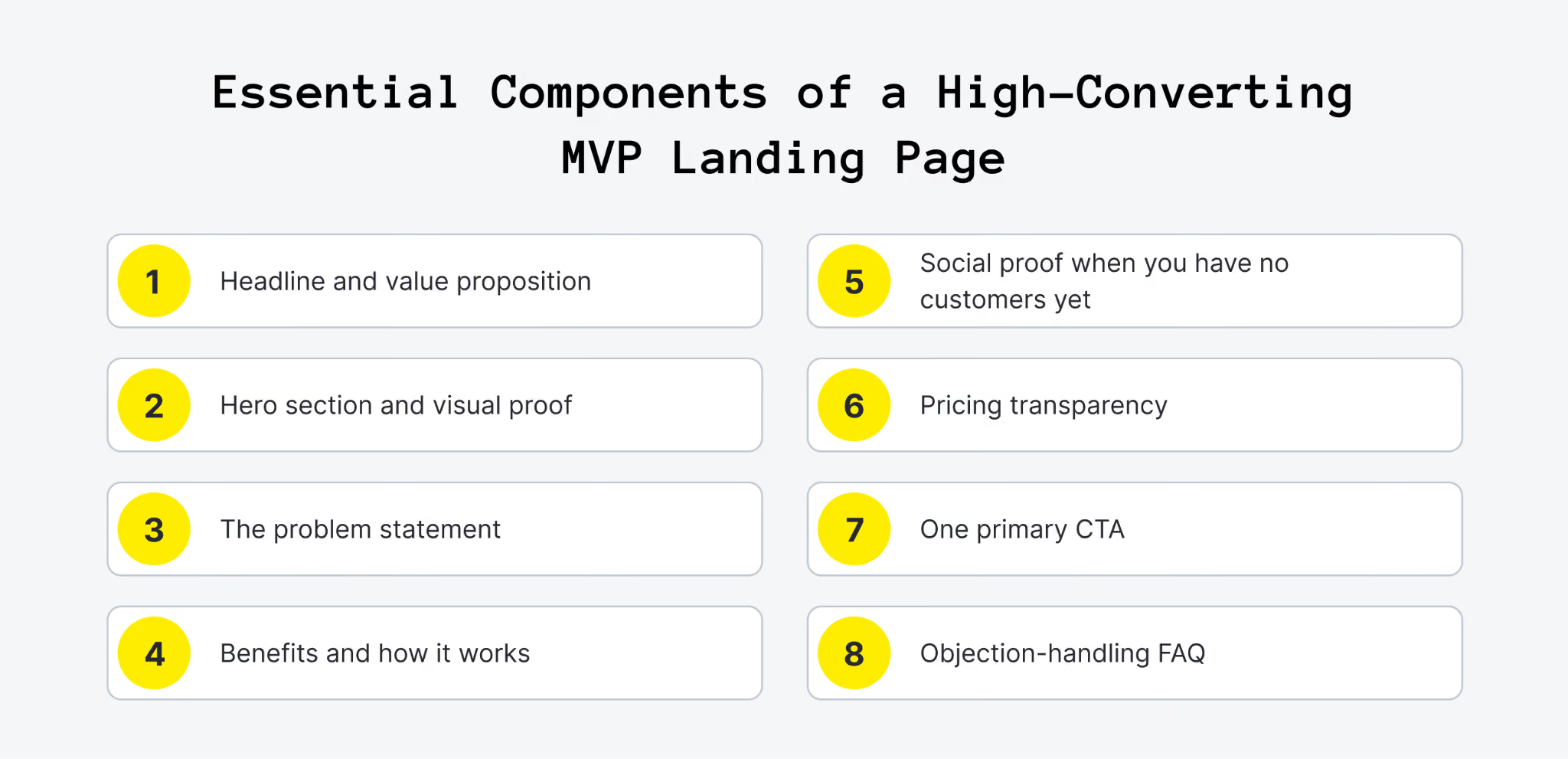
A high-converting MVP landing page needs to do more than explain what the product is. Every section should help visitors understand the value, trust the idea, and move toward one clear action. The goal is to remove uncertainty while giving potential customers enough information to decide whether the product is worth their attention, time, or money. Most of that uncertainty comes from having nothing to show, which is why founders increasingly use an AI video generator like Higgsfield to produce a short demo before development starts.
Headline and Value Proposition
The headline is often the first thing visitors read, so it needs to communicate the product’s core value immediately. A strong headline focuses on the outcome customers want rather than simply describing the product or its features. The supporting copy can then clarify who the product is for, what problem it solves, and why the proposed solution is different.
Hero Section and Visual Proof
The hero section should reinforce the promise made by the headline and give visitors an immediate sense of what the product looks like or does. A product screenshot, interactive demo, short video, or relevant visual can make an early-stage concept feel more concrete. For an MVP landing page, the visual does not need to show a finished product, but it should provide enough context for visitors to understand the proposed experience.
The Problem Statement
A clear problem statement shows visitors that the page understands the situation they are dealing with. It can describe the current workflow, common frustrations, or the cost of relying on existing alternatives. The more specifically the page reflects a real customer problem, the easier it becomes for the right audience to recognize themselves in the message.
Benefits and How It Works
This section should explain what customers get from the product and how the solution delivers that value. Benefits should take priority over a long list of technical features, especially at the MVP stage. A simple three-step explanation can also help visitors understand the experience without requiring them to figure out how the product works on their own.
Social Proof When You Have No Customers Yet
An early-stage product may not have customer testimonials, logos, or case studies yet, but the page can still provide credibility. Founder expertise, early user interviews, beta testers, waitlist numbers, research findings, or quotes from potential customers can help demonstrate that the idea is grounded in a real problem. The key is to use genuine evidence rather than manufacture social proof that does not exist.
Pricing Transparency: Turning Interest Into Willingness to Pay
Showing pricing can turn a simple interest signal into a stronger test of willingness to pay. Even if the final pricing model is not decided, an MVP landing page can present an expected price or a realistic pricing range. Visitors who continue after seeing the price provide a more meaningful signal than visitors who only express interest when no financial commitment is mentioned.
One Primary CTA
The landing page should have one main action that represents the validation goal. Depending on the stage, this could be joining a waitlist, requesting early access, starting a trial, booking a demo, or pre-ordering the product. Keeping the CTA consistent throughout the page makes the desired next step obvious and produces cleaner data about how many visitors actually take it.
Objection-Handling FAQ
An FAQ can address the questions that might prevent an interested visitor from taking action. Common concerns can include pricing, integrations, security, setup time, availability, website cookie consent, or how the product differs from existing alternatives. For an MVP, the FAQ is also a useful place to acknowledge limitations honestly and set expectations about what is available now versus what is planned for later.

How to Build and Run a Landing Page MVP
Building a landing page MVP should be a fast validation exercise, not a full-scale design and development project. The focus is on getting a clear message in front of the right audience, measuring their response, and learning from the people who show genuine interest.
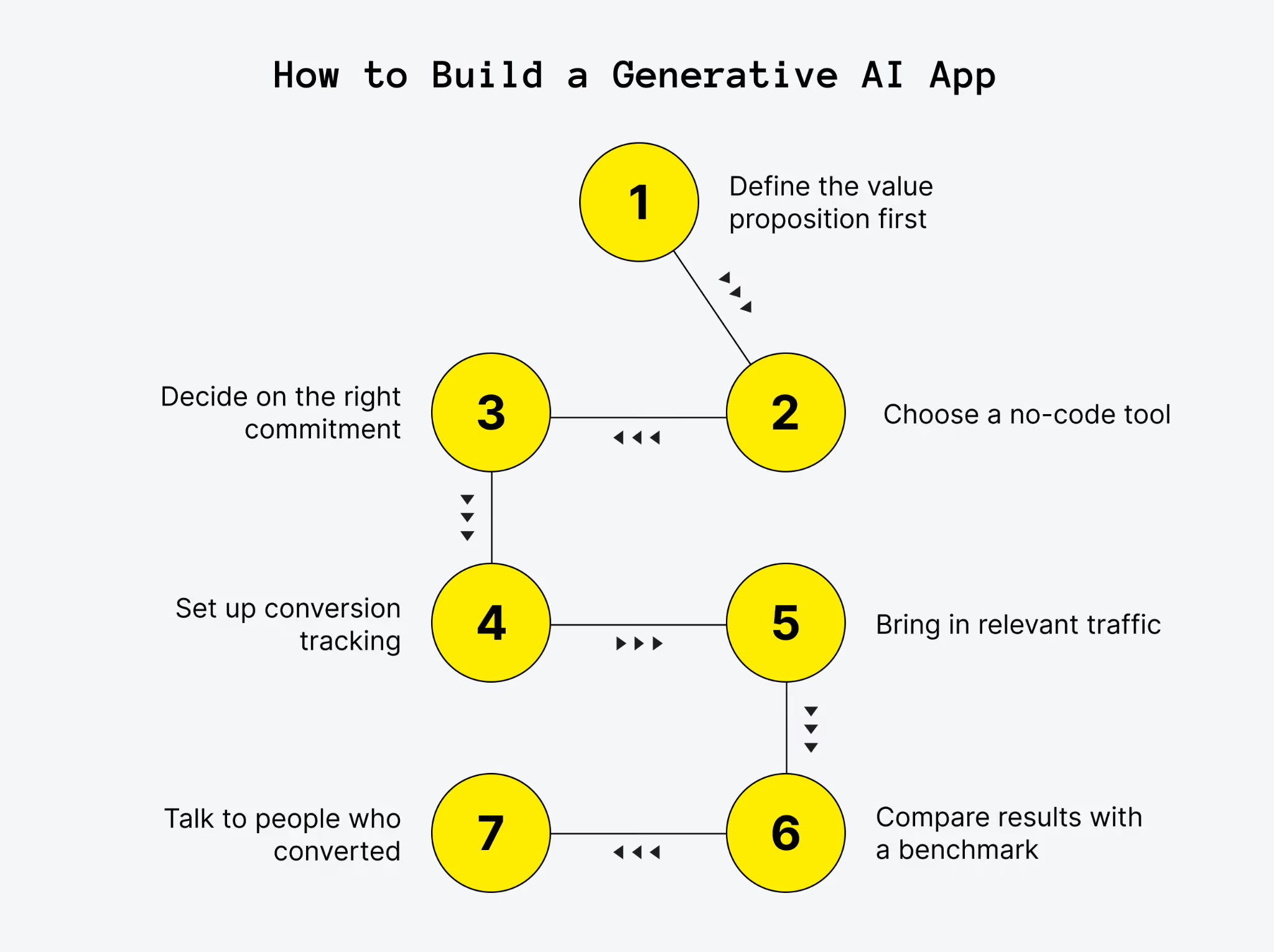
1. Define the Value Proposition First
The first thing you need to do is make sure the problem, target audience, and promised outcome are clearly defined. If the value proposition is vague, better design will not make it easier to validate your startup idea. It’s important to settle on the core message before moving on to the page itself.
2. Choose a No-Code Tool
You should use a simple platform such as Webflow, Framer, or Carrd to get the page live quickly. For an MVP, the build should take a day or two rather than become a full design sprint. The goal is to validate the idea, so spending weeks perfecting visual details usually adds little value at this stage.
3. Decide on the Right Commitment
You should decide what action would represent a meaningful demand signal for your particular idea. An email signup is easy and therefore shows relatively weak intent, while a pricing click, pre-order, or referral-based waitlist requires more commitment. The stronger the action, the more useful the result can be for assessing willingness to move beyond simple curiosity.
4. Set Up Conversion Tracking
It’s important to connect the form to a real email collection system and set up basic analytics before sending traffic to the page. At a minimum, you should be able to track visits, conversions, and traffic sources. This data makes it possible to understand what actually happened instead of relying on general impressions.
5. Bring in Relevant Traffic
The traffic should come from people who could realistically become customers. Depending on the audience, this could include relevant communities, targeted outreach, or a small paid advertising campaign. Traffic from friends and family is usually less useful because their interest may not reflect genuine buying intent.
6. Compare Results With a Benchmark
You should evaluate the conversion rate against relevant industry data rather than an arbitrary target. Unbounce analyzed 464 million visits across more than 41,000 landing pages and found a 6.6% median conversion rate overall, compared with 3.8% for SaaS landing pages. These figures provide useful context, although traffic source, audience, offer, and CTA can all have a significant impact on the result.
7. Talk to People Who Converted
The conversion rate can show how many people took action, but conversations can help explain why they did it. You should speak with several people who signed up or showed stronger interest to find out whether they actually have the problem described on the page. This feedback can reveal whether the original value proposition matches the real customer problem and what may need to change before development begins.
Real Landing Page MVP Examples
Real examples make the landing page MVP approach easier to understand because each company used a slightly different way to test demand. The common thread is that the teams looked for evidence of interest before investing heavily in the actual product.
Buffer
Founder Joel Gascoigne built a two page site before writing any of the actual product. The first page explained what Buffer would do, while the “Plans and Pricing” page showed a short message explaining that the product was not ready yet and included an email field. This MVP landing page example shows how pricing interest can be tested before development begins. Once the initial response showed real interest, Gascoigne added a pricing table with a free plan, a $5 plan, and a $20 plan, then tracked which options visitors clicked. He had his first paying customer within four days of the rough version going live and shipped the real product about seven weeks after starting.
Dropbox
Drew Houston’s landing page MVP relied on a demo video rather than page copy alone. The screen recording showed how file syncing would work and was posted to Hacker News in 2007 alongside a Y Combinator application. This landing page MVP example demonstrates how a video can validate interest in a product before the underlying technology is fully ready. The beta waitlist grew from around 5,000 to about 75,000 signups overnight. Unlike a traditional landing page test, the video demonstrated the proposed product experience while the page captured the resulting interest.
Robinhood
Robinhood’s waitlist landing page asked visitors for one thing: an email address. It also included a referral leaderboard that allowed people to move up the list by bringing in friends. This mechanic helped grow the waitlist to about 1 million signups before launch, with more than half of new signups coming through referrals. The page itself reportedly converted visitors at over 50%, which was far above a typical landing page conversion rate.
These three MVP landing page examples used different tactics, but the underlying idea was the same. Buffer tested pricing before writing a line of code, Dropbox tested a workflow with a video instead of working software, and Robinhood turned the signup process itself into a growth mechanic. Each company used a simple way to replace assumptions about demand with real user behavior and measurable results.
Landing page MVP vs. Other Ways to Test an Idea
A landing page MVP is only one option for early validation, and its usefulness depends on what you are trying to learn. The table below compares it with a prototype and a concierge MVP, focusing on the question each approach can answer, the resources it requires, and its main limitation.
Three ways to test an idea before building it — each answers a different question, not a ranked list of options.
The key takeaway is that these approaches can work together rather than compete with each other. A landing page can help establish whether there is enough interest to continue, a prototype can test the proposed experience, and a concierge MVP can provide evidence that the underlying solution delivers value.
How to Get More out of Your Landing Page MVP
A landing page MVP becomes more useful when the first test is treated as a starting point rather than a final verdict. Once you have some traffic and initial conversions, the same page can help you learn which message resonates, what motivates people to sign up, and whether their interest is strong enough to turn into real product adoption.
A/B Test the Promise, Not the Button Color
The most valuable experiments should focus on the core assumption behind the page. Different headlines, value propositions, target audiences, or offers can reveal which positioning gets the strongest response. Small visual changes, such as button colors or minor spacing adjustments, are unlikely to teach you much about whether the idea itself resonates. A/B testing works best when each version represents a meaningful hypothesis and the results are measured against the same audience and traffic conditions.
Run Multiple Positioning Pages in Parallel
If it is unclear which audience or benefit should be at the center of the offer, several focused landing pages can test different positioning approaches at the same time. Each page can speak to a particular customer segment or emphasize a different outcome. Comparing conversion rates can then show which combination attracts the strongest response. This approach keeps different hypotheses separate instead of mixing several messages into one page.
Add a Survey or Wizard to Learn Why People Converted
A signup tells you that someone was interested, but it does not necessarily explain what convinced them. A short survey or multi-step wizard can collect information about their problem, priorities, expectations, and reasons for taking action. Questions can also help distinguish between people who simply liked the idea and those who have an urgent problem they are actively trying to solve. This qualitative feedback can make the conversion numbers much easier to interpret.
Offer Beta Access or a Paid Pilot
Once there is evidence of interest, the next useful step can be giving selected signups access to an early version of the product. A beta lets you observe whether the problem remains important when users actually interact with the solution. A paid pilot provides an even stronger signal because customers have to commit money rather than just an email address. Pre-orders and other forms of payment are particularly useful when the main remaining uncertainty is willingness to pay.

Mistakes That Make a Landing Page MVP Useless
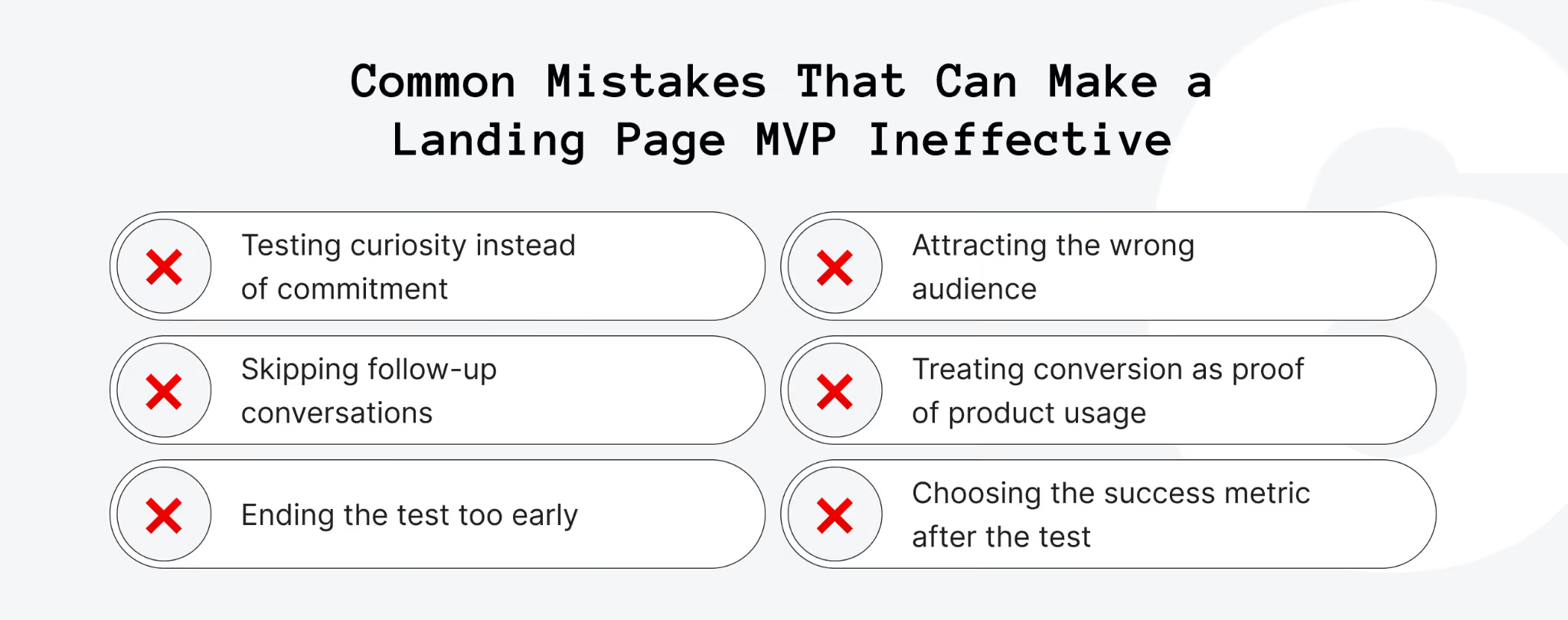
A landing page MVP can produce valuable evidence, but only when the test is designed to measure meaningful behavior. Several common mistakes can make the numbers look promising while telling you very little about actual demand.
Testing Curiosity Instead of Commitment
An email signup usually measures mild interest rather than strong demand. If the only action on the page is entering an email address, almost any reasonably appealing idea can generate conversions. A stronger test gives visitors an opportunity to make a more meaningful commitment, such as viewing pricing, requesting access, or pre-ordering.
Attracting the Wrong Audience
A high conversion rate means little if the visitors do not resemble your potential customers. Friends, family, existing followers, or a broad untargeted audience may respond positively because they already know the founder or simply enjoy supporting new ideas. The test becomes much more useful when the traffic comes from people who actually experience the problem.
Skipping Follow-Up Conversations
Conversion data tells you how many people took action, but not what motivated them. Talking to several people who signed up can reveal whether they have the problem described on the page and what they expected the product to solve. Without this context, it is easy to draw conclusions from a number without understanding what is behind it.
Treating Conversion as Proof of Product Usage
A strong conversion rate can show that the problem resonates with enough people to justify further validation. It does not show that those same people will actually use the product regularly. Adoption, retention, and habit formation require a different test once there is something people can use.
Ending the Test Too Early
A test that runs for only a day or two may produce a number that is too small to interpret confidently. Traffic needs enough time and volume to reveal a consistent pattern rather than a temporary spike. The quality and source of the traffic also matter because different audiences can behave very differently.
Choosing the Success Metric After the Test
The success threshold should be defined before the traffic starts arriving. A 4% conversion rate can look weak against one benchmark and impressive against another, so changing the standard after seeing the result makes the test difficult to trust. A predefined target keeps the evaluation objective and prevents the data from being interpreted in whichever way makes the idea look better.
Looking for a reliable tech partner?
Upsilon can help you develop an MVP that'll grow to be a success!
Final Say on Landing Page MVP
A landing page MVP can answer one of the most important early questions: is there enough real demand to justify building the product? A strong response shows that the problem matters to a specific audience and that people are willing to take action. But validation is only the beginning. Once the demand is there, the next challenge is turning that signal into a clear product scope and deciding what the first version actually needs.
That is where a product studio like Upsilon can become useful. Upsilon offers the full MVP development process, from discovery and product strategy through design, development, launch, and further improvement. Rather than treating an MVP as a feature checklist, the team looks at the entire product logic and uses experience from launching its own products and working with dozens of startups to determine what needs to be built now and what can wait. With our discovery services, these insights can be turned into a focused product scope with clear priorities, technical direction, and a realistic path to development.
If the landing page has given you enough evidence to move forward, the next step does not have to be another round of guesswork. Talk to us about what you are building, where you are in the process, and what you are trying to validate. Our team can help you figure out what should come next and how to turn an early demand signal into a real, usable MVP.



FAQs
What is a landing page MVP?

A landing page MVP is a single web page that describes a product idea and asks for a real commitment, such as an email signup, a click on a pricing plan, a pre-order, before the product exists. It tests whether anyone wants the idea enough to act, using the smallest possible investment: a page, not a product.
How long should it take to build a landing page MVP?
A focused landing page MVP takes 2-5 days to build with a no-code tool and a few days to a week to collect a meaningful read on traffic. Buffer's original 2-page test went from idea to a working signal in days, not weeks. The page itself is the fast part; driving enough real traffic to trust the result takes longer.
What's a good conversion rate for a landing page MVP?
Unbounce's analysis of 464 million visits across 41,000 landing pages found a 6.6% median conversion rate overall, and 3.8% for SaaS pages. A landing page MVP asking for a real commitment (a pricing click, a pre-order) rather than an email alone should be judged against the lower end of that range, since the ask is bigger.
What can't a landing page MVP tell you?
It tells you whether people will say yes to an idea, not whether they'll use the product once it exists. Ideas where the value only shows up through real use like a marketplace that needs both sides active, a collaboration tool that needs a team adopting it can collect real signups from people who never convert to real usage, because saying yes to an idea and changing a habit are different decisions.
Do I need to build the product before running a landing page MVP?
No, that's the entire point. The page describes what the product will do and asks for a commitment before any of it is built. Buffer, Dropbox, and Robinhood all validated demand with a page before writing the product itself, or before writing more than a demo.
What tools do I need to build a landing page MVP?
A no-code page builder (Webflow, Framer, or a simpler tool like Carrd), an email capture form, and basic analytics to track visits and conversions. Nothing here requires an engineer, the entire point of a landing page MVP is testing an idea before committing engineering time to it.
to top