MVP Development Consultant: How to Find and Hire One


Building an MVP sounds simple until you have to decide what actually belongs in it. Which features are essential? What can wait? Is your technical approach realistic for your budget and timeline? This is where an MVP development consultant can make a real difference. They help pressure-test your idea, challenge your assumptions, and catch potential scope or technical problems before they turn into expensive changes halfway through development.
And getting the right people involved early matters. According to CB Insights' analysis of startup failures, 23% of failed startups cited “not the right team” as one of the reasons for failure. That doesn't mean every founder needs to hire a standalone consultant. Depending on your stage, startup budget, and plans, an MVP agency or a dedicated development team with strong technical leadership might make more sense. The real challenge is understanding which option fits your situation and making sure the people advising you can actually challenge your decisions rather than simply agree with them.
In this guide, we'll break down what an MVP product development consultant actually does, how they compare with an MVP agency and a dedicated team, what you can expect to pay, and where to find the right person. We'll also cover how to vet a consultant before signing a contract and the common mistakes that can turn a potentially useful engagement into money wasted.
Key Takeaways:
- A startup MVP development consultant helps founders validate assumptions, prioritize features, and make technical decisions before development begins.
- Independent consultants, MVP agencies, and dedicated teams offer different levels of separation between scoping and building, so the right choice depends on your needs and MVP stage.
- Expect to pay around $5,000 - $15,000 for a fixed-scope MVP consulting engagement, with hourly rates typically ranging from $150 to $300.
- The best consultants have relevant experience, challenge your assumptions, and can explain what they would cut from your MVP if the budget or timeline changed.
- Treat the initial scope as a starting point, not a permanent plan: real user feedback can reveal better priorities and change what your MVP needs.
What an MVP Development Consultant Does
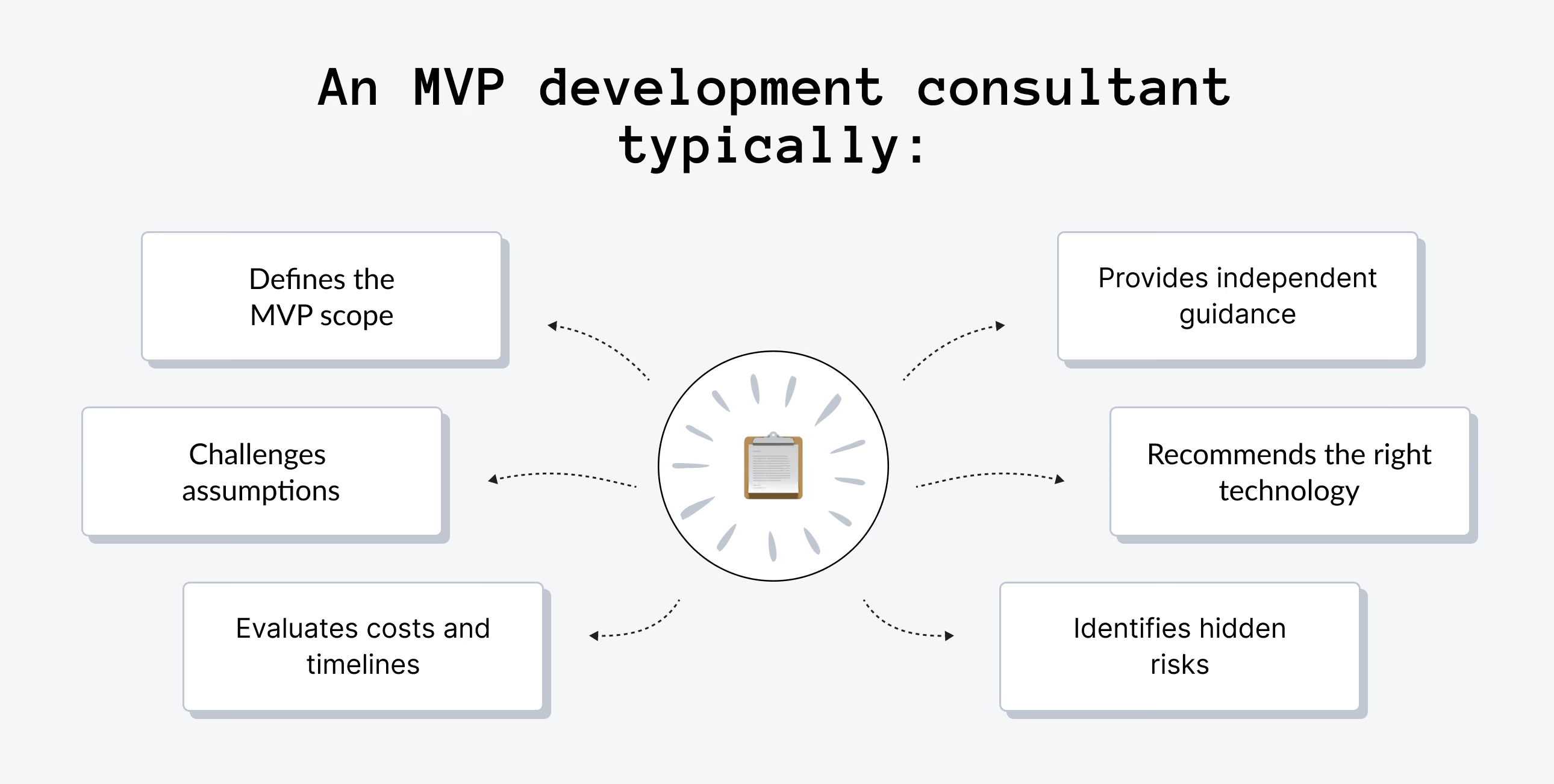
A good MVP development consultant looks at your idea, asks what you're trying to learn from the first version, and helps determine which features deserve a place in that version and which ones are really a second-version problem that you're taking on too early.
That's different from an MVP development agency's or MVP development company's sales process, even though the two conversations can sound similar at first. Most companies offering MVP development services fold consulting work into a broader package rather than offering it as a standalone engagement. That's the main reason founders so often confuse the independent consultant role with the agency role.
An agency's discovery call is often shaped by the fact that the same team pitching you will also bill you for the build. An independent consultant, or a consulting engagement kept separate from the build contract, has no such incentive. Their output is a scope document, a technology recommendation, and an honest assessment of your timeline and budget before anyone writes a single line of code.
The role also includes technical due diligence that a non-technical founder can't easily handle alone: whether your idea needs a mobile app or a responsive web app first, whether a no-code tool can get you to a real test or only a demo, and whether an integration you're assuming is simple — payments, a specific API, real-time features — actually holds up under closer examination.
Getting this wrong doesn't necessarily show up as a missed deadline. It shows up as a rebuild three months in, once real usage exposes a decision that nobody with the right experience was in the room to catch.
This is also where a real consultant earns their fee against a specific fear most founders have but don't always say out loud: not knowing whether a $40,000 quote from an agency is fair or twice what it should be. A consultant with no stake in that quote can tell you which parts represent real scope and which parts look like padding, in a way the agency giving you the quote never will.
Here's a concrete example. A founder building a two-sided marketplace assumes a simple listing-and-checkout flow will cover the first version. A consultant with real marketplace experience asks the question that changes the entire scope: how do you handle a seller who lists something a buyer never receives?
That question is the entire value of the hire. Skip it, and the same issue surfaces after the first real dispute, with real users and real money involved.


MVP Development Consultant vs. MVP Agency vs. Dedicated Team
There are three main ways to get an MVP off the ground, and they’re not as interchangeable as they might seem. An independent consultant, an MVP agency, and a dedicated team each bring a different level of involvement, expertise, and control. The table below breaks down the key differences so you can see which option makes the most sense for your product, budget, and stage.
The third option seldom appears as its own category, but it's the model most dedicated-team engagements, including Upsilon's, run on.
An independent consultant earns their cost when you want a second, disinterested opinion, or when you're choosing between multiple agency proposals and want someone with no stake in any of them to review the scope. If you haven't picked a build partner yet, that consulting fee buys real protection.
If you're about to hire a team that already includes this judgment as part of the engagement, a separate consultant is simply a second bill for the same conversation.
Picture three founders at the same stage: idea validated, no build partner chosen yet.
The first wants an outside check before signing with any agency and hires an independent consultant for two weeks. The second is comfortable with one team owning both scope and build and goes straight to an agency's discovery phase. The third wants the scope conversation but doesn't want to manage two vendors, so they choose a dedicated team where the lead developer does both jobs.
None of the three made the wrong call. Each matched the option to how much separation they wanted between the person judging the scope and the person getting paid to build it.
What It Costs to Hire an MVP Development Consultant
A standalone MVP consulting engagement runs $150 to $300 an hour, or $5,000 to $15,000 for a fixed-scope discovery engagement that produces a scoping document, a technology recommendation, and a cost estimate you can take to any development partner. That's a real cost, and it's separate from the build itself.
Context matters here: the average MVP build costs $30,000 to $65,000, and the median build takes 8 to 16 weeks (see how MVP cost breaks down by feature and complexity for the full picture).
A $5,000 to $15,000 consulting engagement represents 10 to 25% of a typical build budget, spent to make sure you put the other 75 to 90% toward the right thing. Skip it, and the same scope mistakes can surface after money is already committed, when fixing them costs far more than catching them would have.
The real MVP cost risk is hiring a consultant whose recommendation doesn't survive contact with a real build team, then paying for the scoping work twice: once for the report you received, and again when the team you ultimately hire has to rescope the project because the first recommendation missed something the build team needed to know.
Rates vary by geography more than they vary by skill. A US-based independent consultant tends to sit toward the top of the $150 to $300 hourly range. A consultant working out of Eastern Europe or Latin America with comparable experience often charges $60 to $120 an hour for the same depth of scoping work.
Geography is a reasonable filter for a build team you'll work alongside for months, but it's a poor filter for a short consulting engagement where the deliverable is a document, not ongoing collaboration.
Upsilon's own dedicated team pricing starts with a Project Discovery Team at $6,000 for two weeks. It does the same scoping work a standalone consultant would at a comparable price and moves straight into the build if you decide to continue.
If you would like an initial estimate before starting a conversation, try the AI MVP Estimator. It can turn your idea into an initial product summary, scope, and price estimate in just a few minutes.
Need a hand with your startup's MVP?
Upsilon was once a startup too, so we can help build and scale your product!

Where to Find an MVP Product Development Consultant
Finding the right MVP consultant takes a bit more than a quick Google search. The best candidates often come through founder networks, specialized review platforms, and communities where people share real experiences. Here are the places and signals worth paying attention to:
- Start with founder referrals. Recommendations from founders who built something similar are usually the highest-signal source. They can tell you what the consultant actually caught, challenged, or helped avoid (not just whether they enjoyed the engagement).
- Check Clutch and GoodFirms. Both platforms can help you find independent consultants and agencies, with reviews tied to real client engagements rather than testimonials published by the company itself.
- Look beyond the star rating. Filter reviews by project size, industry, and product type. A 5-star review from a company building an internal tool tells you much less about someone's ability to scope a consumer MVP.
- Search for independent consultants directly. Consultants sometimes listed as an MVP product development consultant can be harder to find through directories focused on agencies. LinkedIn, YC founder communities, and Indie Hackers can be better places to find individual experts, especially through recommendations.
- Be careful with general search results. Google will often return agencies whose discovery process includes consulting. That's a legitimate option, but it's different from hiring an independent consultant who isn't involved in the development contract.
- Prioritize relevant experience over years in the field. Ten years of enterprise software experience doesn't necessarily mean someone knows how to scope a lean consumer MVP under startup-level budget and timeline constraints.
- Ask about recent projects at your budget level. Instead of asking how long they've been consulting, ask when they last scoped a project similar to yours and within a comparable budget, such as $20,000 - $80,000. Recent, relevant experience is a much stronger signal than a long résumé.
How to Vet an MVP Development Consultant Before You Hire
The best way to vet an MVP product development consultant is to see how they think about your product, not how well they can describe their consulting process. A few targeted questions can quickly show whether a candidate can challenge assumptions, prioritize features, and give you something useful before you commit to a larger engagement.
Here are the questions worth asking during the first conversation:
1. How would you scope my idea?
Ask the consultant to walk you through how they would approach your actual product, rather than giving you a generic overview of their process.
A strong answer should include:
- Which features they would cut from the first version;
- Why those features can wait;
- What they would keep in the MVP;
- What they would need to validate before finalizing the scope.
A vague promise to “figure out the MVP together” after you sign tells you very little.
2. What would you need to validate before choosing the tech stack?
A strong consultant won't recommend a technology stack before understanding what the product actually needs to handle.
Listen for questions about:
- Expected user volume;
- Real-time functionality and whether it is essential;
- Integrations and third-party services;
- Security or compliance requirements;
- What you already have, such as wireframes, a validated audience, or existing code.
A weak answer jumps straight to a stack they're comfortable with instead of first identifying the product's actual requirements.
3. Tell me about a time you pushed back on a founder's scope
Ask for a specific example of a project where they disagreed with the founder's original plan — and what happened next.
The story matters more than saying they're “collaborative.” It shows whether they are actually willing to challenge assumptions when necessary.
A consultant who has never disagreed with a client may not have done one of the most important parts of the job: protecting the MVP from unnecessary scope.
4. What does the engagement actually deliver?
Ask how the consulting engagement ends and what you will have in your hands when it is over.
Clear deliverables might include:
- A defined MVP scope;
- A prioritized feature list;
- A recommended technical approach;
- A cost estimate;
- A development roadmap;
- Documentation you can take to another team.
Be cautious about vague language around “ongoing collaboration” when there is no clear handoff. It can be a sign that the consulting engagement is really a soft sell for a development contract you have not agreed to yet.
5. Does the free consultation actually give you anything useful?
Pay attention to what happens during a “free consultation.”
A good discovery call should leave you with at least one specific insight about your product — for example, a risk the consultant has spotted or a question that still needs validation.
If the entire conversation stays generic and ends with a pitch for a paid engagement, you may have had a sales call wearing a consulting label.
6. What did a past client disagree with you about?
Don't rely only on the two references the consultant provides. If possible, contact at least one past client yourself.
And don't just ask, “Did you like working with them?”
Ask: What did the consultant get wrong?
This often produces a much more useful answer than asking what went well. If a reference offers nothing but praise, that may mean the engagement was unusually smooth — or that they haven't thought critically about it. Either way, it's worth knowing before you sign.
7. What would you cut if my budget were cut in half?
This is one of the quickest tests of a consultant's prioritization skills.
A strong consultant should be able to explain:
- What stays in the MVP;
- What moves to a later release;
- What can be simplified;
- What should be removed entirely;
- Why those decisions make sense.
If every feature is treated as essential, the consultant hasn't done the hardest part of MVP consulting yet: deciding what doesn't need to be built.

Common Mistakes That Turn a Good Hire into a Wasted One
Even with the right consultant, a few common MVP mistakes can undermine the value of the engagement. Most come down to treating the consultant's work as a final answer rather than a tool for making better decisions as you learn more about the product.
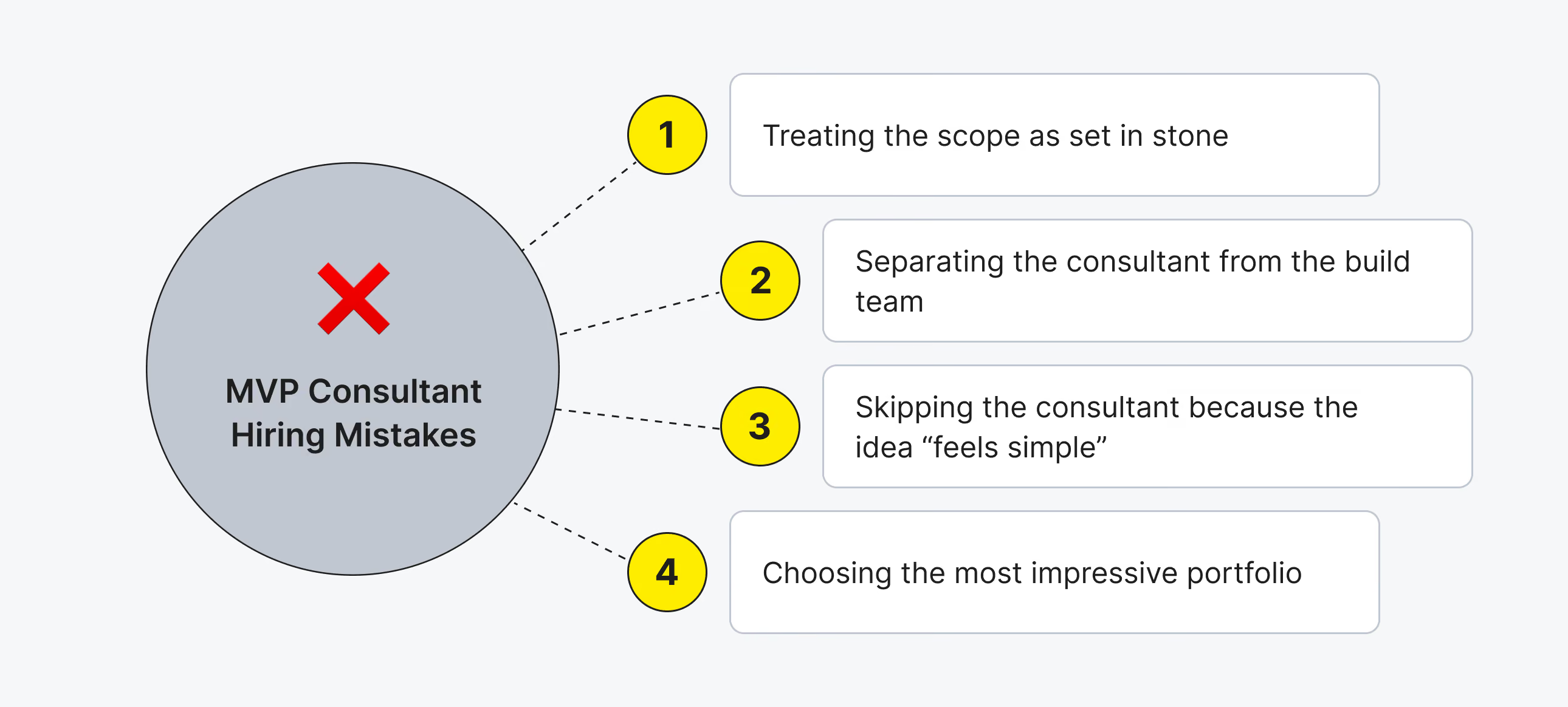
Treating the Scope as Set in Stone
Real users will teach you things that no amount of upfront scoping can predict. A good consultant should make that clear from the start.
Treat the initial scope as a working plan, not a contract with reality. If you defend every decision made before launch, you may end up protecting assumptions instead of responding to what users actually need.
Separating the Consultant From the Build Team
When the consultant and development team have never worked together, important context can get lost during the handoff. The developers may interpret the scope differently from what the consultant originally intended.
Ask upfront how the consultant's work will be transferred to the development team. If possible, consider a team that can carry the same product and technical thinking from scoping through development.
Skipping the Consultant Because the Idea “Feels Simple”
Simple products can hide just as many scope traps as complex ones. They just tend to hide them in fewer places.
Take a basic booking app: it still needs to handle double bookings, cancellations, time zones, and availability rules. These are exactly the kinds of decisions a consultant can surface before they turn into expensive rework.
Choosing the Most Impressive Portfolio
A polished portfolio doesn't necessarily mean relevant experience. A beautiful case study for a food delivery app tells you little about someone's judgment when working on a B2B SaaS product with completely different users and sales dynamics.
Look for relevant experience, not just impressive visuals. Ask what was genuinely comparable about their previous projects and how that experience applies to your product.
Looking for a reliable tech partner?
Upsilon can help you develop an MVP that'll grow to be a success!
How Upsilon’s MVP Development Consulting Services Can Help
Choosing an MVP product development consultant is ultimately about finding someone who can turn an idea into a focused, realistic plan without losing sight of the bigger picture. The right consultant helps you validate assumptions, cut unnecessary features, make informed technical decisions, and define an MVP that can actually be tested with real users. Just as importantly, the scope should remain flexible as you learn from the market.
As a product studio, we at Upsilon offer a full range of MVP development services, from discovery and product strategy to design, development, and launch. Our team doesn’t look at an MVP as a list of features to build. We dig into the product logic, user needs, business model, and technical constraints to understand what needs to be built and what can wait.
We also bring experience from both sides of the table. We’ve launched our own products, so we know what it takes to move from an idea and an early hypothesis to something real and usable. And because we’ve worked with dozens of startups, our consulting isn’t limited to recommendations that end up in a scope document. It’s backed by battle-tested product and development expertise and can continue all the way through building, launching, and improving the MVP.
If you’re looking for more than a consultant who hands you a document and walks away, let’s talk. Tell us what you’re building, where you are in the process, and what you’re trying to validate and we’ll help you figure out the next step.



FAQs
What does an MVP development consultant do?

An MVP development consultant reviews your product idea, pressure-tests the scope, and advises on the technical approach before a build starts. Some also build; many don't. Their job is to catch a scope or technology decision that would cost you months and budget to unwind, before you've spent either.
How much does an MVP development consultant cost?
A standalone consulting engagement runs $150 to $300 an hour for a US-based consultant, or $5,000 to $15,000 for a fixed-scope discovery engagement, separate from the cost of building the MVP itself. A full MVP build averages $20,000 to $80,000, so a consulting-only engagement is a small fraction of that, spent to make sure the larger number goes toward the right thing. Rates outside the US often run $60 to $120 an hour for comparable experience.
What's the difference between an MVP consultant and an MVP development agency?
A consultant advises; an agency (or dedicated team) builds. An independent consultant gives you an outside opinion on scope and approach with no incentive to sell you more build hours. An agency's discovery phase does similar work, but the same team that scopes the project also builds it, which is a real conflict worth knowing about going in.
Where can I find a good MVP development consultant?
Start with referrals from other founders who've built something comparable, then check Clutch and GoodFirms for verified client reviews rather than testimonials on a company's own site. Independent consultants are harder to find through directories built for agencies; LinkedIn and founder communities (YC forums, IndieHackers, local startup groups) surface them better than a general search. Recent, relevant project experience at your rough budget level matters more than years in the field.
Do I need a consultant if I'm already hiring a development team?
Not if the team includes real technical leadership as part of the engagement. A dedicated MVP team with a lead developer or product-minded technical lead does the same scoping and pushback work a standalone consultant would, without a second hire or a second bill. A separate consultant earns its cost when you want a second, independent opinion before committing to whoever builds it.
to top