


How to Build a Minimum Viable Product (MVP) for Startups: The Ultimate Guide
%20for%20Startups.avif)

Key facts at a glance
- A custom MVP costs $15,000–$120,000 in 2026. Most startups land at $40,000–$80,000.
- MVP development basically takes 3 to 6 months. Simple products ship in 6–8 weeks.
- 43% of failed startups cite poor product-market fit as a root cause (CB Insights 2024 update).
What Is an MVP (Minimum Viable Product)?
An MVP is a test version of a product that ships with only a few critical features. Those features must be valuable enough for an end user to adopt the product. An MVP can take the shape of a web or landing page, a custom web application, a program, or even a physical form.
The term is a business and startup staple. Even people outside product development recognize it.
An MVP is not a rough draft. It is the smallest complete version of your idea that a real customer can use and judge.
%2520Defined.avif)
What Is the Goal of MVP Development?
MVP development has three goals. You verify that the product is viable. You identify its strong and weak features. You measure how the intended audience actually reacts.
Everything else, including polish, scale, and extra modules, comes after those three answers.
Why Do Startups Build an MVP Instead of a Full Product?
An MVP lowers costs, accelerates development, and puts real user feedback into the roadmap before the expensive work starts. It shows you whether your idea is as worthwhile as it seemed. It also shows which direction is safe to take next.
The final aim of MVP development for startups is:
- verifying the product's viability;
- noting its strong and weak features;
- and examining the reaction of the intended audience to the product.
Roksoliana Liubachivska, Business Development Manager at Django Stars and startup mentor, puts it this way:
"The primary value of building an MVP lies in testing the product with real potential users. Startups often assume their MVP is complete and high-quality, but only after user testing do they uncover what features need refinement. This iterative feedback loop allows the product to evolve in a way that truly serves its users' needs — a lesson I've repeatedly seen in my experience mentoring startups."
An MVP also builds a connection with your target audience at a lower cost. And it speeds up delivery, because the team ships one focused thing instead of ten unfinished ones.
How Often Do Startups Fail, and Can an MVP Prevent It?
Startup failure rates are high. US Bureau of Labor Statistics data shows roughly 21.5% of new businesses fail in year one and 48.4% fail within five years (SegmentOS analysis). The most-cited root cause is building something nobody wanted.
CB Insights analyzed 431 failed VC-backed startups and found 43% failed from poor product-market fit, 29% from bad timing, and 19% from unsustainable unit economics (Preuve summary of the CB Insights update). Capital ran out in 70% of cases, but that is the symptom rather than the cause.
An MVP attacks the root cause directly. You test demand before you spend the runway, not after.
Which Famous Companies Started as an MVP?
Spotify, Amazon, and Airbnb all validated their models with stripped-down first versions. Zappos, Uber, and Facebook did the same. Their early releases had a fraction of today's functionality.
The pattern repeats: launch a limited feature set, listen, then expand.
What Does Product-Led Growth Have to Do with an MVP?
A good product solves a real user problem or improves a daily routine. When it does, users discover the value themselves and tell others. That word-of-mouth influx is the core of product-led growth.
Aim for that effect from the MVP stage, not after the full launch.
What Are the Main Benefits of Building an MVP?
An MVP delivers 4 concrete business benefits: customer-validated analysis, investor appeal, low-risk testing, and cost control. Each one maps to a common reason startups stall.
The MVP benefits are closely linked to the main purpose it serves, as well as its main goals and features. We'll consider them in detail and state how an MVP for startups can bring value and positively affect a project.
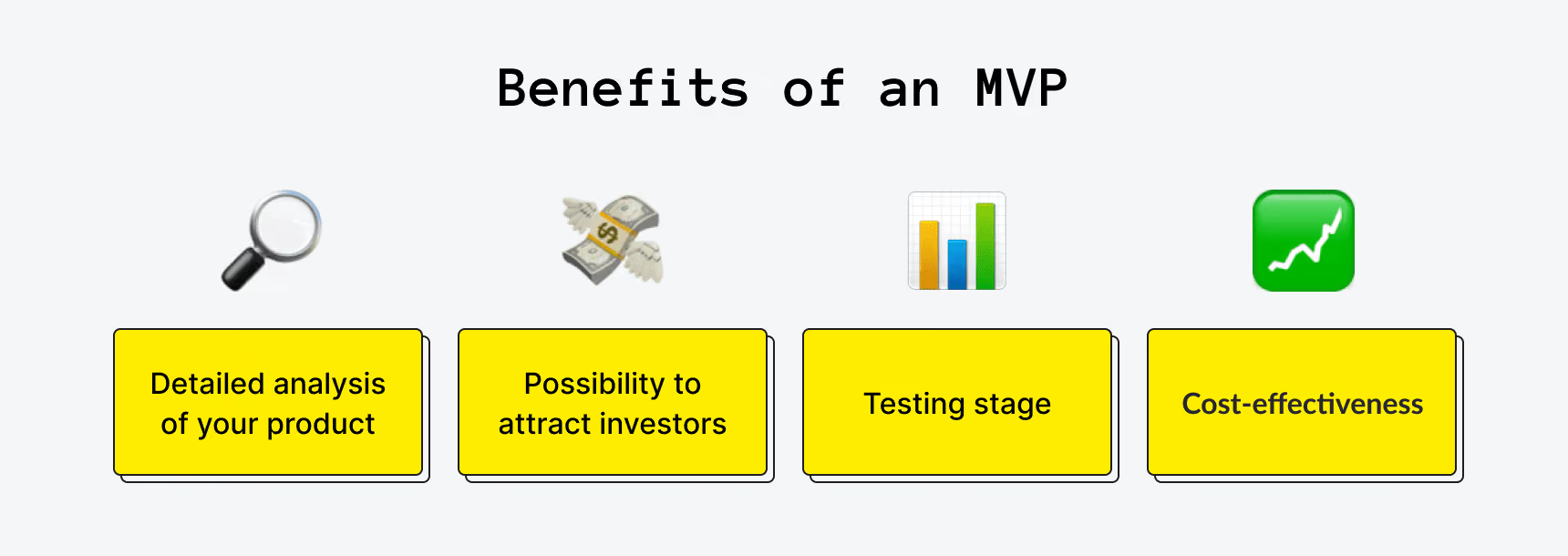
- Detailed analysis of your product based on customer experience. Customer feedback is priceless during the MVP creation process, as it gives you an opportunity to identify the most and least appealing parts of your product or service, giving you a chance to make it stand out, serve user needs, and be competitive.
- Possibility to attract investors. Having a working MVP to demonstrate increases your chances of appealing to potential investors, and it's among the best practices for pitch deck creation too. Investors are likelier to be involved in a project that is already "touchable" than a concept detached from any action.
- Testing stage. Reversibility is also a key factor determining the popularity of MVP development for a startup. I.e., it is much easier to eliminate the functions that prove to be unnecessary, fix the bugs, or add new features while testing the product's usability. This flexibility helps to implement updates smoothly and bring the release closer.
- Cost-effectiveness. A lot of startups have been damaged by inefficient financial planning. MVP product development helps to reduce costs, redistribute the funds if necessary, and eventually minimize the expenses of a final product to save the startup budget.
Need to build an MVP?
We are happy to assist. Drop us a line and we will be there to share our expertise!

What Are the Steps of the MVP Development Process?
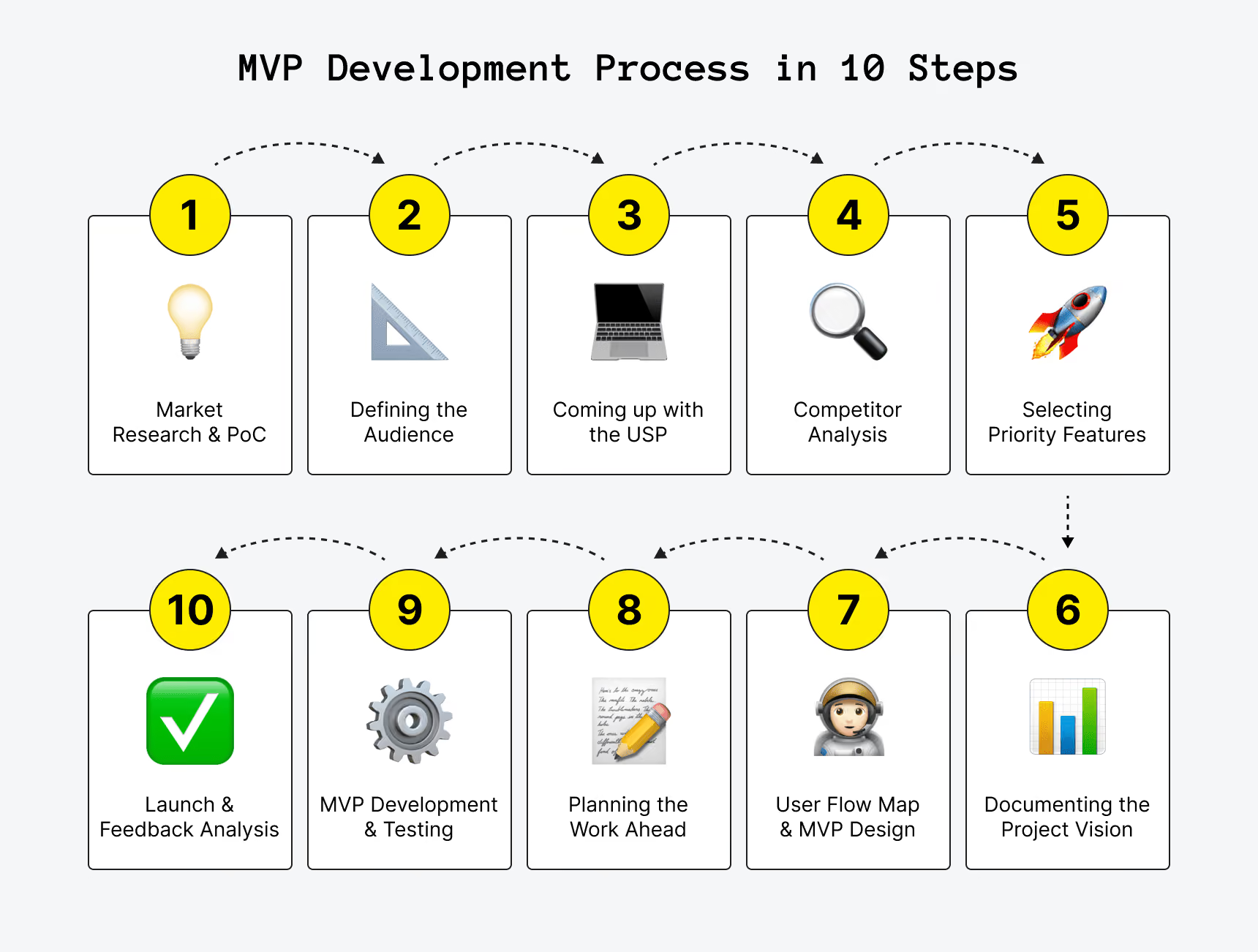
MVP development runs through 10 structured stages, from market research to post-launch feedback. Each stage produces an artifact you can reuse: a market map, a persona, a feature list, a roadmap, a prototype.
The process is deeply structured and split into visible milestones. Here is each one.
Step 1: Do the Market Research
Start by analyzing the market you want to enter. Examine four data sets: audience needs and customer behavior, main market tendencies, price level and rate of return, and advertising and promotion channels.
Begin with a proof of concept (POC) step. A POC decides how your product will stand out among the others. It helps you land on a solution that meets real user expectations.
Step 2: Narrow Down Your Key Audience
Narrow it aggressively. Instead of covering most of the population, minimize and break down your target groups. Wanting 100% of humanity to love your product is understandable, but it is not a viable option.
Concentrate on the people who will be eager to buy and use the product because they need it.
When defining who your potential clients are, cover these points:
- their age, sex, place of living, marital status, occupation;
- their paying capacity;
- the type of gadgets they prefer;
- how the problem your minimum viable product will be solving correlates with them.
The output is a portrait of your average product consumer. That portrait serves both the build and the promotional campaign.
Step 3: Think of Your USP
A strong USP fixes a real problem or takes the current experience to a new level. Define which solution the MVP offers and how it hooks the client.
You need a great unique selling point (USP) that solves a real problem. Take an audiobook player as an example. Its selling points could be:
- support different file formats;
- synchronization between the user's various devices;
- timer and night mode settings.
Find what makes your product unique or clearly ahead of the benchmarks. Concentrate the build on that feature set. Document the insights carefully, so future teammates understand where the concept came from.
Step 4: Monitor Your Rivals
Assume competitors exist. Even a special product usually has analogous solutions, and someone will always want a piece of the pie. Analyze your future competitors and keep the data organized, at minimum in a spreadsheet.
Check 4 things for each rival:
- their website;
- their social network pages;
- their activities in the mass media;
- their participation in professional exhibitions, etc.
Assume competitors exist. Even a special product usually has analogous solutions, and someone will always want a piece of the pie. Analyze your future competitors and keep the data organized, at minimum in a spreadsheet.
Step 5: Shortlist Your MVP Features
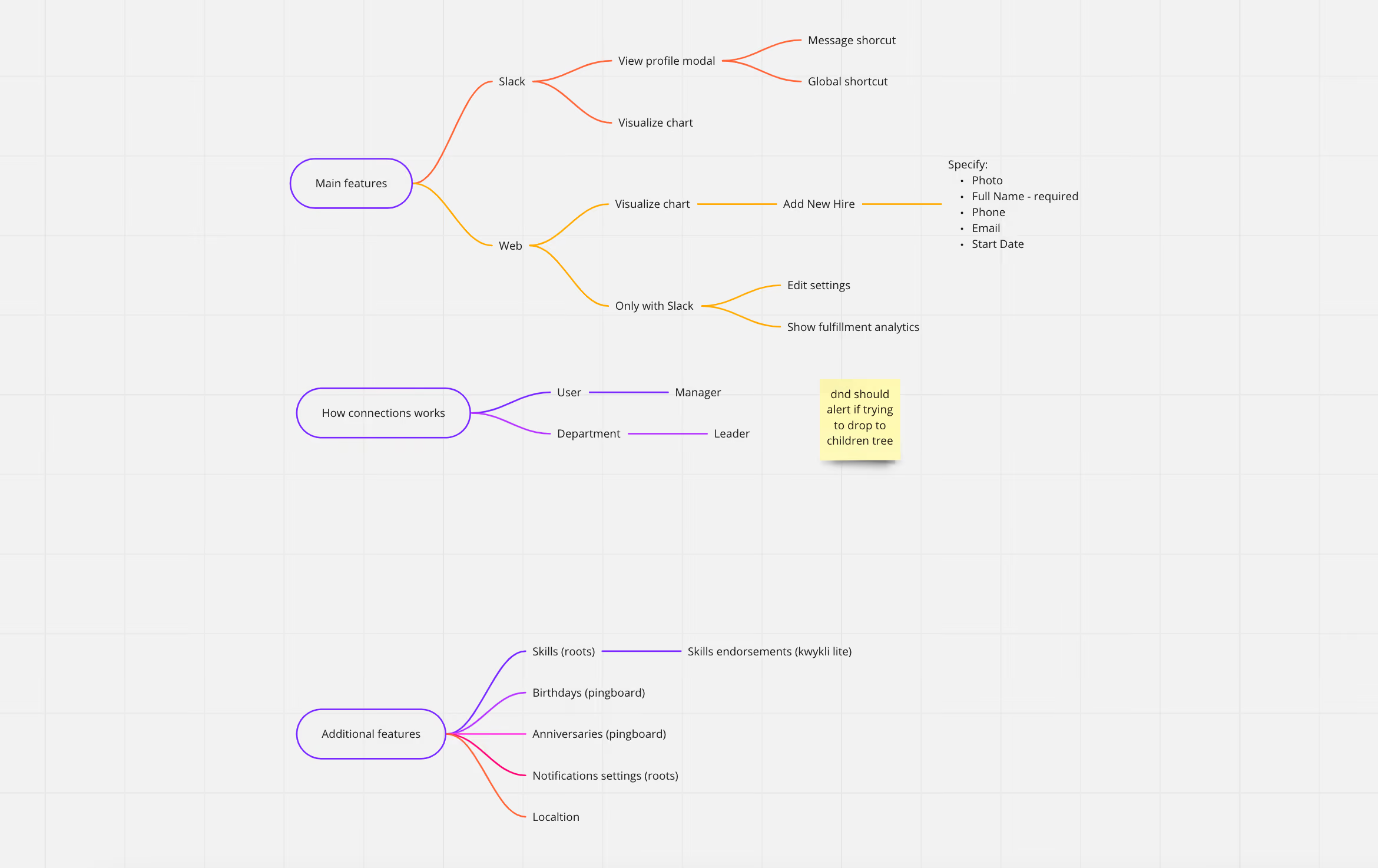
An MVP should include only the most necessary functions — usually a handful of core features, not a full catalog. Pick the several main features that become the backbone of the product. Build a must-have list and run feature prioritization on it.
Define the core set first. Then keep a second list of additional features for later releases.
For a concrete example, Upsilon maintains exactly this kind of product feature list for our own product, OrgaNice.
Step 6: Document Your Project Vision
Hold one or several meetings to agree on the major principles of the project. The output is a detailed action plan that guides the whole MVP development process.
Four things belong in that document:
- Costs. Devise a strategy for spending a reasonable amount of time, effort, and funds. Startup funding is hard to raise, and draining the budget inadvertently is easy.
- Key features. Direct most of your resources to the core MVP functionality.
- Client feedback. Feedback will shape the end product. Set up the collection channels in advance.
- Promotion methods. Landing pages, social networks, and contextual advertising push a newborn product ahead. Organizing a fundraising activity on a platform like Kickstarter is another option.
Make sure every responsible team member joins the discussion. Each one should share their vision of the product, the top priorities, and the funds distribution. A varied web development team can bring in many expert insights.
Step 7: Map Out User Flow and Design the MVP
Anticipate the user experience before you code it. Create a user path map or build a User Flow Diagram.
A flow diagram answers three questions. Is the interface intuitive enough for clients? How do they reach the information or features they need? Do your vision and the client's vision of the product match?
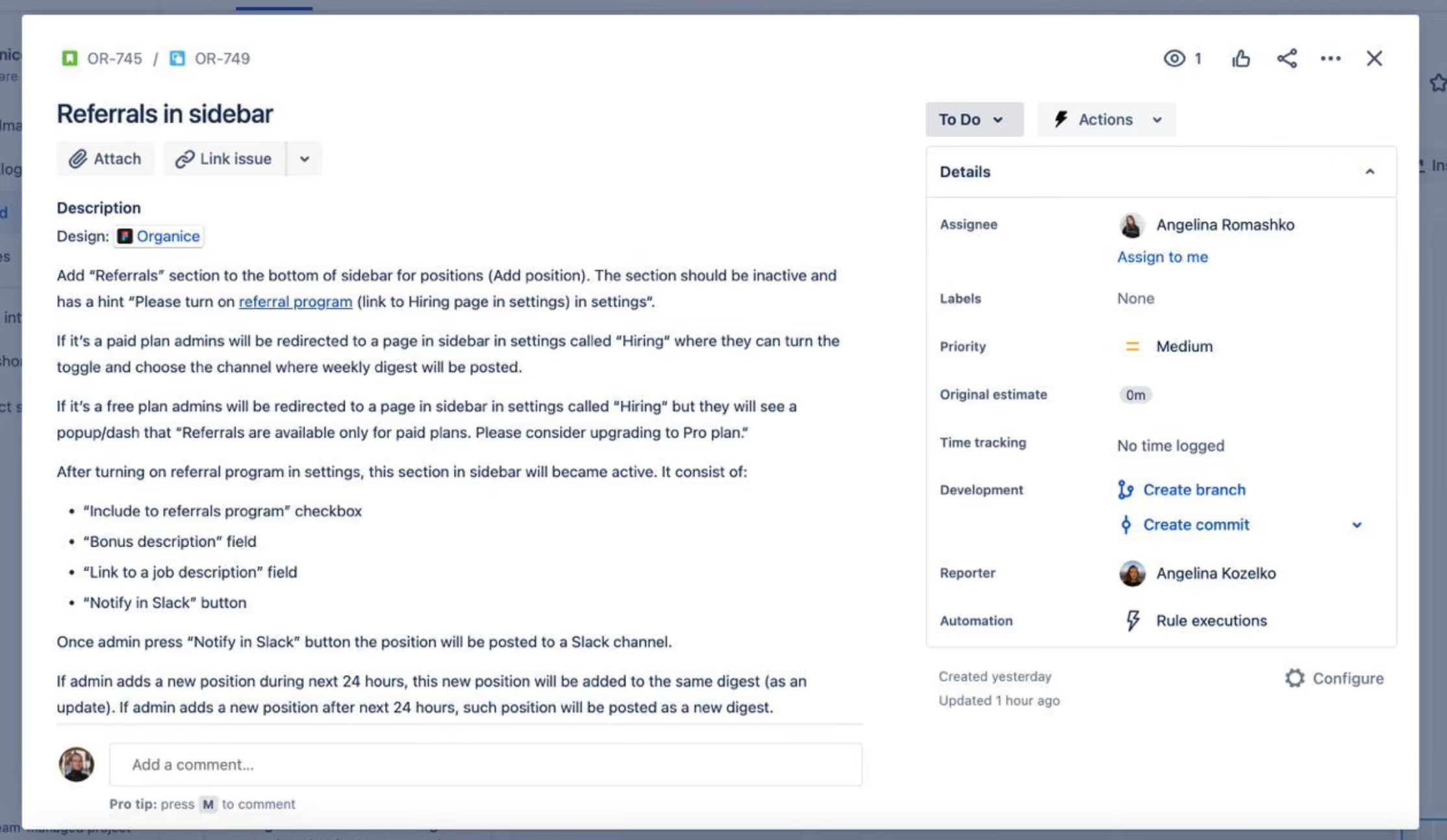
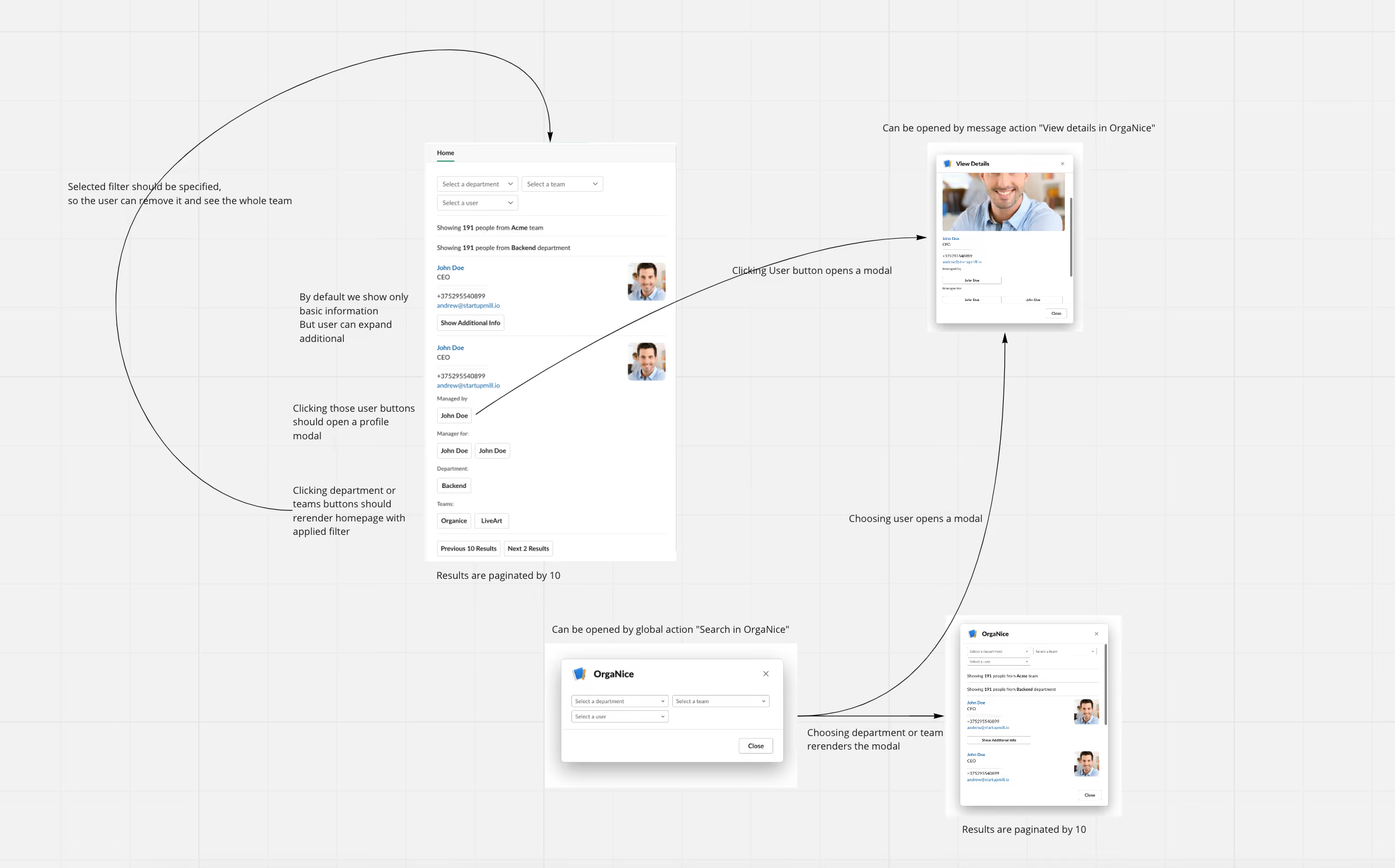
Furthermore, a User Story map will help you plan and describe the journey a user takes. For instance, here's an example of a User Story that we use for our product OrgaNice.
MVP design does not need to be perfectly polished. The UI/UX must conform to the core features and stay simple and intuitive.
Then build a click-through prototype. It demonstrates what the final product will feel like, and it becomes the reference point during development.
Step 8: Plan the Work Ahead
A detailed product development roadmap keeps the team organized and aligned. Indicate the work ahead, split it into milestones, and note the possible assignees. Each step should carry relevant tasks assigned to specific team members.
Development goes much smoother with a structured plan. A plan also lets you change course dynamically and see the iterations. Plenty of startup tools exist for planning, assigning, and monitoring progress.
Step 9: Develop and Test
Once the research is collected and analyzed, the build starts. Keep three things in mind while the solution comes together:
- look into the strong and weak sides of your minimum viable product, along with the ways to improve them;
- choose your management and development technique and proceed with QA testing;
- pay attention to risks, both internal and external.
Step 10: Launch the Solution and Work on Feedback
After MVP release, it is essential to continue with further testing and analyze the reviews received from users. Pay attention to comments on the interface and usability, the feature list, the design, and the overall customer experience.
Four questions are worth asking every early user:
- Did they enjoy using the product?
- Are they likely to recommend it to friends or colleagues?
- Is it worth its price?
- Which features should be added or removed?
Opinions will be diverse. Concentrate on recurring issues and improve the product based on those. If you host a product presentation after launch, prepare the guest list in advance, choose speakers, and hire a professional conference photographer to maximize the benefit.
Still unsure about the starting point?
Get a project evaluation and consultation from our specialists.
What Are the Biggest Challenges When Building an MVP?
Four mistakes account for most MVP failures: perfectionism, missing feedback, ignored analytics, and bad timing. Each one is avoidable with a rule you set before development starts.
Not all MVPs succeed. Building a product without roadblocks, unexpected problems, or unforeseen circumstances is practically impossible.
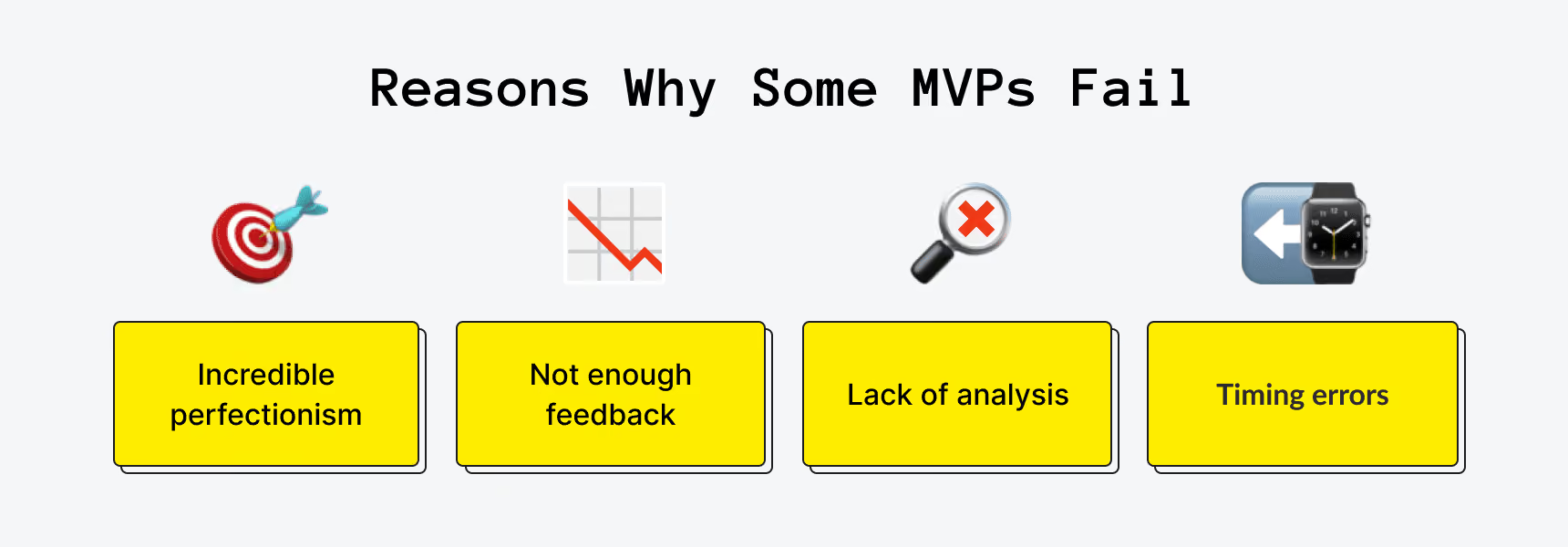
Why is Perfectionism Dangerous for an MVP?
Perfectionism delays the release. Your MVP must be well-balanced, well-tested, glitch-free, and attractive. But polishing endlessly or adding intricate features causes real harm.
You are building a minimal version of a future product. Choose the optimal MVP type and let minor imperfections slide. Testing in the real world matters more than a flawless build.
What Happens When a Startup Skips User Feedback?
The product stops matching real needs. Hypotheses are inevitable in business, but decisions based only on assumptions are unreasonable. Customer experience must be the primary guidance when building an MVP.
Urge clients to speak up. Conduct research, segment your target groups, and identify their needs. The more good questions you ask, the better answers you get.
Listen to your teammates too. And never take client feedback for granted.
Which MVP Metrics Do Startups Ignore Too Often?
Downloads, purchases, and the volume and mood of reviews all reflect the client's opinion and your market position. Ignoring them is a reliable way to damage a product. If the numbers look bad, act before the damage is irreparable.
Two traps sit on either side of the analytics question. One is monitoring worthless vanity data that feels good. The other is making fast-track, impulsive decisions without enough information behind them.
Pick the right set of metrics and gather enough data to act on. Dashboard reporting tools help organize and visualize the critical ones.
How Long Does It Take to Build an MVP?
MVP development typically takes 3 to 4 months, and the exact number varies from project to project. Simple products with limited backend logic can ship in 6–8 weeks. Complex platforms such as marketplaces, AI products, or regulated fintech typically need 5–8 months.
Releases that come too early or too late both spoil the result. Rushing a Product Hunt launch without preparation makes life hard for a long time afterward.
Find the balance. Be well-prepared, and remember that less is often more with an MVP.
Compressing the timeline below three months usually raises costs by 20–40% because of communication overhead.
Is a No-Code MVP a Good Way to Save Time?
No-code is fine for quick validation and risky as a foundation. Cutting corners with a no-code MVP looks like an easy speed-up, but it often creates technical debt and scalability issues later.
What works for validation can become a bottleneck when it is time to refine or scale. As a no-code product grows, the limitations usually force a complete rebuild. That rebuild ends up more costly and more time-consuming than doing it right the first time.
What Makes MVP Development Smoother?
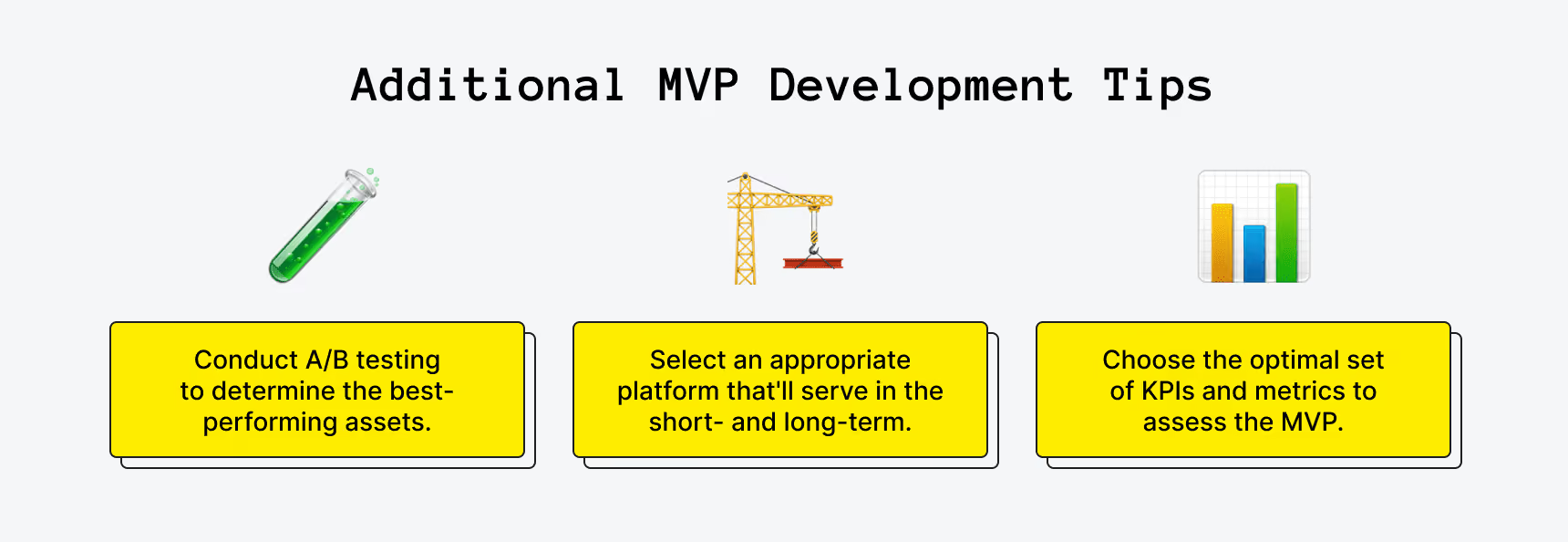
Three practices consistently help: A/B testing on core assets, an early platform decision, and a tight KPI set. They apply regardless of which MVP path you choose.
The original text does not contain any dashes, so no changes were needed. The copy is already grammatically correct and reads smoothly as written.
How Does A/B Testing Help an MVP?
A/B testing helps you choose the most reliable MVP features and assets. Equip the product with two versions of a similar element — buttons, pop-ups, and so on. Compare them, then keep the winner.
Testing this way reveals the wording, colors, and element placement that work best for your audience. Multiple MVP tools automate the process.
How Do you Choose the Right Platform for an MVP?
Choose early, because migration gets tough later. Finalizing the tech stack and platform decision is a critical step when building an MVP for a startup.
If you plan a mobile application, making the MVP available on both Android and iOS is usually wise. Consider the different app types and pick the one that makes the most sense for your case.
Add a small landing page as well. It costs little effort and money, and it lets clients examine and understand your MVP.
Which KPIs Should You Track for an MVP?
Track four metrics: activations, active users, customer acquisition cost, and engagement. Together they tell you whether the product is being adopted, used, and valued.
- Activations. Count how many clients picked your MVP — signed up, or downloaded the app. This measures product recognition and shapes the next round of activity.
- Active users. These are people who use the product within a period, so they split into daily, weekly, and monthly active users. The number lets you calculate profit correctly and measure the promotional campaign's effectiveness.
- Customer acquisition cost. Learn how much you spend to attract a single client, then calculate real ROI. The result shows which expenses to cut and which marketing efforts to prioritize.
- Engagement. This metric measures current value and forecasts future value. It also guides UX improvements based on customer feedback.
How Much Does It Cost to Build an MVP in 2026?
A custom MVP costs $15,000–$120,000 in 2026, and most startups land in the $20,000–$65,000 range. Complex, regulated, or Series-A-ready builds run $120,000–$300,000+. Upsilon's own benchmark for a B2B SaaS is around $35,000 over roughly 3 months.
All estimates are rough. Cost and timing vary with the unique requirements of every solution, even when the feature lists look similar. For a specific number, use our MVP cost calculator or talk to our business development specialists.
What Does an MVP Cost by Product Type?
Cost tracks complexity more than anything else. These are 2026 market ranges for the most common MVP categories:
Product type |
Typical cost |
Typical timeline |
|---|---|---|
Landing-page validation MVP |
$2,000–$8,000 |
1–2 weeks |
No-code prototype (Bubble, FlutterFlow) |
$5,000–$18,000 |
2–4 weeks |
Simple web app (auth, CRUD, 3–5 screens) |
$15,000–$35,000 |
4–8 weeks |
B2B SaaS platform |
$30,000–$80,000 |
3–6 months |
Consumer mobile app |
$25,000–$80,000 |
2–5 months |
Two-sided marketplace |
$40,000–$150,000 |
3–7 months |
AI-powered product |
$40,000–$150,000+ |
2–8 months |
Fintech or healthtech (regulated) |
$70,000–$250,000+ |
4–9 months |
How Much Do Developer Rates Affect MVP Cost?
Team location is the single largest cost variable. A mid-level developer bills roughly $120–$150/hour in North America, $80–$120/hour in Western Europe, $40–$65/hour in Eastern Europe, and $25–$45/hour in Asia.
The same simple MVP that costs $80,000–$120,000 with a US in-house team costs $35,000–$55,000 nearshore.
Scope and rate multiply. Cutting one of them without cutting the other rarely works.


How Does Upsilon Estimate MVP Projects?
We use the PERT method (Program Evaluation and Review Technique). PERT takes three estimation points: pessimistic, realistic (the most likely case), and optimistic.
The expected estimate is a weighted average of those three points:
(optimistic + pessimistic + (4 x realistic))/6 = expected estimate
For our marketplace estimations, we defined the essential MVP features and calculated the MVP agile development time based on the PERT method, here's the result.
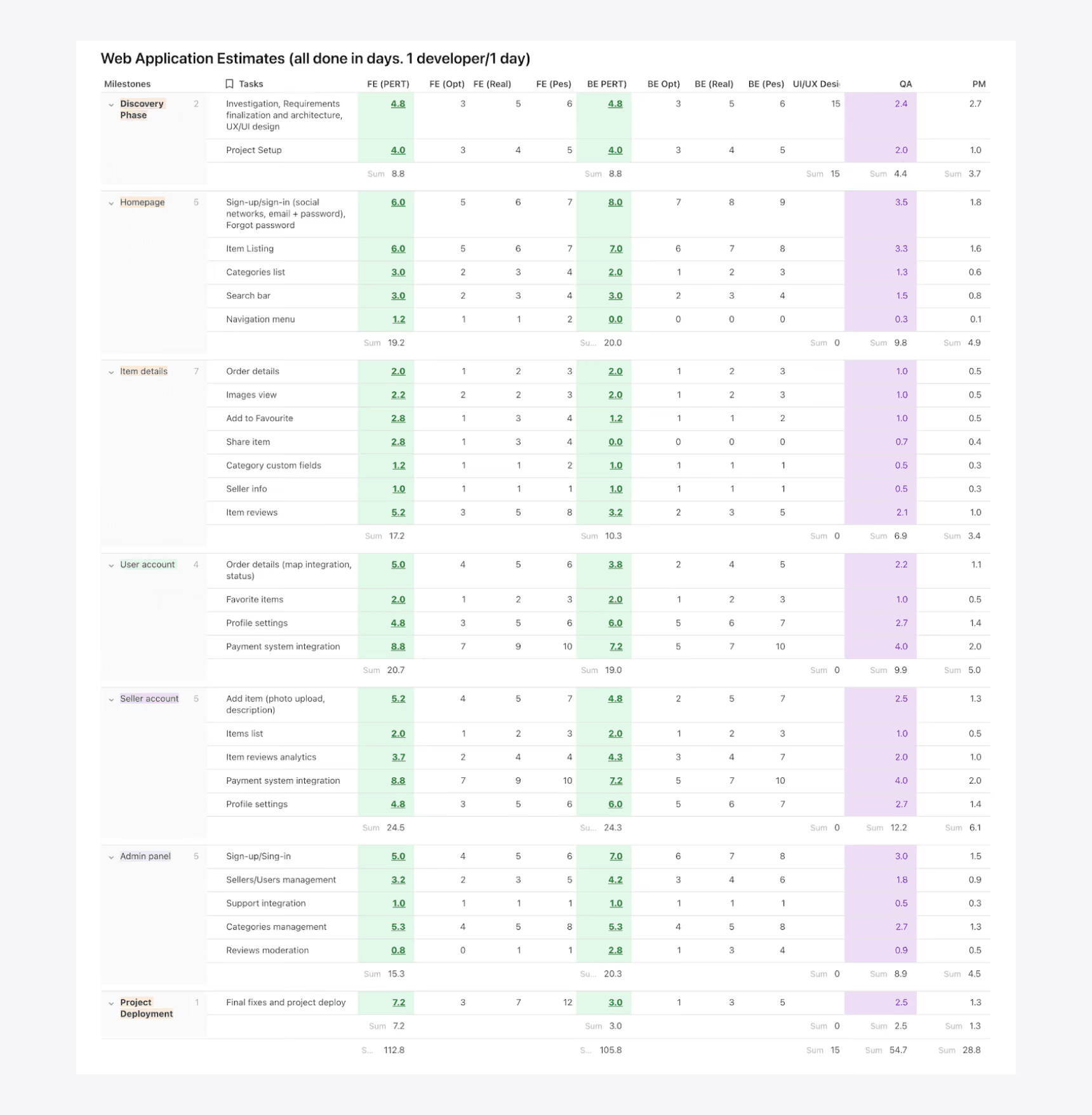
*FE - front-end, BE - back-end
The approximate duration of the project from the discovery phase till release is 6 months, considering one back-end and one front-end developer.
We also included a QA engineer, UI/UX designer, and project manager in our estimations, and we highly recommend not skimping on these specialists. QA engineers guarantee product quality during the whole development lifecycle, and project managers support the steady day-to-day work on the project, making sure that communication between the client and the team is going smoothly. With a well-formed team, the questions on how to build a minimum viable product and how to make it effective will be solved.
Thus, based on the sample workflow details and team composition given above, the rough MVP development cost will be around $80,000 for a marketplace. What’s for custom software development services, we can also guarantee on-time delivery and the high quality of the built product.


Which Real Companies Started With an MVP?
MVP development for tech startup teams has long been a common path. Minimum viable products have been the initial part of multiple successful startups. We have compiled the most remarkable cases so you can realize the huge potential of MVP implementation.
Zappos
Back in 1999, Nick Swinmurn, the founder of Zappos, was enlightened with the idea of launching an online shoe store. As there was no certainty that the startup would pay off, he decided to begin with no inventory at all.
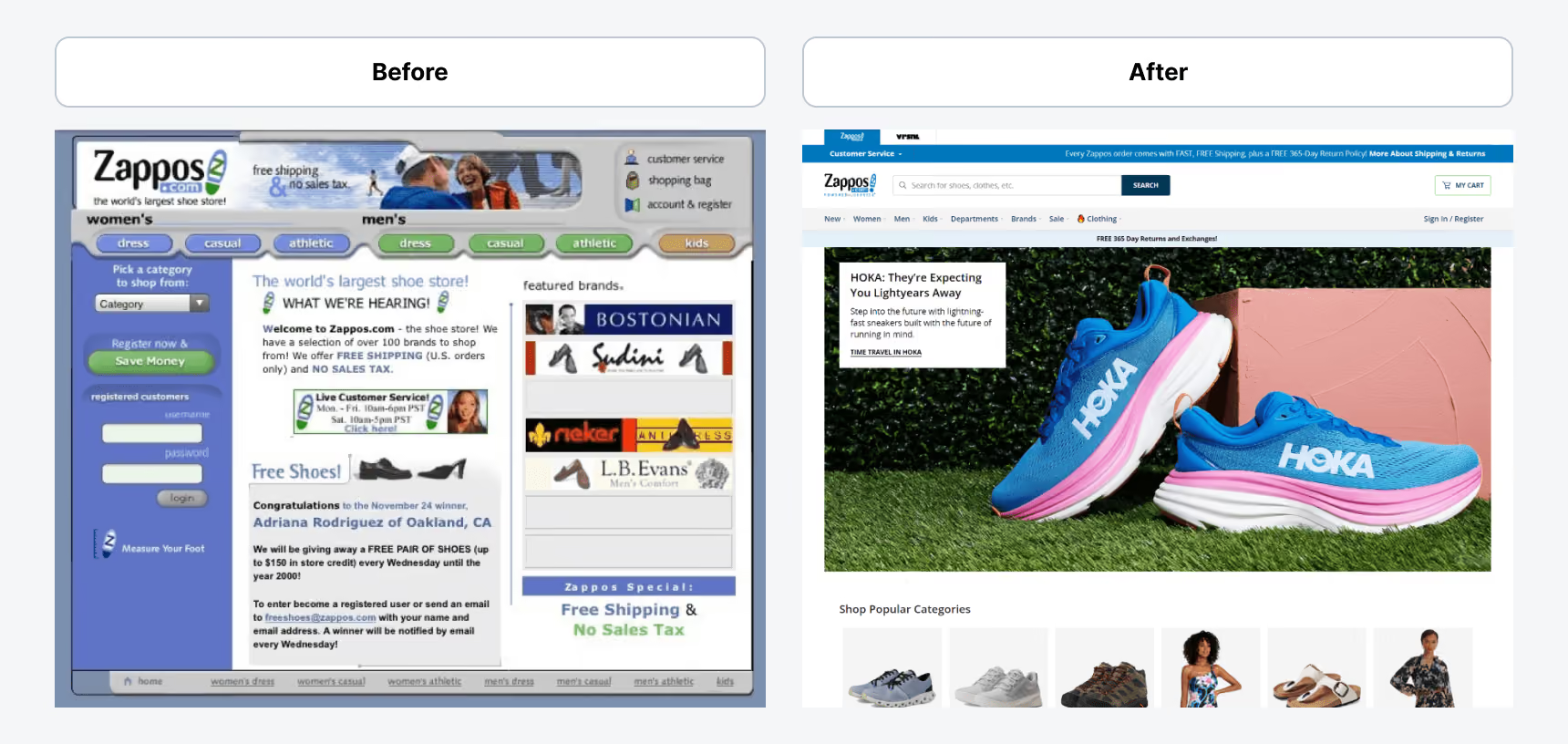
He had no shoes in stock physically, yet he placed pictures of them on the website. As soon as someone made an order, he purchased the needed pair of shoes and shipped them to the customer. As simple as that! By doing so, Nick Swinmurn minimized his financial risks in case the shoes would not sell well and had a nice opportunity to test his MVP.
This particular case can be marked as an official start of what we consider an MVP today. Zappos was eventually acquired by Amazon for $1.2 billion and is continuing its work as an Amazon subsidiary.
Uber
Back in 2008, a couple of enthusiasts were not satisfied with the cab situation in San Francisco. The price per trip was high, and no alternatives affected the cost.
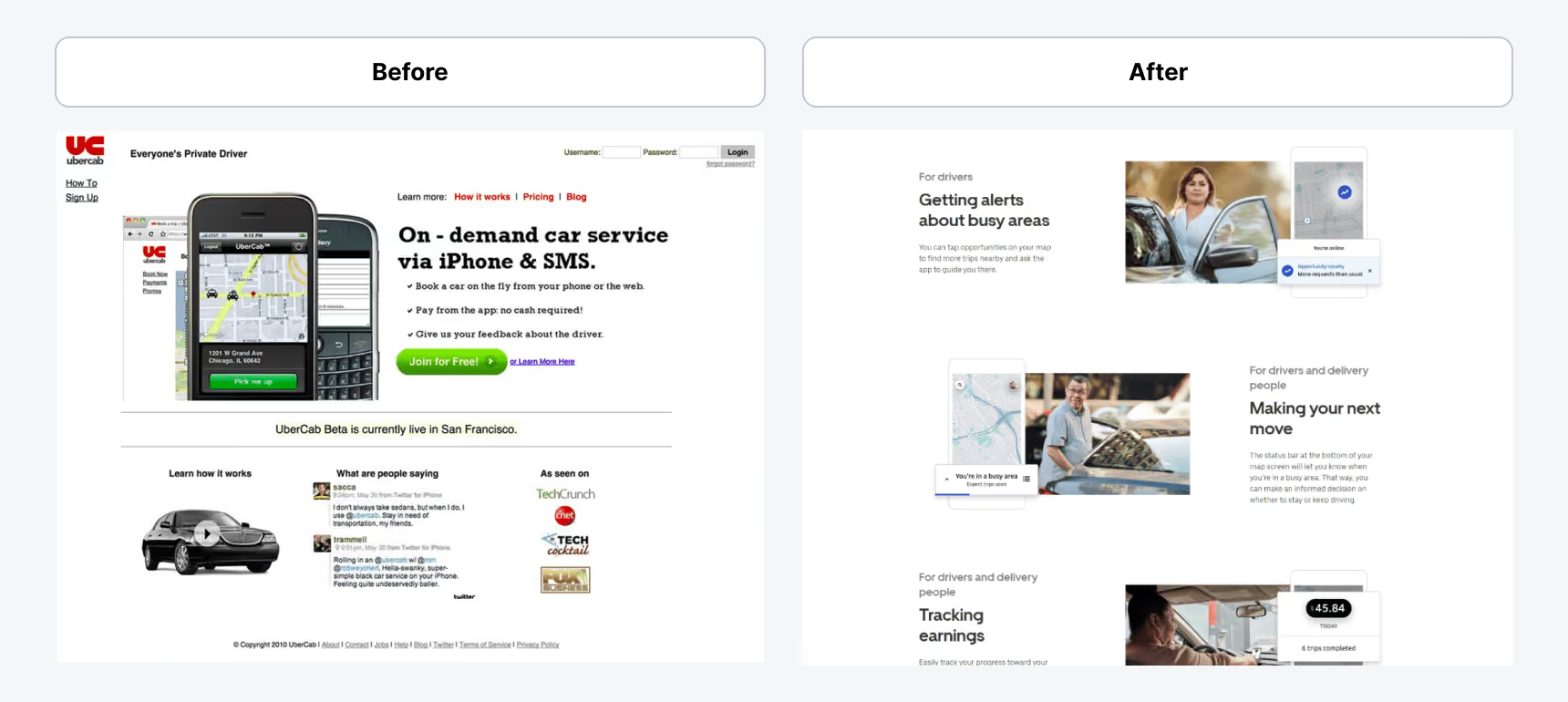
Garrett Camp and Travis Kalanick, the inventors of Uber, launched an MVP app that was available only in San Francisco and had very limited functionality. But this was already enough to prove that the idea was brilliant. Today Uber is a widely-known prosperous company that has provided lots of people with a profound cab service.
It may be hard to believe, but such a media giant as Facebook originally started as a small project. Two former Harvard students decided to create a website where people could join interest groups and exchange their thoughts with each other.
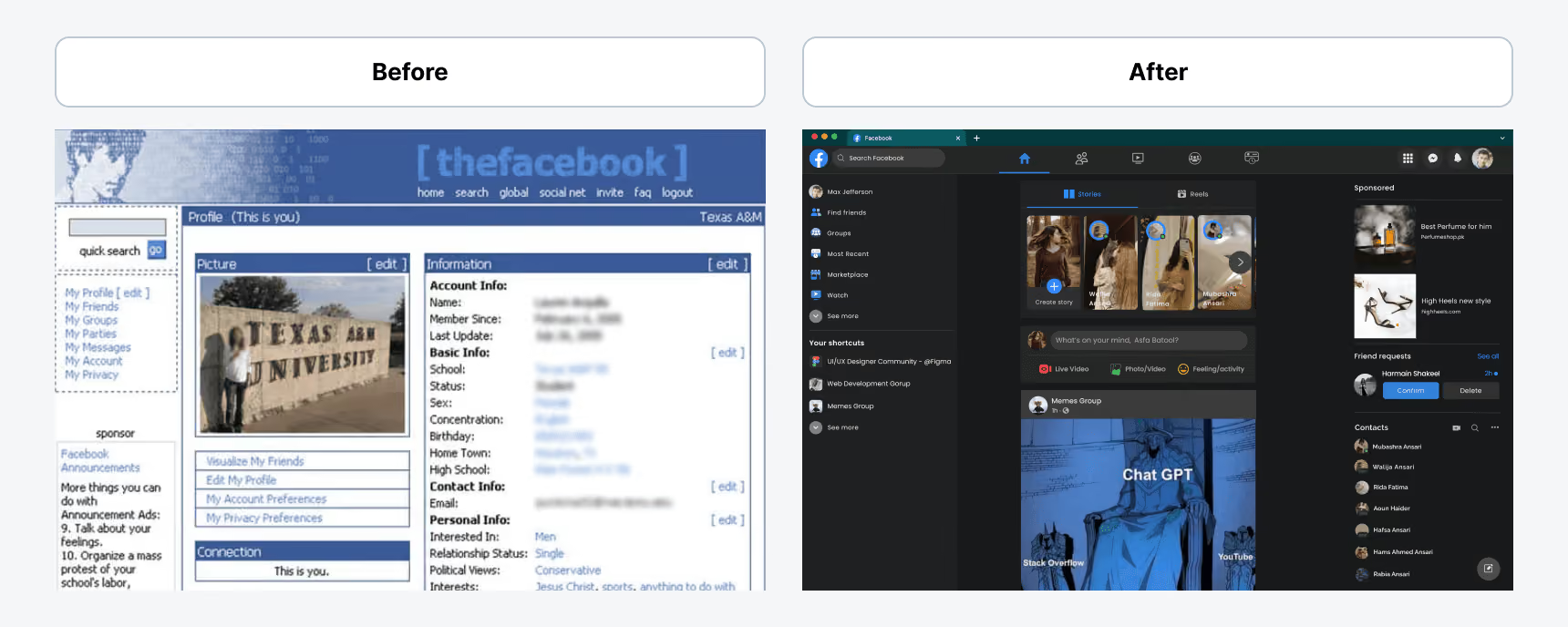
Mark Zuckerberg and Eduardo Saverin considered all the social media network inefficiencies and provided users with what they really needed. The necessity to reduce risks and development costs was obvious, thus, Facebook was initially launched as a small website available for students but quickly made it to the top, where it still stands today.
Other Successful MVP Examples
Do any of the names below sound familiar? We bet they do! And all of these minimum viable product examples represent the central concept of MVP development for a startup: you can launch your project having only your idea and a limited temporary set of features without spending a fortune. If it is what your target audience really wants, you will succeed. However, it's usually not as easy as it seems.
More examples of MVP-based companies that became million-dollar businesses:
- Dropbox
- Amazon
- Buffer
- Airbnb
- Spotify
- Foursquare
- Product Hunt
How Upsilon Can Help You Build an MVP
Upsilon is an MVP development company that can help you launch a product within roughly three months. Our agile team has built numerous successful products for our own product studio and for clients, and some of those client products have turned into 6-digit businesses.
Approaching MVP web development is intimidating without prior experience or an in-house team. We provide a tailored team of versatile specialists and advise on the optimal path based on years of expertise.
We are agile, we use sprint-based pricing, and we offer special discount rates for startups.


Final Takeaway: Is an MVP Worth It?
Bringing a new product to life can be a tough challenge with the abundance of competitors, lack of time, money, and knowledge of the possible results. A minimum viable product is the right solution that will let you avoid risks, minimize your expenses, and conquer your audience by adapting to their demands.
Surely, MVP creation is a complex process that should be carefully planned and divided into significant stages. Stick to them using our tips for successful MVP implementation, avoid others' mistakes, and you will receive a most positive MVP product development experience.
Upsilon has been providing MVP development services for startups for quite a while now and helped many companies grow. We're agile, use sprint-based pricing, and even have special discount rates for startups. So if you have any additional questions, feel free to contact us, we'll be glad to help!



FAQs
What is an MVP?

An MVP (minimum viable product) is the smallest working version of your product that lets real users complete one core task: real code, real infrastructure, not a mockup or a slide deck. It exists to test whether people want what you are building before you spend the budget to build all of it.
How much does it cost to build an MVP?
The cost to build a Minimum Viable Product (MVP) typically ranges from $20,000 to $65,000, depending on complexity, platform, and team location. It can drop to $10,000 for simple, single-feature apps and scale beyond $100,000 for complex, multi-platform products with custom back-ends.
How long does it take to build an MVP?
A typical MVP takes 3 to 4 months from discovery to launch, depending on feature scope and team size. Simple MVPs with one core feature can ship in as little as 4 to 6 weeks, while more complex products with multiple integrations or custom infrastructure can take 6 months or longer.
What's the difference between an MVP and a prototype?
A prototype is a clickable mockup with no working code, built to test design and flow. An MVP is a real working product: actual code, actual users, actual data. Most founders need a prototype first to validate the design, then an MVP to validate demand.
Do I need to know how to code to build an MVP?
No. No-code tools, AI-assisted development, and dedicated development teams all let non-technical founders build a real MVP. A workflow that fits a no-code tool's constraints offers the fastest path, while anything more custom requires a development team.
Should I build my MVP in-house or hire a development partner?
In-house works if you already have a technical co-founder who can own the build. Most non-technical founders get a faster, more predictable result from a dedicated team with a fixed scope and sprint-based delivery, since it removes the hiring and management overhead of building a team from scratch.
to top
Read Next


Never miss an update
