Upwork vs Freelancer vs Fiverr: Freelancer Platforms Compared


Hiring freelancers has become a standard way for businesses to scale quickly, fill skill gaps, and complete projects without expanding their full-time team. With thousands of professionals available online, companies can find everything from software developers and designдавers to marketers and copywriters in just a few clicks.
The importance of these platforms is only expected to grow. According to Statista, the number of freelancers in the United States is projected to reach 86.5 million by 2027, accounting for more than half (50.9%) of the U.S. workforce. As more businesses embrace flexible hiring, choosing the right freelance marketplace is becoming an increasingly important decision. In addition, a recent report from Upwork found that the share of skilled knowledge workers who freelance reached 38% in 2026, up from 28% the previous year, showing the growing role of freelance talent in modern workforce strategies.
Among the biggest players, Upwork vs Freelancer vs Fiverr is one of the most common comparisons. While all three platforms connect businesses with independent professionals, they differ in pricing, talent quality, hiring workflows, and the types of projects they're best suited for.
In this guide, we'll compare their features, fees, advantages, and drawbacks to help you determine which platform offers the best value for your next project – whether you need a quick one-time task or a long-term freelance partner.
Key Takeaways:
- Upwork, Fiverr, and Freelancer serve different hiring needs. Upwork is better suited for larger projects and long-term collaborations, Fiverr works well for quick, clearly defined tasks, and Freelancer offers a flexible bidding model for various project types.
- Freelance platforms work best for individual contributors, not full product teams. When a project requires multiple roles like developers, designers, and QA specialists working together, managing freelancers separately can create additional coordination challenges.
- Pricing is not the only factor when choosing a platform. Freelancer and client fees vary across marketplaces, but businesses should also consider hiring time, project management effort, communication overhead, and potential risks.
- Clear project scope is essential for successful freelance hiring. A well-defined task makes it easier to find the right candidate, compare proposals, and avoid delays caused by changing requirements during development.
- Dedicated development teams can be a better fit for complex software projects. Unlike freelance marketplaces, dedicated teams provide coordinated specialists, established workflows, and ongoing collaboration, reducing the risks of managing multiple independent contractors.
What Is Upwork and How Does It Work?
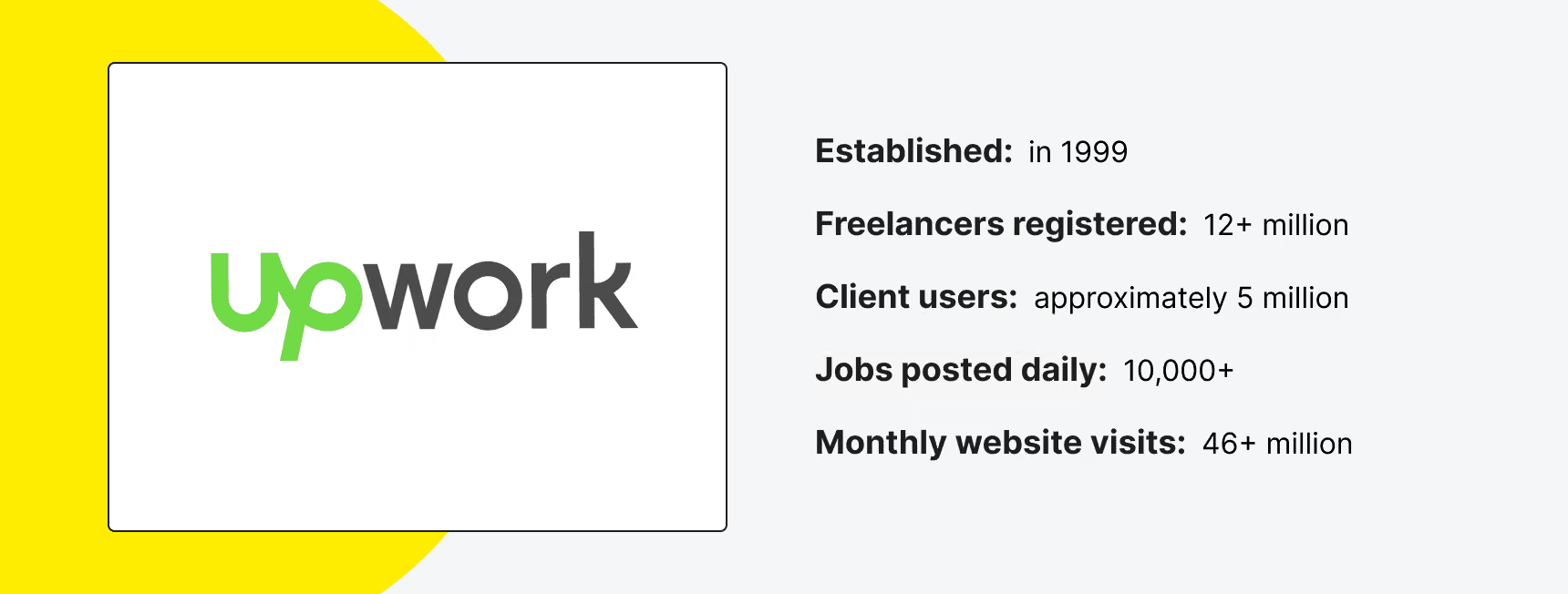
Upwork started out back in 1999 and was then known as Elance. It was focused on outsourcing IT work, yet soon began to include other fields as the platform expanded. What is Upwork used for? After merging with oDesk, Elance-oDesk became Upwork, the biggest freelance marketplace today that’s renowned around the globe.
How Upwork Works
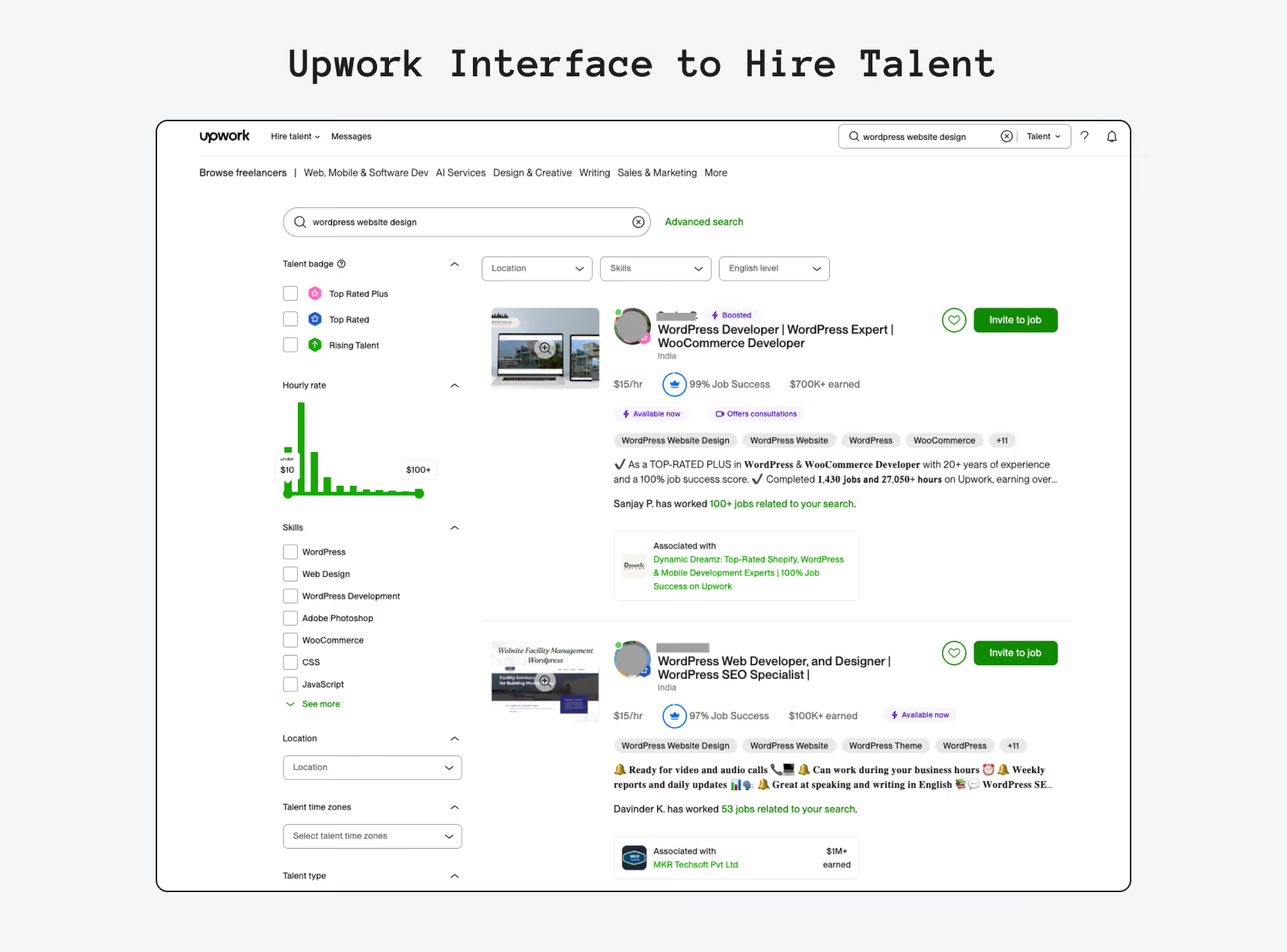
Any user, regardless of being a freelancer or employer, has to first create an account and fill out the profile. Then an employer can post a job listing that outlines the specifications of the project and the requirements. Freelancers can then submit their proposals so that employers can review them and choose the best option. An employer can invite a freelancer whose profile they like to take the job too.
Plus, the platform has a Project Catalog feature, allowing freelancers to post predefined flat-price offers for one-off jobs that employers can purchase.
Upwork has an intuitive interface and convenient chats that ease communication between parties. Collaboration is available on hourly or fixed-price bases, and you can split work into milestones. When the freelancer finishes the task, the employer can approve it, informing Upwork to release the payment via the built-in safe payment protection system. Let's go over the major Upwork pros and cons.
What Are the Upwork Benefits?
Upwork has a reputation as a trustworthy platform with a strong matching algorithm that can speed up the process of finding the right workforce. It offers many billing methods, including a variety of cards, PayPal, and even ACH bank accounts for U.S. clients. Besides, it has a diary feature for freelance time tracking to register the time they spent on the work, which can simplify verification.
The rating system is transparent, so leaving reviews on the freelancer and client is also possible. Freelancers have to undergo a lengthy identity verification process, which may include skills testing. The detailed profiles resemble resumes with education, work history, and other information.
In addition, the platform displays each freelancer’s vital statistics (for example, how many projects the freelancer has already completed, how much they’ve earned on the platform, their job success rate, or if they’re “Rising Talent”).
The figures below can also be attributed to Upwork’s advantages:
How many freelancers are on Upwork? 18+ million freelancers from 180+ countries registered
Client users: 5+ million
Monthly website visits: 63+ million


What Are the Upwork Downsides?
Mentioning other pros and cons of Upwork, the platform is generally considered more suitable for larger-scale and long-term projects, which can be either a benefit or a disadvantage differentiating Fiverr vs Upwork vs Freelancer. This point depends on the employer’s needs.
As a talent marketplace, Upwork counts 18 million registered freelancers across more than 180 countries, but its client base is smaller and pricier than the raw freelancer count suggests: 794,000 active clients in Q3 2025, down 7% from 855,000 a year earlier, spending a combined $4 billion annually on the platform, according to Upwork's own SEC-filing-sourced usage data. That combination, a large freelancer pool serving a shrinking but higher-spending client base, is consistent with a platform built for larger, more serious engagements rather than casual one-off tasks.
Freelancer fees have changed significantly in recent years. In May 2023, Upwork replaced its tiered pricing model with a simplified structure. As of 2026, the freelancer service fee is variable (0%–15%) depending on the contract, job category, and other factors determined by Upwork. The exact percentage is displayed before a proposal is submitted and remains fixed for the lifetime of that contract.
Client fees vary by plan. Marketplace (Basic) clients pay a Marketplace Fee of up to 7.99% on payments to freelancers, while eligible U.S. clients paying by bank account may qualify for a reduced 3% fee. A one-time Contract Initiation Fee ranging from $0.99 to $14.99 applies to each new Marketplace contract. Business Plus clients pay a 10% Marketplace Fee (or 8% with the eligible U.S. bank payment discount) and only pay a Contract Initiation Fee on new contracts under $100. Enterprise customers receive custom pricing, consolidated billing, and dedicated account management.
Not sure if hiring freelancers is right for you?
Reach out to our expert team to discuss your project needs.

What Is Fiverr and How Does It Work?
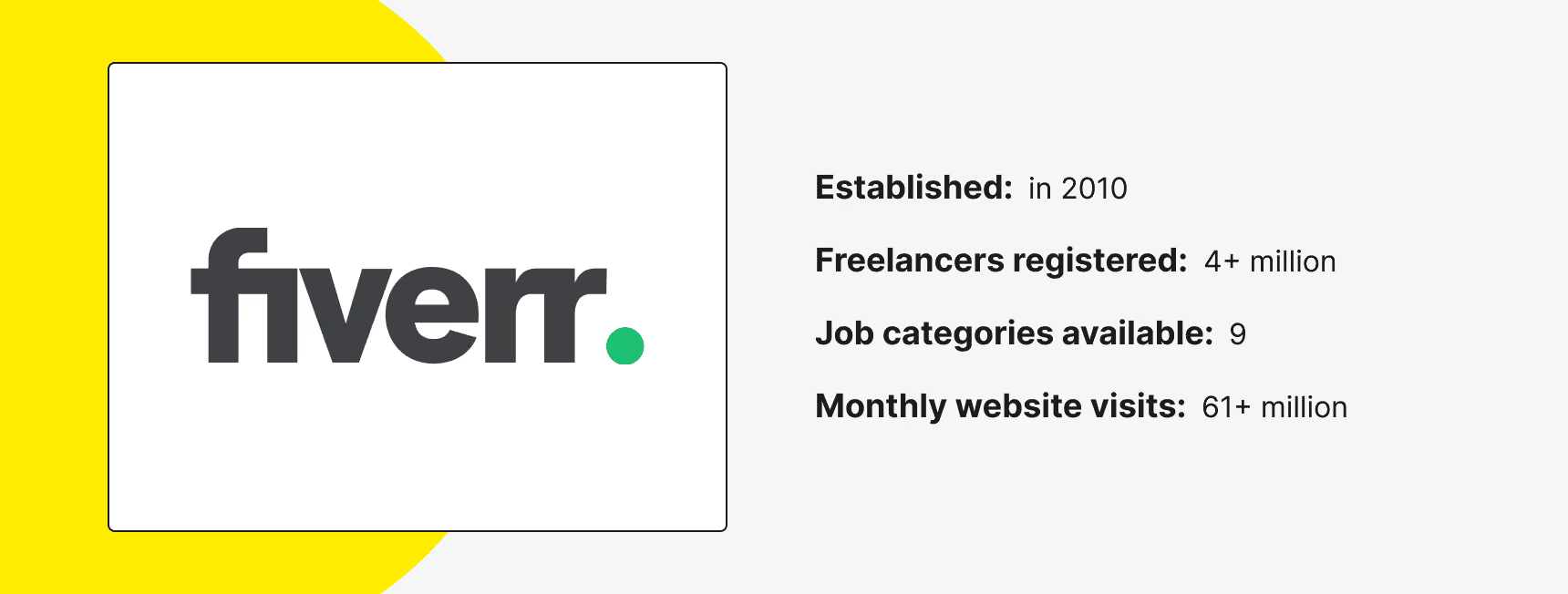
When was Fiverr created? This is one more popular freelance platform founded in 2010. The company had the vision of offering the lowest prices on the market without compromising the quality of delivery and focusing on specialized services. It allowed adding small projects with the rate margin being as little as 5 USD, and such Fiverr pricing helped it stand out from the terms provided by Freelancer or Upwork.
How Fiverr Works
What is Fiverr used for? Any type of user has to create a free account to register on the platform. Employers, or people who pay for the freelancers’ services, are called “buyers”, and those who provide services are called “sellers”.
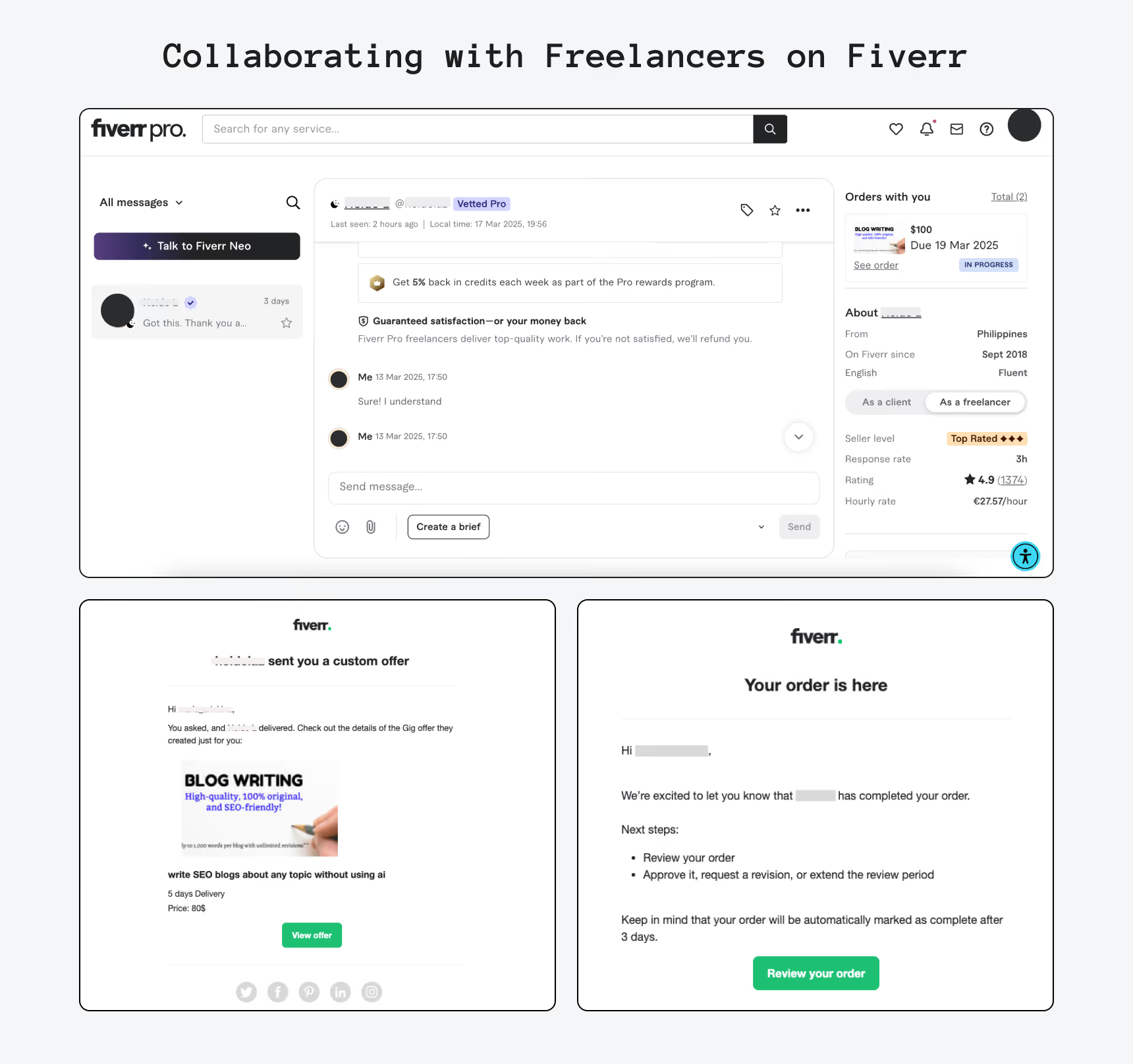
Is Fiverr free to join? Yes, and freelancers propose available services, referred to as “gigs”, which employers can browse, select, and should pay for right away (payments are collected in the system). Fiverr states that a gig is bought every four seconds on their platform. The gigs often come as packages, such as creating logo designs, and the freelancers set their own flat rates for the work. When the freelancer delivers the work, buyers can accept it and review the freelancer. Let's move on to the Fiverr pros and cons.
What Are the Fiverr Advantages?
This platform is a good option for short-term contracts and finding someone to complete one-off work (which is one of the factors setting apart Fiverr vs Upwork). Competitive pricing is among the biggest benefits of Fiverr. Service prices vary widely, as freelancers set their own rates, from a few dollars for simple tasks to thousands of dollars for complex projects. Plus, Fiverr supports multiple payment methods and currencies.
Moreover, thanks to the clear rating system, employers can make more informed decisions about who to hire. Fiverr also offers Pro and Enterprise solutions designed to connect buyers with vetted professionals and agencies.
Additionally, here are some short facts about Fiverr:
How many people use Fiverr? 3.5+ million employers (aka Buyers) registered and more than 380k sellers
Job categories available: 700+ (e.g., the AI services category was recently added)
Monthly website visits: 60-70+ million (varies by month)


What Are the Fiverr Disadvantages
One of the disadvantages of Fiverr services is that employers have to pay for the order in advance, not upon completion. Nonetheless, just like other popular freelance platforms, Fiverr holds on to the money and will only issue the payment to the freelancer if the employer releases it, marking that he’s satisfied with the job.
What cut does Fiverr take, and how much does Fiverr charge freelancers? The Fiverr fee for freelancers is 20%. Buyers pay a 5.5% service fee, and for purchases under $200, an additional $3.50 small order fee applies. Hourly contracts also include a $5 order initiation fee in addition to the standard service fee.
Notably, this platform is more geared toward smaller projects, often one-time work rather than long-lasting collaborations, which is one of the points differentiating Upwork vs Fiverr. Hence, if this is the case, perhaps other alternatives are better.
What Is Freelancer.com and How Does It Work?
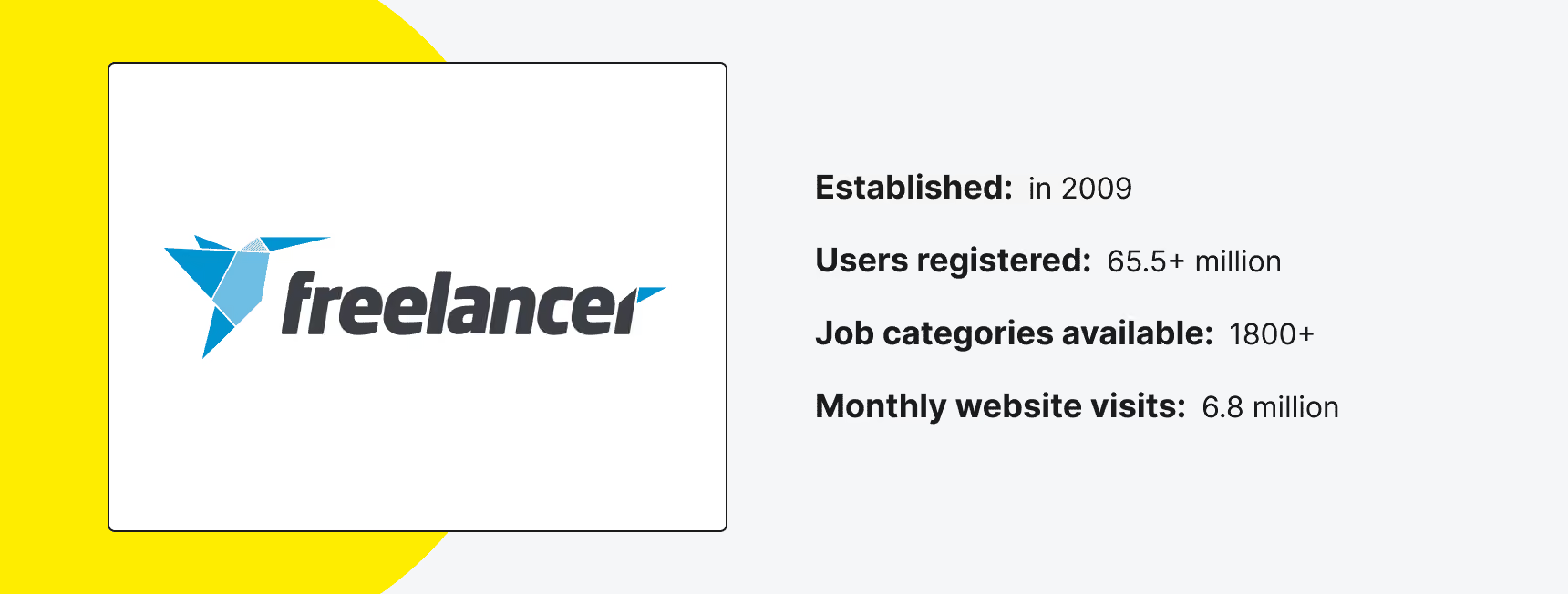
Freelancer.com is another popular freelancer platform that was founded in 2009. The company quickly put the common pain point of freelancers to use by making payment acceptance possible in various local currencies apart from USD. This became its unique selling point and competitive advantage.
How Freelancer Works
After account registration, employers are allowed to list their job posts with the requirements free of charge. In turn, freelancers can place bids to get the order, indicating their quote and other details, such as the expected time of delivery. Likewise, employers may also offer freelancers whose profiles they like to apply for the job. The employer can then select the most suitable bid, and, usually, the process is rather fast. On average, about 67% of jobs receive bids within one minute and 87% within five minutes.
Once a candidate is “signed” for the task, one-on-one communication begins within the platform via the chat. Importantly, the employer makes an upfront payment on the platform using Freelancer’s secure payment system, but it’ll be issued when the milestone is complete, and the employer approves it. Interestingly, their Technical Co-Pilot team can assist with managing a project for a business too.
What Are the Pros of Using Freelancer?
Freelancer.com is free to join, and from the start, freelancers who join as free members get 6 bids per month. The platform is rather straightforward in use and provides round-the-clock support if required. There are plenty of categories to choose from, and the fees are compatible if we compare Upwork vs Freelancer vs Fiverr.
Some of the standout points include that the platform makes it possible for buyers to get quotes for free and to pay only if they're satisfied with the quality of the work. The platform offers a mobile app version as well so that buyers can keep in touch with freelancers via chat. Plus, the support team is available 24/7, and the platform supports multiple currencies and languages.
Here are a few key figures to note about Freelancer:
Users registered: 75+ million freelancers and employers
Job categories available: 2700+ (including AI specialists)
Monthly website visits: approximately 5–7 million (varies by month)


What Are the Cons of Using Freelancer?
One of the obvious disadvantages is that the platform charges both parties, employers and freelancers, meaning that the Freelancer fees may be more noticeable if the project is small. As such, an employer will be charged either 3% or 3 USD for a fixed-price project, depending on what is higher, and 3% for hourly projects. However, there’s a Freelancer Enterprise package solution as well that may allow a business to cut costs and doesn’t have access, monthly, or annual fees or compulsory subscriptions.
On the freelancer’s side, for a small fixed-price project the platform can charge an introduction fee of 10% or 5 USD and 10% for hourly ones. There may also be additional fees, for instance, for Freelancer to PayPal transaction transfers. But there is a Freelancer Membership available, offering four plans (Basic, Plus, Professional, and Premier) ranging from $4.99 to $99.95 per month.
Furthermore, the website’s measures in terms of quality control aren’t that strict, which may possibly pose a problem during the candidate search. Users sometimes note that they’ve encountered technical problems with the platform.
Other Freelance Platforms Worth Knowing
Surely, there are more freelance sites similar to Upwork. Some freelancing platforms are more specialty- or niche-focused, whereas others follow a more general approach to finding a broader range of freelancers according to the provided services or skills.
Plus, the terms of these analogous sites like Fiverr and Upwork may also differ, i.e., some platforms are subscription-based, while others charge transaction fees. Therefore, it is best to look into the options, compare them, and select one that fits your needs most.
So, what are the best freelance platforms like Fiverr? Below we list 5 popular alternatives to Upwork, Fiverr or Freelancer:
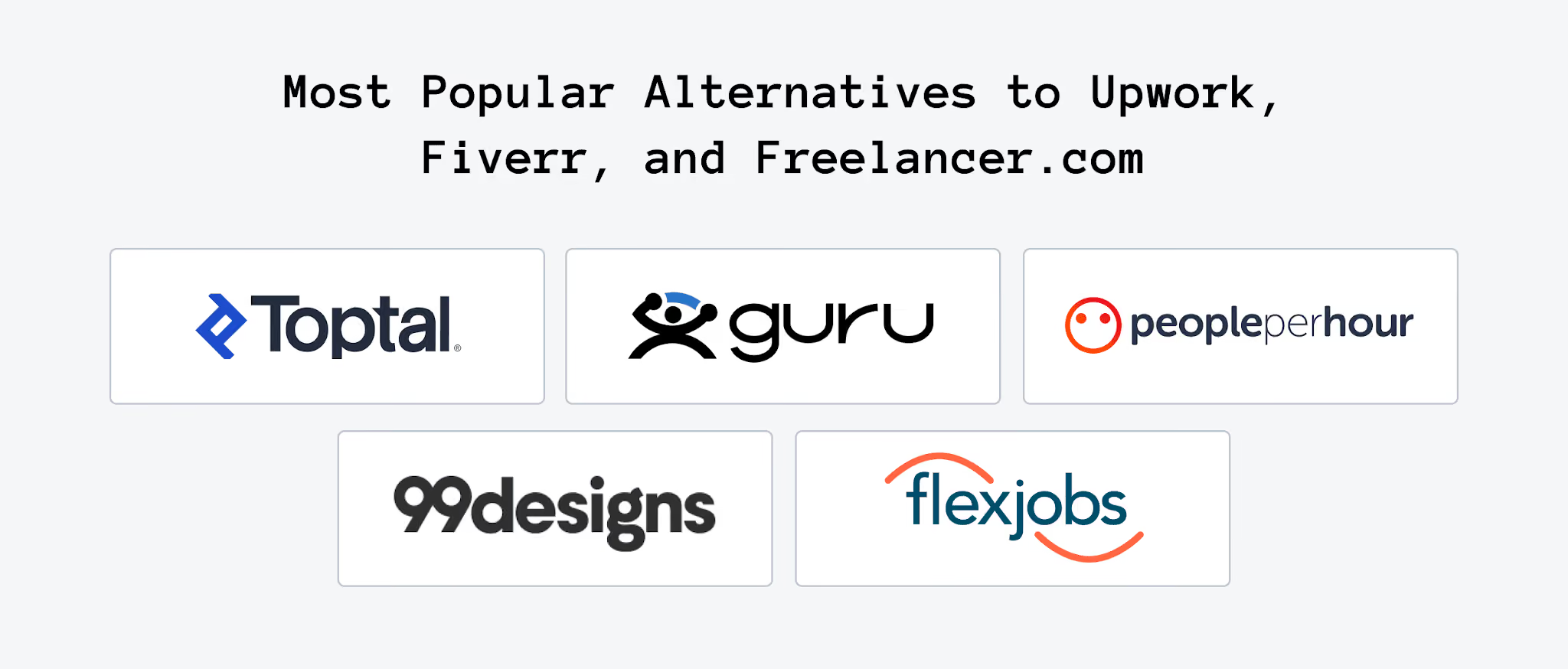
1. Toptal: a heavily screened network for senior developers, designers, and finance specialists. Expect the highest hourly rates of any platform on this list, in exchange for a smaller, pre-vetted talent pool instead of an open marketplace.
2. Guru: broad category coverage across design, development, translation, and legal work, with more flexible payment arrangements (escrow, hourly, recurring, or task-based) than most competitors offer.
3. PeoplePerHour: UK-based, strongest for web development, design, and marketing talent, with a hybrid model that lets you post a job or browse freelancer profiles directly.
4. 99designs: a Vista-owned marketplace built specifically for logo and graphic design work, run as design contests rather than proposals.
5. FlexJobs: a curated, subscription-based board for remote and flexible roles rather than a bid-based marketplace, a better fit for a longer-term remote hire than for gig-based work.
Upwork vs Fiverr vs Freelancer: How They Really Compare
So, which is better: Upwork or Fiverr or Freelancer? What’s the best freelancer website, and which of the three best freelance platforms should you choose? Let’s recap the above mentioned and list a few major takeaways regarding Upwork vs Fiverr vs Freelancer.
When to Choose Upwork
So, which is better, Upwork or Fiverr? As mentioned earlier, Upwork is a better fit if you have a larger-scale project or need long-term collaboration. The platform is proposal-based, meaning freelancers submit applications for posted jobs and can work on either fixed-price contracts or hourly projects.
Upwork is highly competitive and offers access to a wide range of specialists across development, design, marketing, and business services. Freelancer profiles include work history, ratings, reviews, and skill information, helping employers compare candidates and find a suitable match for their needs.
Upwork’s pricing structure has changed in recent years. Freelancers now pay a variable service fee ranging from 0% to 15% depending on the contract, instead of the previous fixed 10% commission. For clients, Marketplace contracts include a fee of up to 7.99% on payments to freelancers, along with a Contract Initiation Fee of $0.99–$14.99 for new contracts. Business Plus and Enterprise clients have separate pricing structures with additional features.
When to Choose Fiverr
Fiverr is a strong choice for businesses looking for creative services, specialized skills, or quick one-time projects. Is Upwork or Fiverr better in this case? Fiverr works more like a marketplace where freelancers create service listings (“Gigs”) with predefined packages, prices, and delivery times that employers can browse before placing an order.
This model makes Fiverr convenient for smaller projects where the scope is clear from the start. Unlike Upwork, where clients usually post a job and review proposals, Fiverr allows employers to select a service directly based on a freelancer’s portfolio, reviews, and previous results.
Fiverr’s fee structure is straightforward: freelancers pay a 20% service fee on completed orders. Buyers pay a 5.5% service fee, and orders under $200 include an additional $3.50 small order fee. These fees should be considered when comparing the total project cost.
When to Choose Freelancer
Freelancer allows businesses to post jobs with detailed project requirements, after which freelancers can submit bids with their proposed rates and timelines. This approach gives employers the ability to compare multiple offers and choose the candidate that best matches their budget, skills, and expectations. Also, freelancers can share their online portfolios to present their previous work.
The platform offers thousands of categories, making it a flexible option for different types of projects and a potential alternative when comparing Freelancer vs Fiverr. It supports both fixed-price and hourly contracts, which makes it suitable for short-term tasks as well as larger projects.
Freelancer’s fee structure includes a 10% fee or $5 minimum for fixed-price projects (whichever is greater) and a 10% fee for hourly projects for freelancers. Employers pay 3% or $3 for fixed-price projects (whichever is greater) and 3% for hourly projects.
When Hiring Through a Freelance Platform Makes Sense
Choosing between freelance platforms is not just about finding the largest marketplace or the lowest price. The right platform depends on the type of work you need, how much involvement you want in the hiring process, and whether you are looking for a quick deliverable or a longer-term collaboration.
A freelance platform is usually the right choice in a few specific situations, rather than a default hiring path:
- You need one or two specialists to extend an existing team, not build an entire team from scratch.
- Your budget does not yet support a full-time in-house hire for a specific skill.
- Your team is missing expertise in a niche area or a specific part of the tech stack for a defined period of work.
- You have enough time to review candidates, run a paid test task, and manage the project directly.
- Your project has a clear scope that can be described before publishing a job post.
- The work is occasional or project-based rather than something that requires a permanent employee.
If the task cannot be explained in a couple of sentences yet, it is worth refining the scope before creating a job listing. A vague brief usually leads to unclear proposals, mismatched expectations, and additional revisions later. Spending time defining requirements upfront makes the hiring process smoother, whether you decide to work with a freelancer or a larger development team.
Each platform is designed around a specific hiring model: proposal-based marketplaces work best when you need to compare candidates for a defined project, while gig-based platforms are better suited for ready-made services with clear deliverables.
For example, a non-technical founder who needs a pitch deck redesigned before an investor meeting next week may find Fiverr the best fit: the deliverable is clear, the timeline is short, and there is no need for a lengthy hiring process. A technical co-founder looking for an additional backend developer for six weeks to complete a specific integration may be better suited to Upwork or Freelancer, where they can define technical requirements, review candidates, and manage the collaboration directly.


When a Freelance Platform Isn’t the Right Call
A freelance platform stops being the right tool once a project needs more than one role moving together, design, development, and QA coordinated toward the same deadline, rather than a single well-specified task you can hand to one person. None of the three platforms compared here solve for that coordination. Upwork, Fiverr, and Freelancer.com are all built to fill one role at a time; none assembles a team, manages a sprint, or replaces a contributor who drops off mid-project without you starting the search over.
Two risks become more significant as the project grows:
- Reliability: A single freelancer disappearing mid-project can stall the entire task. Marketplace platforms do not guarantee continuity the way an agency with a broader talent pool can.
- IP ownership and handoff: A marketplace contract may not define code ownership, repository access, documentation, or knowledge transfer with the level of detail founders need before sharing a product idea. Clarifying these points after development has already started creates unnecessary risk.
B2B SaaS development is a realistic example of where this model can break down. A typical SaaS product may require a designer, multiple developers, and a QA engineer working toward the same three-month deadline, coordinated by someone who can resolve scope questions quickly.
Hiring that team through Upwork, Fiverr, or Freelancer means:
- Running separate hiring processes for each role
- Managing multiple contracts and communication channels
- Coordinating timelines and deliverables yourself
- Taking responsibility for project management and quality control
- Having no guarantee that freelancers have experience working together before
A dedicated development team removes much of this coordination overhead by bringing together specialists who already have experience collaborating on software projects.
For a single, narrow feature with a technical co-founder able to direct the work, a freelance platform remains a practical option. Upwork’s proposal-based model or Freelancer.com’s marketplace approach can work well in this scenario.
However, for a product that requires a project manager, QA process, and several specialists working together from day one, a dedicated development team is often a better structural fit. Freelance platforms are designed to fill individual roles; dedicated teams are designed to coordinate multiple roles toward one product goal.
Looking for a reliable tech partner?
Upsilon is a trustworthy team that can help you with your tech needs!
Concluding Thoughts on Upwork vs Freelancer vs Fiverr
All in all, freelancer platforms and websites could be a way for companies to streamline the process of finding and hiring independent talent externally. This may be an alternative to in-house employment, especially if you have a one-time task.
We’ve given a detailed overview of the top freelancer websites, comparing Upwork vs Freelancer and Fiverr. You may consider using both Fiverr and Upwork or even Freelancer or other analogous platforms if you need specialists to complete a specific task or whose services you’ll need only for a limited time. The choice of the most suitable and best freelancer platform will be based on your individual needs.
However, bear in mind that choosing in favor of a freelance workforce may not be an optimal decision if you have long-term or larger-scale work scopes. As such, if you'd like to enforce your team, accelerate delivery, or delegate an entire side project that your existing team can't take on, then finding a tech partner is a better option. Upsilon can assist with that as we provide IT staff augmentation services and can deliver turnkey projects. Feel free to contact us to discuss the details!



FAQs
Which is better: Upwork, Freelancer, or Fiverr?

None wins outright. Each fits a different job. Upwork suits larger or ongoing projects billed hourly or by milestone. Fiverr suits small, fixed-price gigs bought like a product. Freelancer charges the lowest fees on both sides but runs the loosest vetting of the three. Match the platform to your project's size and duration, not to brand recognition.
What's the difference between Upwork, Fiverr, and Freelancer?
Upwork and Freelancer both use a post-a-job-and-get-bids model with hourly and fixed-price contracts. Fiverr flips that: sellers list pre-packaged "gigs" at set prices, and buyers purchase directly, closer to shopping than hiring. Freelancer undercuts both platforms on employer fees, at 3% versus Upwork's 5%+ and Fiverr's 5.5%.
Which platform charges the lowest fees?
For employers, Freelancer is cheapest at 3% or $3 per fixed-price project, whichever is greater, against Upwork's $4.95 initiation fee plus 5% and Fiverr's 5.5% buyer service fee. For freelancers, Upwork's flat 10% beats Freelancer’s 10% and Fiverr's 20% seller commission.
Is Upwork or Fiverr better for freelancers looking for work?
Upwork suits freelancers building a long-term client base and track record, since profiles display job success scores and total earnings. Fiverr suits freelancers who want to sell a defined service at a set price without submitting proposals. This guide is written for the person hiring, not the person job-hunting, but the fee gap, 10% flat on Upwork versus 20% on Fiverr, matters either way.
What is a "gig" on Fiverr?
A gig is the packaged service a Fiverr seller lists at a set price, often with Basic, Standard, and Premium tiers spelling out exactly what's delivered and for how much. Buyers purchase a gig directly, similar to buying a product listing, instead of posting a job and waiting for proposals to come in.
When should a founder skip freelance platforms and hire a dedicated team instead?
Once a project needs more than one role working in sync, design, development, and QA moving toward the same deadline, rather than a single well-specified task. A freelance platform is built to fill one role at a time; a dedicated team is built to coordinate several of them from day one.
to top