How to Start Vibe Coding: A Guide for Startups

Startup owners feel the biggest pressure: build, test, and launch quickly. Even if it’s something the world has never seen before, the first version of the product should reach users as fast as possible. That is why the traditional path of hiring a large development team and spending months on building an MVP is not always feasible.
This is where you might want to turn to a new paradigm, vibe coding. It promises to slash development time and empower founders with advanced or limited technical skills to bring their ideas to life.
Recent Stack Overflow data shows a massive surge in the adoption of AI-powered development tools. A 2025 survey found that 84% of developers already use AI development tools. This is a fundamental shift in how we create software. Vibe coding sits at the heart of this revolution, offering a way to translate a vibe or a product vision into functional code using natural language.
But is it the silver bullet it appears to be? For many founders, the initial excitement of generating an app with a few prompts quickly gives way to frustration. Customization becomes a nightmare, scalability seems impossible, and the AI-generated code can be a black box of bugs.
This guide provides a comprehensive overview of how to start vibe coding for startups. We will explore what it is, how it works, its benefits, and its crucial limitations, so you can make an informed decision about how to take advantage of this powerful new approach without hitting a wall.
Key Takeaways
- What is vibe coding in software development? A software development approach that uses AI and natural language prompts to generate code. It allows for rapid prototyping and development based on a general idea or vibe.
- Why does it matter for startups? It accelerates the product development life cycle, lowers initial costs, and makes it easier for non-technical founders to build prototypes.
- What are the hidden challenges? Vibe coding is excellent for initial versions and prototypes, but it often makes founders struggle with scalability, complex customizations, and maintaining high code quality.
- What is the solution? Many startups are finding success by using vibe coding for software development alongside expert human oversight. With this approach, professional engineers can step in to refine, refactor, and scale AI-generated projects, transforming a rough prototype into a polished, market-ready product.
Vibe Coding Explained: What Every Startup Should Know
Before you can employ vibe coding for your startup, you need to understand what the term actually means, where it came from, and how it is reshaping modern software and SaaS app development.
What Is Vibe Coding?
It is an approach where a developer or founder describes the desired outcome, functionality, or vibe of an application in plain English (yet). An AI-powered tool then interprets these natural language prompts and generates the corresponding code. Instead of writing every line of code by hand, you guide the AI, which acts as a super-intelligent co-pilot.
Think of it as the difference between giving a chef a detailed, step-by-step recipe versus describing the kind of meal you want ("a light, spicy, seafood pasta dish") and letting them use their expertise to create it. The vibe is the high-level vision, and the AI handles the granular implementation.
Behind the scenes, this way of doing things is possible due to a few key technologies:
- Natural language processing. Vibe coding tools rely on advanced NLP models to humanize AI interactions, understand human language prompts with context and nuance.
- Large language models (LLMs). OpenAI's GPT series, Anthropic's Claude, Gemini, and others are the engines that power the code generation.
- Iterative refinement: The process is conversational. You provide a prompt, the AI generates code, you review it, and then you provide feedback or new prompts to refine the result.
- Full-stack generation. Modern tools can generate everything from frontend components, such as in React or Vue, to backend logic, database schemas, and API endpoints.
This method marks a significant evolution from earlier low-code and no-code MVP platforms. While those tools offer pre-built blocks and templates, vibe coding provides a more dynamic and flexible canvas. It allows you to create more bespoke software from a textual description.
How Vibe Coding Became a Game-Changer
The rise of vibe coding was not an overnight phenomenon. It is the culmination of several key technological advancements and shifts in the software industry.
AI Breakthroughs Unlock New Development Power
The sophistication of large language models like GPT-4 and Claude 3 has been the primary catalyst. Their ability to understand complex requests and generate coherent, functional code has reached a point where they are reliable enough for professional development tasks. A decade ago, this was science fiction; today, it is a practical reality.
Racing to Build Faster Than Ever
Vibe coding makes it possible to prototype products in days instead of months and allows founders to validate ideas, secure funding, and gather user feedback much faster. Vibe coding addresses this need perfectly for accelerated development cycles.
Making Software More Accessible for Everyone
The movement to democratize tech means vibe coding opens doors for creators who aren’t engineers. Founders, product managers, and designers can get hands-on with building—not just brainstorming.
Building Smarter with Leaner Budgets
Hiring a full-fledged development team is one of the biggest expenses for an early-stage startup. On the other hand, vibe coding for software development offers a more capital-efficient way to build initial product versions, preserving precious startup runway for other critical business functions like marketing and sales.
These factors have created a perfect storm, propelling vibe coding from a niche concept to a mainstream strategy for startups globally.


How Vibe Coding Shapes the Startup World
The impact of vibe coding on the startup ecosystem is multifaceted. It alters not just how products are built but also the strategic decisions founders make.
Accelerating Prototyping and MVP Development
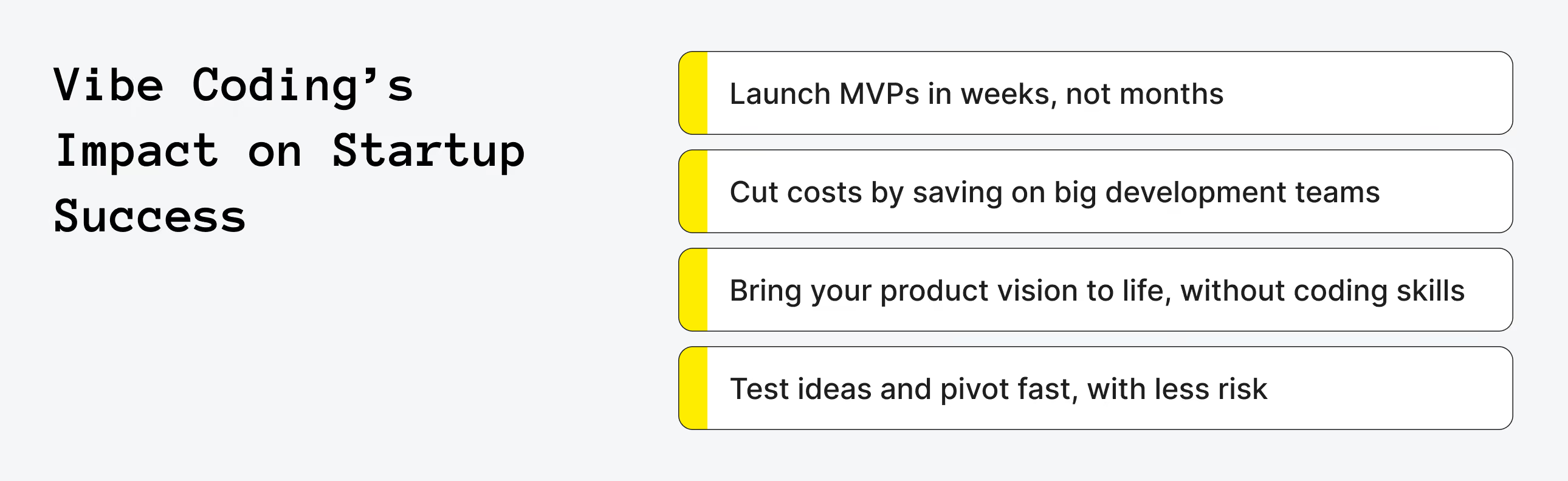
The most significant advantage is the dramatic reduction in time to market. With vibe coding app development, startups can create functional prototypes and MVPs in record time. You can now:
- Build fully working apps at an unprecedented speed;
- Iterate quickly based on real user feedback.
As a result, you can launch a basic MVP version in a few weeks and evolve the product in response to what users actually want. This agile approach reduces the risk of building something nobody needs (the number one reason startups fail).
Lowering the Financial Barrier
By reducing the immediate need for a large engineering team, vibe coding makes it cheaper to get a startup off the ground. You can potentially build the first version of your product yourself or with a very small team, delaying major hiring expenses until after the startup concept is validated and initial traction is achieved.
It’s safe to assume that this approach can reduce initial MVP development costs by as much as 50-70%.
Empowering Non-Technical Founders
Vibe coding bridges the huge gap between idea and execution. Now, a founder with deep industry knowledge but no coding background can get much more hands-on in the development process. They can experiment with features, play with user stories, and pick up valuable technical basics along the way. This hands-on approach gives founders practical insight into how modern software comes together, helping them understand the tech side more deeply as their product grows.
Fostering a Culture of Experimentation
When the cost and time required to build are low, startups are more willing to experiment. Vibe coding allows teams to test multiple ideas, pivot fast, and explore different product directions without committing significant resources. You can foster innovation and increase the chances of finding a true product-market fit, all at the same time.
Vibe Coding vs Traditional Programming
While vibe coding is revolutionary, it is not a replacement for traditional programming, at least not yet. The two approaches have distinct characteristics, and understanding the difference is key to knowing when to use each.
Here is a comparison between vibe coding vs traditional programming:
The choice between them is a trade-off between speed and control. Vibe coding prioritizes getting a functional product out the door as quickly as possible, and traditional programming prioritizes building a robust, scalable, and maintainable foundation for the long term.
Vibe Coding: Pros and Cons for Startups
Like any technology, vibe coding comes with a set of powerful advantages and significant drawbacks. For a startup founder, a clear-eyed view of both is crucial before committing to this development path. Here’s a breakdown of the vibe coding pros and cons.
Vibe Coding Benefits
The upsides of vibe coding are compelling, especially for early-stage ventures operating under tight constraints.
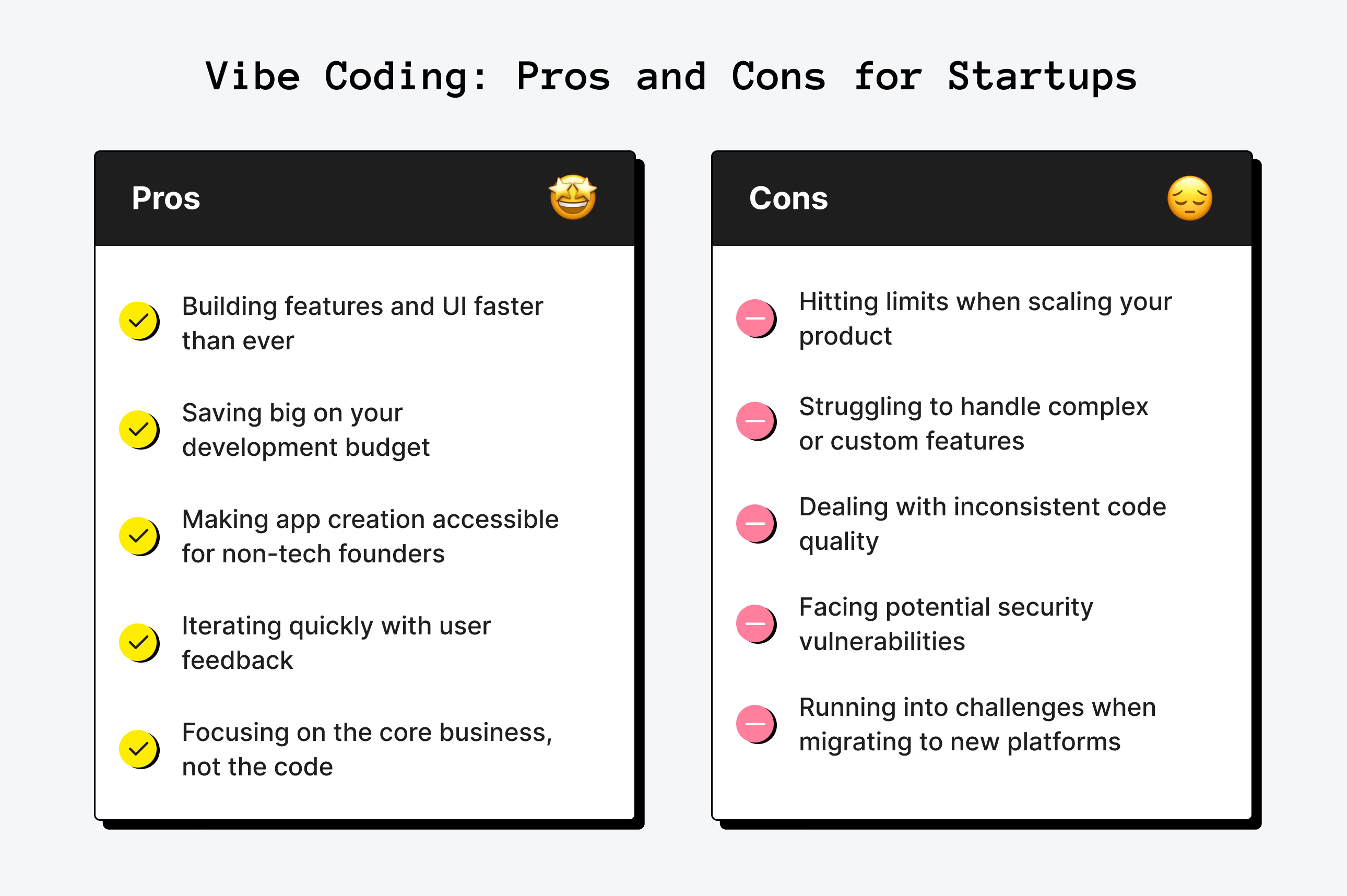
Unmatched Speed
With the right tools for vibe coding, it’s possible to generate entire app scaffolds, features, and UI components in minutes. This speed helps startups outpace competitors and jump on market opportunities much faster.
Significant Cost Reduction
With AI, you minimize the need for extensive engineering hours, which is why vibe coding drastically cuts down on development costs. This is a game-changer for bootstrapped or seed-stage startups where every dollar counts.
Increased Accessibility
It empowers a wider range of people to build software. Product managers, designers, and non-technical founders can create functional prototypes without writing a single line of code. The output products are usually much better-aligned products.
Rapid Iteration
Vibe coding fits perfectly with an agile build-measure-learn cycle. Teams can create features, deploy them to users, and then use targeted strategies for gathering user feedback and quickly fine-tune their products based on ongoing interaction.
Focus on Vision, Not Syntax
You can concentrate on the what and the why of their product rather than getting bogged down in the how. The focus remains on the user problem and the business logic, not on debugging a misplaced semicolon, especially when teams use QueryPal to quickly access shared knowledge. The founder’s dream, isn’t it?
Vibe Coding Limitations
However, the speed and ease of vibe coding come with critical trade-offs that can create major problems down the line if not managed right.
Scalability and Performance Issues
AI-generated code is not always optimized. It can be inefficient, bloated, or lack the robust architecture to handle a large number of users. A prototype that works for 10 users might crash and burn with 10,000.
Difficulty with Complex Customization
While vibe coding for software development is highly effective for building standard features and workflows quickly, it often runs into trouble when a product requires advanced or highly specialized functions. If your app needs a feature that falls outside the typical patterns these tools were designed for, you may quickly reach the limits of what the AI can generate, leading to frustration and unexpected roadblocks.
Inconsistent Code Quality
The code produced by AI varies in quality. It might lack proper documentation, ignore best practices, or contain subtle bugs that are difficult to track down. You risk accumulating technical debt that will need to be addressed later, sometimes at a high cost.
Black Box Problem
Debugging can be a nightmare, too. When something goes wrong, it can be hard to understand why the AI generated the code it did. You are left trying to fix code you did not write and do not fully understand. For security vulnerabilities, this lack of context makes it difficult to assess severity and prioritize fixes accurately, which is why security teams use practices like purple teaming to incorporate exploitability context into remediation from the start.
Security Vulnerabilities
AI models are trained on lots of public code, so they sometimes pick up security flaws too. Without a careful human review, AI-generated code can easily bring new risks to your app. That’s why paying attention to cybersecurity in AI solutions is so important for any startup building with these tools.
Vendor Lock-in
Relying heavily on a specific vibe coding platform can make it difficult to migrate your app to a new environment or technology stack later. In some cases, migration may require rebuilding major parts of your product from scratch, which can be both costly and time-consuming.
As we weigh vibe coding pros and cons, it’s getting clearer when vibe coding is a go-to choice for specific business scenarios.
Need a hand with your MVP?
Upsilon can help you plan and develop an MVP that'll grow to be a success!

Vibe Coding Use Cases
Understanding where vibe coding excels and where it falls short is key to using it the right way. It is a powerful tool, but it is not the best tool for every job. Let’s examine practical vibe coding use cases.
When Vibe Coding Makes Sense
Vibe coding is an excellent choice in several common startup scenarios:
- You have an idea and need to build a tangible prototype to pitch to investors, stakeholders, or first users. Vibe coding allows you to create a clickable, functional model in a fraction of the time and cost.
- For building the very first version of a product with just enough features to be usable, vibe coding is ideal. The goal is to test your core product hypothesis and gather feedback, not to build a polished, scalable application.
- If your company needs a simple piece of software,like an internal dashboard, an automation script, or a basic admin panel, vibe coding is a fast and efficient solution. The stakes are lower, and the scalability requirements are minimal.
- For applications with standard functionality, such as a basic e-commerce store, a content-based app, or a simple social network, vibe coding can handle a big portion of the development work.
- If you want to test a new feature for an existing product without dedicating a full engineering cycle, you can use vibe coding to build a proof-of-concept faster.


When Vibe Coding Isn’t the Right Choice
Despite vibe coding benefits, there are many situations where relying solely on vibe coding is a recipe for disaster:
- If your app requires high performance, enterprise-grade security, and complex business logic (fintech platforms, healthcare systems), the inconsistency and potential vulnerabilities of AI-generated code are unacceptable, especially when security gaps could expose your users to threats like phishing.
- If your startup's core value proposition is unique, or relies on proprietary algorithms or a highly specialized user experience, vibe coding tools will likely fail to deliver the necessary level of control and precision.
- When you are building a product that you envision serving millions of users, you need a solid architectural foundation. Vibe coding is not designed for this kind of long-term strategic planning; it prioritizes immediate results over future-proof architecture.
- For applications that need to integrate with multiple third-party APIs or legacy systems, the nuanced work required goes beyond the capabilities of current AI tools.
This is exactly where many founders hit a wall, and you need to know it before you learn how to start vibe coding. Many founders successfully built a prototype with a tool like Lovable or Bolt.new, only to realize it cannot be scaled or customized to meet market demands. The project stalls, and the initial speed advantage evaporates.
Luckily, a team of cleanup engineers can step in to address the vibe coding limitations. They can take your AI-generated prototype, refactor the inconsistent code, write custom logic by hand where needed, and place it on a scalable architectural foundation.
This hybrid approach using AI for speed at the start and human expertise for robustness and scale is the most effective path forward. It combines the best of both worlds, turning a promising but flawed DIY project into a genuine, viable product.


Top Vibe Coding Tools in 2025: Quick Overview
The market for vibe coding tools is exploding, with new platforms emerging constantly. While a deep dive is a topic for another day, here is a quick overview of some of the leading players that startups are using right now.
Lovable
Often cited as a pioneer in the space, Lovable allows users to describe an app's features and UI in plain English. It generates surprisingly polished frontends and is a popular choice for founders looking to create visually appealing prototypes in minutes.
Bolt.new
Bolt focuses on turning prompts into full-stack web applications. It streamlines the entire process, from generating the database schema to building the API and crafting the user interface. Its strength lies in its integrated, end-to-end workflow.
Cursor
Cursor is an AI-first code editor and a supercharged version of VS Code. It is built for developers who want to integrate AI deeper into the workflow they already follow. It can generate, edit, and debug code with incredible context-awareness, making it a powerful co-pilot for more technical users.
Replit
While not exclusively a vibe coding tool, Replit's Ghostwriter AI feature makes it a major player. Replit provides a browser-based development environment for any language. Ghostwriter assists with everything from code generation and completion to explaining and transforming existing code. Together, they make a versatile tool for both beginners and experts.
GitHub Copilot
Developed by GitHub and OpenAI, Copilot is one of the most widely adopted AI coding assistants. It integrates into popular code editors and provides intelligent code suggestions as you type. It is less about generating full-stack apps from a prompt and more about augmenting the traditional coding process, line by line.
Rocket.new
Rocket.new is an AI-powered vibe coding platform designed to help startups and product teams build applications faster using natural language prompts. Similar to Lovable and Bolt.new, it can generate frontend interfaces, backend workflows, and application logic with minimal setup. Rocket.new also includes intelligent workflow automation and competitor intelligence insights, making it useful for rapid MVP development, product experimentation, and faster iteration cycles.
v0.dev by Vercel
This tool focuses on generating frontend components. You can describe a UI component with text or by providing an image, and v0 generates the corresponding React code using Shadcn UI and Tailwind CSS. It is best for building out the visual elements of a web application.
At this point, you might already be inspired by the idea of streamlined development without actual coding. Hold on, you still need a process to get along well with this type of software.
How to Start Vibe Coding: Step-by-Step Process
Each tool has its own nuances, but the general process follows a consistent and iterative pattern. Here is a high-level overview of the steps we recommend to take seriously.
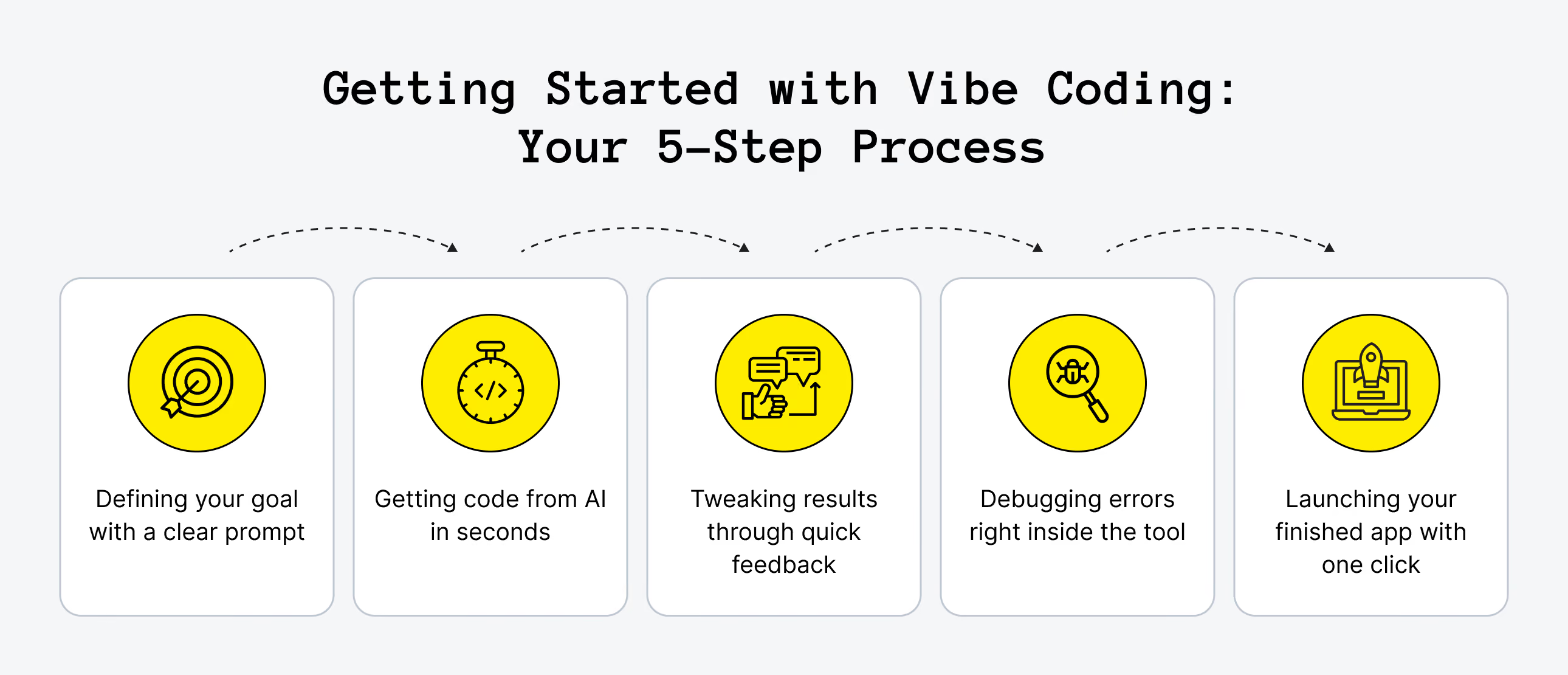
Step 1: Describe Your Goal Using Prompts
Start by defining what you want to build. Be specific.
Bad prompt:
Good prompt:
The quality of your prompts defines the quality of the output.
Step 2: Let AI Generate the Code
Feed your prompt into your chosen vibe coding tool. The AI will process your request and generate the corresponding code — this could be a block of HTML/CSS, a Python function, or a complete full-stack application structure. This step usually takes anywhere from a few seconds to a few minutes.
Step 3: Refine Results Through Iteration
The first output is rarely perfect. Review the generated code and the resulting UI or functionality. Identify what is missing or incorrect. Now, refine your request with follow-up prompts. For example:
The conversational back-and-forth is central to the vibe coding process.
Step 4: Handle Code Errors and Debug Them
You will inevitably encounter bugs. The application might crash, a feature might not work as expected, or you might see error messages. Your job is to describe the error back to the AI. Copy and paste the error message and ask the AI to fix it, for example:
Many modern tools have built-in debugging capabilities where the AI analyzes and suggests fixes for errors.
Step 5: Accept and Deploy the Final Version
Once you are satisfied with the functionality and have ironed out the major bugs, it is time to deploy your application. Most vibe coding platforms have integrated deployment features that allow you to publish your app to the web with a single click to make it accessible to users.
Want a quality MVP right on your first try?
Upsilon's expert team can help plan, build, and scale your product!
Final Thoughts on Vibe Coding in Software Development
We’ve just defined what is vibe coding in software development and explored its transformative impact. It offers an incredible opportunity to accelerate innovation, reduce costs, and bring ideas to life with unprecedented speed. The ability to go from a simple prompt to a functional prototype in a matter of hours or days is a power that was unimaginable just a few years ago.
However, you need to approach this technology with a realistic perspective. Vibe coding is not a magical solution that eliminates the need for sound engineering principles. The journey from a DIY AI-generated prototype to a scalable, secure, and lovable product is fraught with technical hurdles that AI alone cannot solve.
The best results happen when AI and human expertise come together. That’s exactly what we do at Upsilon. If you’ve hit a roadblock with vibe coding, or you’re curious about trying it for your next project, our engineers are here to support you with our vibe coding services at every stage: from early concepts to a solid MVP and beyond. Feel free to contact us if you’d like to chat about your goals or see how we can help.
FAQ
1. How do I start vibe coding for app development in 2025

Begin by defining your app's core feature or vibe. Then, choose a user-friendly vibe coding tool like Lovable or Bolt.new. Start with simple, specific prompts to build out individual components (e.g., "create a user sign-up form").
Then, gradually combine these components and use iterative, conversational prompts to refine the functionality and fix errors.
2. What is vibe coding and how does it work for startups?
It is a software development method where you use natural language prompts to instruct an AI to generate code. One of the key vibe coding benefits for startups is speeding up the creation of prototypes and MVPs. Founders can test ideas, show progress to investors, and gather user feedback faster and at a much lower cost than traditional development.
3. How does vibe coding differ from traditional coding?
Vibe coding for app development uses high-level, natural language instructions to generate code automatically, prioritizing speed. Traditional coding involves a developer manually writing line-by-line instructions in a specific programming language, prioritizing control, quality, and scalability.
The key difference is speed and accessibility versus control and robustness.
4. What are examples of vibe coding tools?
Prominent examples of vibe coding AI software development tools are Lovable and Bolt.new, which are great for generating full-stack applications from prompts. Cursor is an AI-first code editor for developers. Replit offers an in-browser IDE with powerful AI assistance, and v0.dev specializes in generating frontend UI components from text or image prompts.



to top